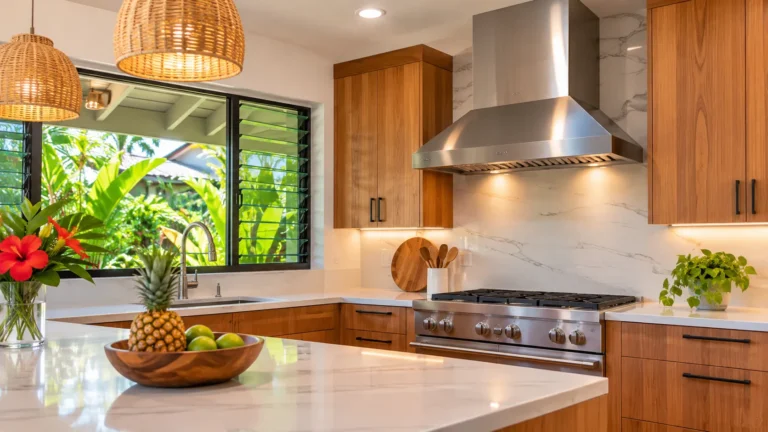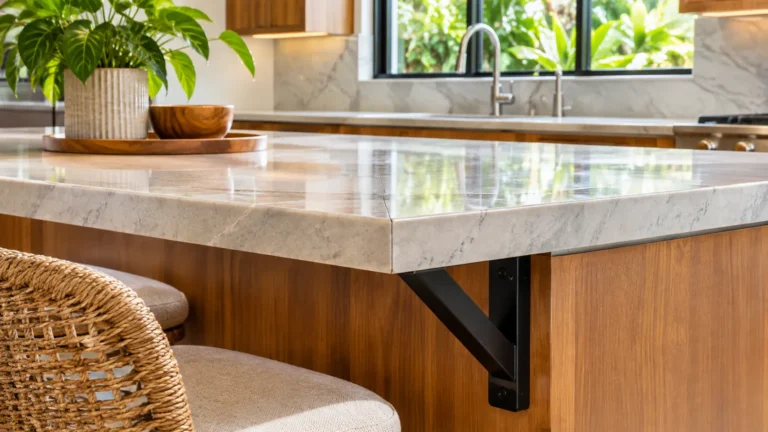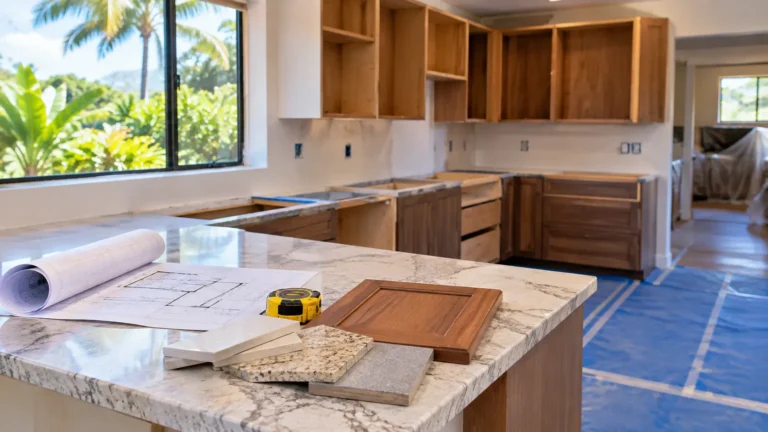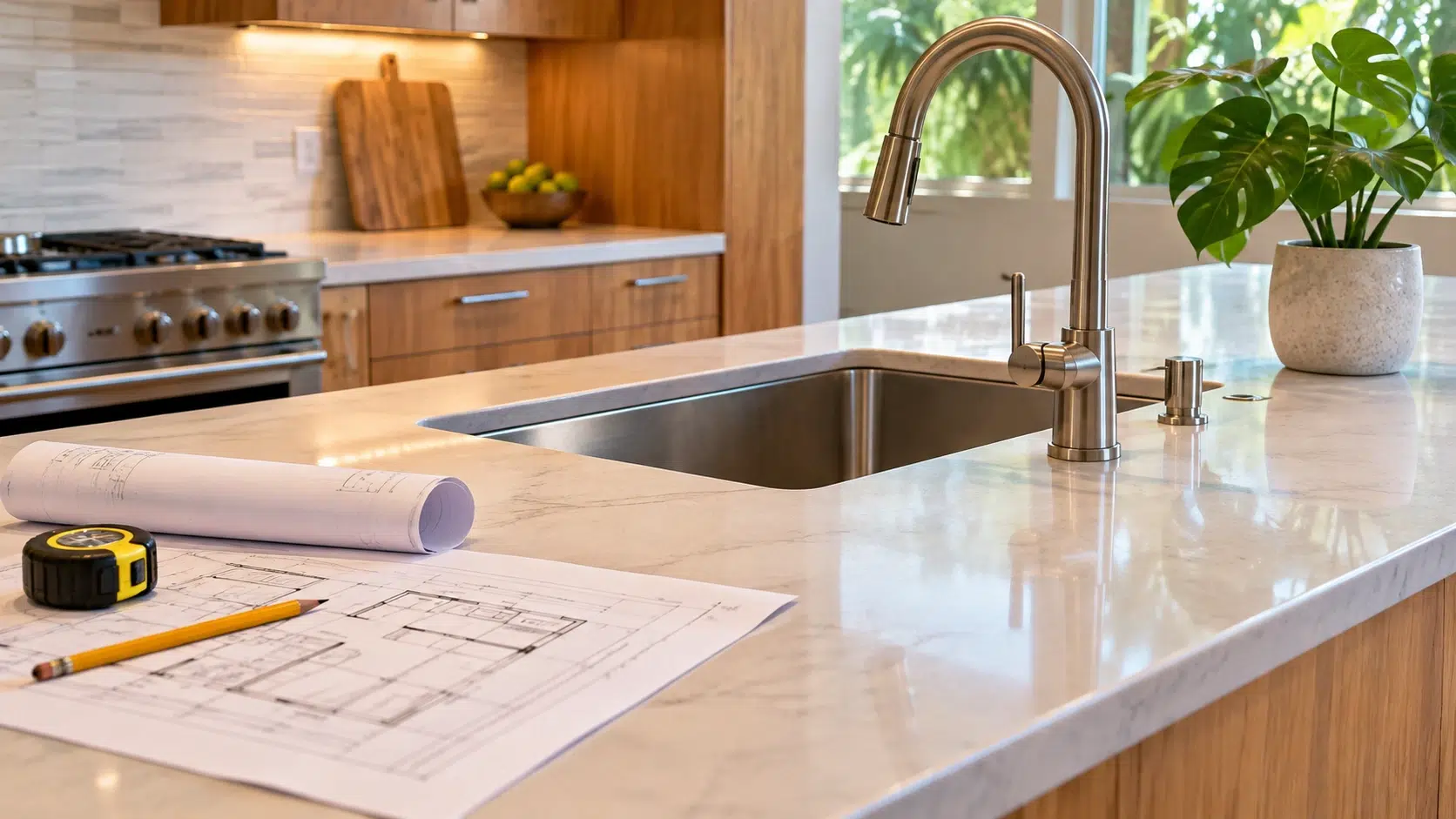
Relocating a kitchen sink in Hawaii can transform the way your kitchen looks, feels, and functions. Whether you want to install a kitchen island, improve countertop space, or create a more practical cooking area, moving your sink requires careful planning.
A kitchen sink connects to water supply lines, drainage pipes, and plumbing vents. Changing its location may affect cabinetry, flooring, countertops, and the overall renovation budget.
For homeowners planning a kitchen renovation in Oʻahu, understanding these requirements before construction can help reduce unexpected expenses and delays.
At United Construction Group, we believe that successful renovations begin with understanding existing conditions and developing a clear construction plan.
This guide explains 10 essential checks for relocating a kitchen sink in Hawaii, including plumbing, drainage, permits, layout considerations, and renovation costs.
Why Relocating a Kitchen Sink in Hawaii Requires Planning
Relocating a kitchen sink in Hawaii involves more than removing the existing fixture and installing it somewhere else.
The current plumbing system was designed around a particular location. Moving the sink can require modifications to the pipes and connections that support it.
For example, moving a sink from a wall to a kitchen island may require new plumbing routes beneath the floor and a different venting configuration.
The complexity depends on the property’s construction, existing utilities, and proposed kitchen layout.
Before making changes, homeowners should determine whether the new location is feasible, what construction work will be necessary, and whether permits are required.
A site assessment helps establish these details before committing to cabinetry, countertops, or demolition.
1. Inspect Existing Plumbing Before Relocating a Kitchen Sink in Hawaii
The first step in relocating a kitchen sink in Hawaii is understanding the condition of the existing plumbing.
A qualified plumbing professional should inspect the accessible water supply lines, drainage pipes, and connections.
Important areas to evaluate include:
- Hot and cold water supply lines
- Existing drainage connections
- Plumbing vent locations
- Pipe materials and condition
- Signs of corrosion or leakage
- Accessibility behind walls and beneath floors
Older properties may have plumbing systems that have been modified during previous renovations.
These alterations can influence how easily the sink can be moved.
For example, an existing drain connection may be difficult to access without removing cabinetry or opening part of the floor.
Identifying these conditions before construction allows the project team to evaluate the proposed layout and determine whether additional work is necessary.
UCG Planning Tip: Request a plumbing assessment before finalizing your kitchen design. Knowing the condition of existing utilities can help prevent avoidable changes during construction.
2. Check Drainage Slope and Wastewater Connections
Proper drainage is one of the most important technical considerations when relocating a kitchen sink in Hawaii.
Kitchen wastewater must flow through the drainage system using a properly designed pipe configuration.
Moving a sink farther from its existing drainage connection may require additional piping and adjustments to the drain route.
A plumbing professional should evaluate:
- Existing drainpipe location
- Proposed wastewater route
- Required drainage slope
- Pipe sizing
- Connection accessibility
- Applicable plumbing code requirements
A longer drainage route does not automatically make relocation impossible. However, it can increase installation complexity.
For homes built on concrete slabs, creating a new drainage route may require opening and restoring portions of the floor.
The proposed design should be evaluated before demolition begins.
3. Evaluate Plumbing Venting Requirements
Plumbing venting helps drainage systems function correctly while protecting water seals in plumbing traps.
When relocating a kitchen sink in Hawaii, the existing vent connection may no longer be suitable for the new location.
This is particularly important when moving a sink to a kitchen island.
Island sink configurations may require a different approved venting arrangement from sinks installed against a wall.
A qualified professional should inspect:
- Existing plumbing vent locations
- Drain and vent connection distances
- Available space for new piping
- Proposed island cabinet configuration
- Applicable plumbing code provisions
Homeowners should not assume that existing venting can simply be extended without further evaluation.
A properly planned drainage and venting system supports reliable operation and helps reduce future maintenance concerns.
4. Inspect Flooring and Structural Conditions
Floor construction can significantly influence the complexity of relocating a kitchen sink in Hawaii.
Different homes provide different levels of access to plumbing systems.
For example, a raised-floor home may have accessible space beneath the kitchen, while a concrete slab may require a more involved approach.
Before relocating the sink, determine:
- Whether plumbing runs beneath the floor
- What type of floor structure exists
- Whether structural elements could be affected
- Whether concealed utilities are present
- How opened surfaces will be restored
Cutting or altering structural components without proper evaluation can create safety and construction problems.
Where necessary, a qualified design professional should assess the proposed modifications.
The objective is to identify a feasible plumbing route while protecting the building’s structural integrity.
5. Verify Water Supply Line Accessibility
Relocating a kitchen sink in Hawaii also requires a suitable route for hot and cold water supply lines.
The new location must allow the sink to connect to the property’s water distribution system.
Depending on the existing layout, this may involve extending or rerouting water lines through cabinets, walls, or floors.
Important considerations include:
- Available pipe routes
- Existing water pressure and supply conditions
- Appropriate pipe materials
- Accessible shutoff valves
- Protection against leaks
- Future maintenance access
For a kitchen island, supply lines may need to pass through the floor.
The proposed route should be reviewed before cabinetry is fabricated.
Accessible plumbing connections can also make future repairs and maintenance easier.
6. Confirm Hawaii Kitchen Sink Relocation Permit Requirements
Before relocating a kitchen sink in Hawaii, homeowners should verify the applicable permit requirements.
Permitting rules depend on the county, the proposed plumbing work, and the property’s existing conditions.
In Honolulu, Revised Ordinances of Honolulu Section 18-3.1 generally requires permits for plumbing installation and alterations, subject to specified exemptions.
Relocating a sink and rearranging its plumbing is different from simply replacing a faucet without changing existing connections.
For official requirements, review the City and County of Honolulu permit regulations.
Homeowners should confirm:
- Whether a plumbing permit is required
- Whether additional building or electrical permits apply
- Who is responsible for permit applications
- Which inspections are required
- Whether condominium or association approvals apply
The Honolulu Department of Planning and Permitting also provides official permitting guidance and frequently asked questions.
Properties outside Honolulu should follow the requirements of their respective county permitting authorities.
UCG Planning Tip: Verify permit requirements before scheduling demolition or ordering custom materials. Permit reviews and inspections may affect the construction schedule.
7. Review Kitchen Layout and Appliance Placement
Relocating a kitchen sink in Hawaii should improve the way the kitchen functions.
A new sink location may create more countertop space, improve movement between appliances, or make food preparation more convenient.
However, an attractive design is not always a practical design.
Consider how the sink interacts with the refrigerator, stove, dishwasher, and primary preparation areas.
Important planning questions include:
- Is there enough countertop space near the sink?
- Can the dishwasher open without blocking circulation?
- Will cabinet doors and drawers have adequate clearance?
- Is the sink convenient for everyday food preparation?
- Does the new layout support multiple household members?
- Will plumbing remain accessible for maintenance?
A kitchen island can provide additional workspace and seating, but placing a sink in the island may reduce usable countertop space.
The right layout depends on your household’s priorities.
Learn more about planning a functional renovation through United Construction Group’s Kitchen Remodeling Services.
8. Inspect Cabinets, Countertops, and Sink Dimensions
Cabinetry and countertop design are closely connected to sink placement.
When relocating a kitchen sink in Hawaii, homeowners should verify that the new cabinetry can accommodate the sink and its plumbing connections.
A new sink location may require cabinet replacement, countertop modification, or changes to adjacent storage.
Before ordering materials, confirm:
- Sink width, depth, and installation type
- Cabinet dimensions
- Countertop opening requirements
- Faucet clearance
- Drain and supply connection locations
- Dishwasher placement
- Waste-disposal compatibility, where applicable
An undermount sink, for example, may require specific countertop fabrication and support details.
Custom countertops should not be fabricated until the sink model and installation specifications are confirmed.
Late design changes can increase material costs and delay installation.
9. Consider Hawaii’s Humidity and Moisture Conditions
Relocating a kitchen sink in Hawaii also presents an opportunity to inspect existing cabinets and surrounding materials for moisture-related damage.
Hawaii properties experience different environmental conditions depending on their location, ventilation, and exposure.
Some coastal properties may face greater salt-air exposure, while poorly ventilated interior spaces may experience moisture accumulation.
Inspect the existing sink area for:
- Swollen cabinet panels
- Discolored wood
- Corroded plumbing components
- Musty odors
- Visible water stains
- Deteriorated cabinet bases
Any active plumbing leaks should be repaired before new finishes are installed.
Material selection should account for the property’s actual conditions.
Moisture-resistant cabinetry, suitable finishes, and accessible plumbing connections may support long-term durability.
A well-planned kitchen renovation addresses existing problems rather than simply covering them with new materials.
10. Request a Detailed Kitchen Sink Relocation Estimate
Before relocating a kitchen sink in Hawaii, request a written construction estimate that clearly identifies the proposed scope.
The estimate should explain what work is included and which items may require further investigation.
Depending on the project, the scope may include:
- Site measurements and assessment
- Plumbing inspection and planning
- Permit applications and inspections
- Cabinet removal or modifications
- Water supply line relocation
- Drainage and venting alterations
- Floor or wall restoration
- Sink and faucet installation
- Final plumbing testing
- Construction cleanup
Ask how concealed conditions will be handled if they are discovered after demolition.
For example, previously unidentified water damage or deteriorated plumbing may require additional work.
A complete estimate should also explain how changes will be documented and approved.
When comparing contractors, review the proposed scope rather than focusing only on the total price.
Hawaii’s Department of Commerce and Consumer Affairs recommends checking contractor licensing before hiring. Homeowners can review its official guide to hiring a licensed contractor.
How Much Does Relocating a Kitchen Sink in Hawaii Cost?
The cost of relocating a kitchen sink in Hawaii varies depending on the existing plumbing system, proposed sink location, and construction requirements.
There is no single price that accurately represents every project.
Several factors can influence the total cost.
Distance From Existing Plumbing
Moving the sink farther from existing drainage and water supply connections may require additional piping and installation work.
Floor Construction
A sink relocation involving concrete floor modifications may require more extensive construction and restoration than a project with accessible plumbing beneath the floor.
Cabinet and Countertop Changes
Custom cabinetry, new countertops, and different sink configurations can affect the overall renovation budget.
Permits and Inspections
Required permits, professional services, and inspections should be included in project planning.
Concealed Conditions
Existing water damage, deteriorated plumbing, or unexpected utility locations may require additional work.
Material Selection
Sink models, faucets, cabinetry, and countertop materials can influence the final project cost.
For accurate pricing, homeowners should request a site-specific evaluation and written scope.
Is Relocating a Kitchen Sink in Hawaii Worth It?
Relocating a kitchen sink in Hawaii can be worthwhile when the new layout provides meaningful functional improvements.
For example, moving a sink to a kitchen island may allow homeowners to face the living area while preparing meals.
Moving a sink along an existing wall may create more practical countertop space or improve appliance placement.
However, relocation is not always the best solution.
In some kitchens, changing cabinet storage, appliance positions, lighting, or countertops can improve functionality without major plumbing modifications.
Before making a decision, compare the proposed benefits with the additional construction requirements.
A successful renovation balances appearance, convenience, cost, and long-term maintenance.
Common Mistakes When Relocating a Kitchen Sink in Hawaii
Avoiding common planning mistakes can make a kitchen renovation more predictable.
Finalizing the Layout Before Inspecting Plumbing
A sink location that appears practical on a drawing may require extensive plumbing changes.
Confirm feasibility before approving the final design.
Ordering Cabinets Too Early
Cabinet dimensions and plumbing access should be coordinated before custom materials are ordered.
Ignoring Drainage and Venting
Proper plumbing design is essential for reliable sink operation.
Assuming Permits Are Unnecessary
Moving plumbing connections may require permits and inspections.
Overlooking Existing Water Damage
Hidden moisture problems should be addressed before new cabinetry or finishes are installed.
Comparing Incomplete Estimates
A lower estimate may exclude work that another contractor has included.
Request clear scope descriptions and written assumptions.
Frequently Asked Questions About Relocating a Kitchen Sink in Hawaii
1. Can I relocate my kitchen sink to an island?
Yes, relocating a sink to an island may be possible if the floor construction and plumbing system can accommodate the necessary water supply, drainage, and venting connections.
A qualified plumbing professional should evaluate the proposed location.
2. Do I need a permit for relocating a kitchen sink in Hawaii?
Permit requirements depend on the county and project scope. In Honolulu, plumbing alterations generally require permits unless a specific exemption applies.
Confirm requirements before construction begins.
3. How much does moving a kitchen sink cost?
Costs depend on plumbing accessibility, drainage requirements, floor construction, cabinet modifications, permits, and restoration work.
A site-specific estimate is the most reliable way to establish a budget.
4. Can I relocate a kitchen sink without replacing the countertop?
Possibly. The answer depends on the countertop material, existing sink opening, and proposed layout.
Some projects may require countertop replacement or professional modification.
5. How long does kitchen sink relocation take?
The timeline depends on plumbing complexity, permit requirements, inspections, and associated renovation work.
Projects involving concrete floor modifications or extensive cabinetry changes may take longer.
6. Can I move my kitchen sink to another wall?
Yes, provided a compliant plumbing route can be established.
The proposed location should be assessed for drainage, venting, water supply, and accessibility.
7. Do I need a licensed plumber to relocate a kitchen sink?
Plumbing alterations must comply with applicable Hawaii licensing and county requirements. In Honolulu, the Department of Planning and Permitting states that electrical and plumbing work must be performed by appropriately licensed contractors.
8. Will moving a kitchen sink damage my flooring?
Some relocations require opening sections of the floor to install or modify plumbing.
The amount of work depends on the existing floor structure and the proposed pipe route.
9. Should I relocate my sink during a complete kitchen renovation?
A full kitchen renovation can be a practical time to evaluate sink relocation because cabinets, countertops, and other components may already be changing.
However, the decision should still be based on feasibility and budget.
10. What should I prepare before requesting a kitchen renovation quote?
Gather photographs, existing plans if available, measurements, preferred sink locations, appliance specifications, and a list of project priorities.
These details can help the project team prepare for an initial assessment.
Plan Your Kitchen Sink Relocation With United Construction Group
Relocating a kitchen sink in Hawaii requires careful coordination between plumbing, layout planning, cabinetry, and construction.
Whether you’re updating an older kitchen, considering a new island, or planning a complete renovation, understanding existing conditions is an important first step.
United Construction Group works with property owners on residential and commercial construction projects in Hawaii, including kitchen remodeling.
A project-specific conversation can help clarify your goals, identify potential construction requirements, and determine appropriate next steps.
Thinking about relocating your kitchen sink?
Explore our Kitchen Remodeling Services to learn more about planning your renovation.
You can also connect with United Construction Group to discuss your project and request a consultation.
United Construction Group | Hawaii Construction and Remodeling