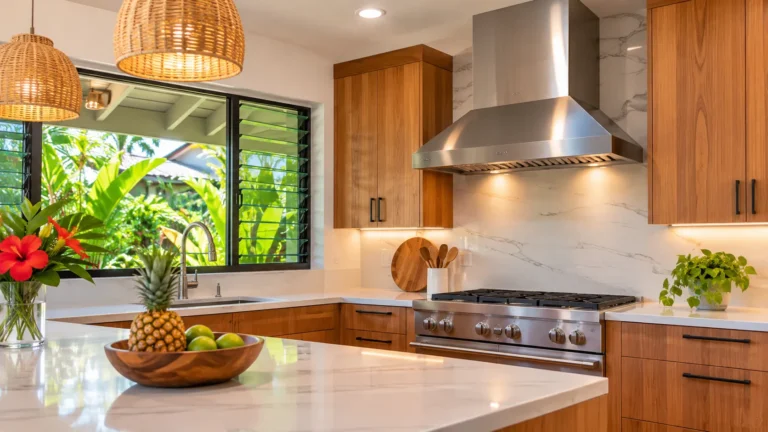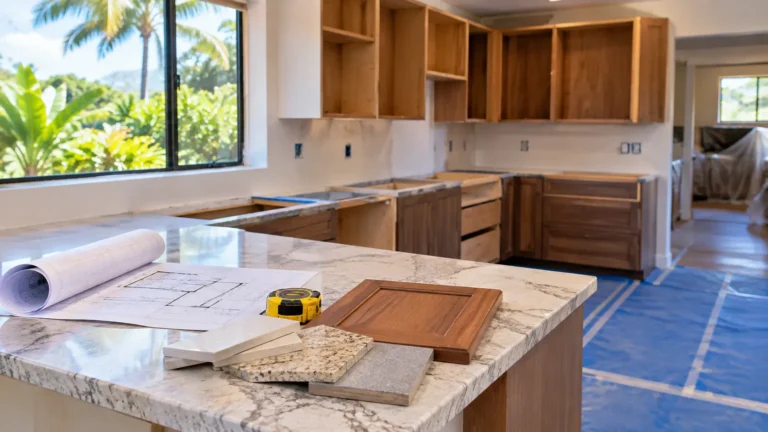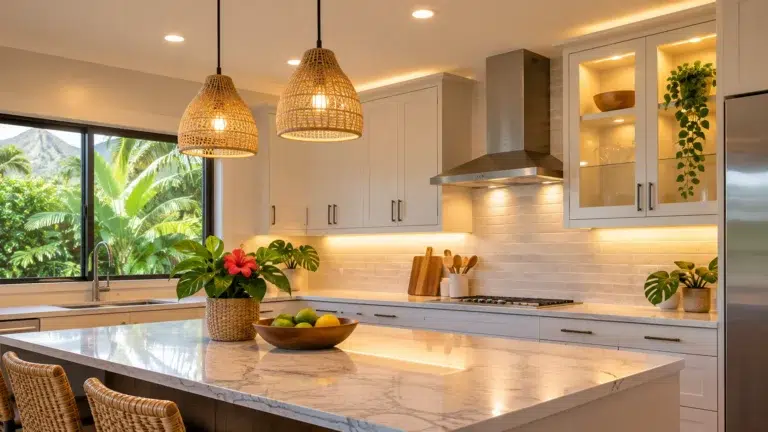
Countertop seams and support are essential considerations when planning a kitchen renovation in Hawaii. From selecting granite or quartz countertops to designing a functional kitchen island, proper seam placement and structural support can significantly influence the appearance, durability, and performance of your kitchen.
Many homeowners focus on countertop colors, patterns, and finishes without fully understanding the installation requirements behind them. However, inadequate support, unsuitable cabinetry, and poorly planned seams can contribute to expensive repairs and premature countertop damage.
Understanding countertop seams and support before fabrication begins helps homeowners make informed decisions, communicate effectively with contractors, and protect their renovation investment.
Whether you are renovating a home in Honolulu, Kapolei, Kailua, or elsewhere on Oʻahu, these 10 essential tips will help you prepare for your countertop installation.
Why Countertop Seams and Support Matter in Hawaii
Countertop seams are joints where two separate countertop sections meet. They are commonly required when kitchen layouts exceed available slab dimensions or when transportation and installation limitations make a single-piece countertop impractical.
Countertop support refers to the cabinetry, brackets, framing, substrates, and other structural components that carry the countertop.
Properly planned countertop seams and support can help:
- Reduce the risk of countertop movement.
- Improve the appearance of finished joints.
- Maintain countertop stability.
- Support kitchen island overhangs.
- Protect vulnerable areas around sinks and appliances.
- Reduce avoidable installation problems.
- Improve long-term kitchen functionality.
Hawaii homeowners should also consider humidity, coastal exposure, material availability, and existing building conditions when planning a kitchen renovation.
1. Plan Countertop Seams and Support Before Fabrication
One of the most important steps in countertop installation is reviewing the proposed layout before materials are cut.
Your contractor and countertop fabricator should coordinate the countertop seams and support requirements with the cabinetry design, appliance locations, and kitchen layout.
Factors that influence seam placement include:
- Available countertop slab dimensions.
- Kitchen island size.
- Countertop material and thickness.
- Sink and cooktop locations.
- Cabinet configuration.
- Installation access.
- Natural stone patterns and veining.
- Manufacturer installation requirements.
For countertops with prominent veining, reviewing the proposed slab layout can help homeowners understand how adjoining sections will appear.
Request a fabrication drawing or layout showing proposed seams before approving production.
Ask your contractor: Where will the countertop seams be located, and how will each section be supported?
2. Choose the Right Countertop Material
Different countertop materials have different installation, maintenance, and structural requirements.
Understanding how countertop seams and support vary between materials can help you select a surface that suits your household.
Granite Countertops
Granite is a natural stone known for its distinctive patterns and durability.
Because every slab has natural variations, seam placement and pattern alignment require careful planning.
Some granite surfaces may also require periodic sealing, depending on the stone and finish.
Quartz Countertops
Engineered quartz offers a wide range of colors and relatively consistent patterns.
Quartz countertop seams can be less visually prominent when the material has a uniform appearance, although completely invisible seams cannot be guaranteed.
Homeowners should follow manufacturer requirements regarding heat exposure, fabrication, and structural support.
Marble Countertops
Marble offers a distinctive appearance but is generally more susceptible to acid etching and staining than many other countertop materials.
Its installation and maintenance requirements should be considered before selection.
Porcelain Countertops
Porcelain countertops offer various contemporary finishes. However, fabrication and installation require specialized techniques that account for the product’s thickness, edge details, and support requirements.
Ask your contractor: Which countertop material best suits my kitchen layout, daily routines, and maintenance expectations?
3. Understand Countertop Overhang Support Requirements
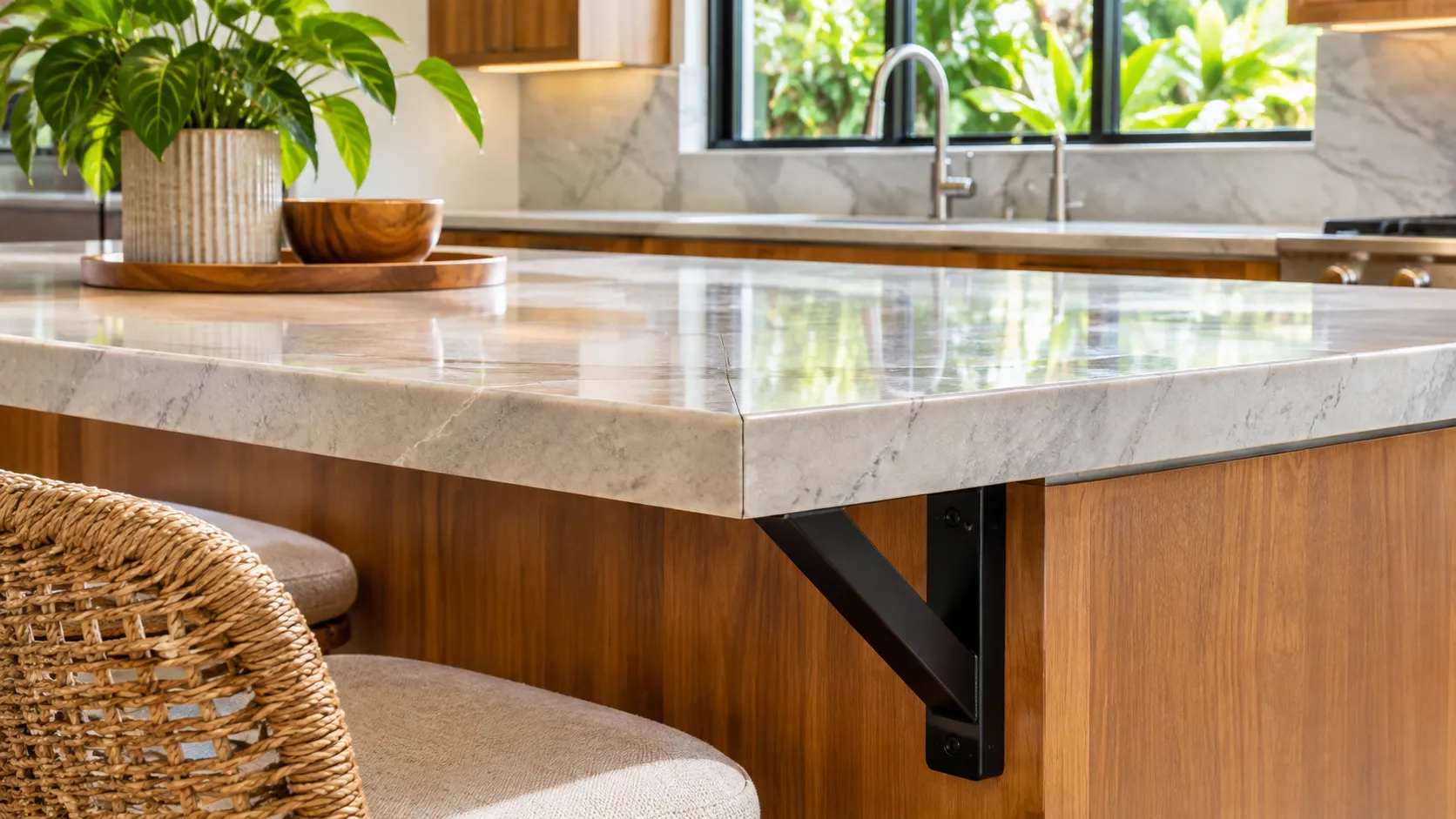
Kitchen islands and breakfast bars frequently feature countertop overhangs to provide additional seating and workspace.
However, unsupported countertop extensions can create structural concerns.
Countertop seams and support should be evaluated together when designing large kitchen islands, particularly when joints are located near overhangs.
Common countertop support systems include:
- Steel support brackets.
- Concealed countertop brackets.
- Decorative corbels.
- Reinforced cabinet framing.
- Structural support panels.
- Engineered support systems.
The appropriate support method depends on countertop thickness, material characteristics, overhang dimensions, and manufacturer requirements.
Homeowners should avoid assuming that all countertop materials can accommodate the same unsupported overhang.
For additional natural stone guidance, consult the Natural Stone Institute.
Ask your contractor: What is the permitted unsupported overhang for my selected countertop material, and what reinforcement is required?
4. Inspect Existing Kitchen Cabinets
Countertops rely on a suitable supporting structure.
Even premium countertop materials may develop problems when installed over unstable, damaged, or uneven cabinets.
Before installation, countertop seams and support requirements should be reviewed alongside the condition of the cabinetry.
A cabinet assessment should consider:
- Cabinet levelness.
- Cabinet alignment.
- Structural stability.
- Existing water damage.
- Loose connections.
- Previous cabinet modifications.
- Support around appliances.
- Compatibility with the countertop system.
Older Hawaii homes may have cabinets affected by plumbing leaks, moisture exposure, or years of regular use.
Replacing countertops without addressing damaged cabinetry can leave underlying problems unresolved.
Ask your contractor: Can my existing cabinets safely support the selected countertop, or do they require reinforcement or replacement?
5. Review Countertop Seam Placement and Appearance
Countertop seams are often necessary, but their appearance can vary considerably depending on the material and fabrication quality.
When reviewing countertop seams and support, homeowners should discuss both structural performance and visual expectations.
Factors affecting seam visibility include:
- Countertop color.
- Surface patterns.
- Natural veining.
- Lighting conditions.
- Joint alignment.
- Adhesive color.
- Fabrication quality.
- Surface finish.
Large-pattern natural stone countertops may have more noticeable transitions between adjoining sections.
Materials with consistent patterns may make seams less prominent, but no contractor should guarantee completely invisible joints for every installation.
Request examples of completed countertop installations using similar materials.
Ask your contractor: What level of seam visibility should I reasonably expect from my selected countertop?
6. Provide Proper Support Around Sinks and Cooktops
Sink and cooktop openings require careful fabrication because they change the shape and continuity of the countertop slab.
These areas should receive particular attention when planning countertop seams and support.
Depending on the material, manufacturers may specify requirements for:
- Cutout dimensions.
- Corner radii.
- Minimum clearances.
- Reinforcement.
- Joint placement.
- Appliance installation.
- Sink mounting systems.
Undermount sinks may require dedicated mounting or support systems, depending on their design and installation instructions.
Homeowners should finalize sink and appliance selections before countertop fabrication begins.
Changing appliance dimensions after fabrication may require additional work or replacement materials.
Ask your contractor: How will the countertop and sink be supported around the cutout openings?
7. Consider Hawaii’s Climate and Environmental Conditions
Hawaii’s tropical climate introduces additional considerations when planning residential kitchen renovations.
Although countertop materials have their own performance characteristics, surrounding cabinetry, hardware, and support components can be affected by environmental exposure.
Humidity and Moisture
Humidity and plumbing leaks can affect certain wood-based cabinet materials and substrates.
Appropriate ventilation, moisture management, and cabinet material selection can help protect the installation.
Coastal Salt Air
Properties near the ocean may experience increased exposure to salt-laden air.
Suitable corrosion-resistant hardware and support components should be considered where environmental exposure warrants them.
Material Transportation
Countertop slabs and specialty hardware may require shipping between islands or from mainland suppliers.
Material availability, delivery schedules, and property access should be incorporated into the renovation timeline.
Planning countertop seams and support around actual site conditions helps homeowners address these considerations before construction begins.
Ask your contractor: Are the proposed countertop support materials appropriate for my property’s environmental conditions?
8. Understand Countertop Installation Costs in Hawaii
Countertop installation costs depend on several factors beyond the price of the selected slab.
Homeowners should request a detailed estimate that includes countertop seams and support requirements rather than evaluating material pricing alone.
Potential cost factors include:
- Countertop material selection.
- Slab dimensions and thickness.
- Number of countertop sections.
- Fabrication complexity.
- Seam placement.
- Sink and cooktop openings.
- Edge profiles.
- Structural reinforcement.
- Existing countertop removal.
- Cabinet repairs.
- Transportation and delivery.
- Plumbing reconnection.
- Installation labor.
Kitchen renovations involving structural modifications, new cabinetry, or utility changes may require additional planning and professional services.
A detailed written scope helps homeowners understand what is included and identify potential additional expenses.
Learn more about Kitchen Remodeling Services in Hawaii from United Construction Group.
Ask your contractor: Does my estimate include all required fabrication, countertop supports, delivery, and installation work?
9. Coordinate Countertop Installation With Other Kitchen Work
A successful kitchen renovation requires coordination between cabinetry installers, countertop fabricators, plumbers, electricians, and other relevant professionals.
Countertop seams and support should be incorporated into the overall renovation plan rather than treated as an isolated installation task.
A typical countertop replacement or renovation sequence may include:
- Existing kitchen assessment.
- Kitchen layout and material selection.
- Appliance and sink selection.
- Cabinet installation or preparation.
- Countertop support preparation.
- Final countertop measurements and templating.
- Countertop fabrication.
- Countertop installation.
- Plumbing and appliance connections.
- Final inspection and project closeout.
The exact sequence depends on the project scope and selected installation system.
Coordinating these activities helps reduce scheduling conflicts and avoid unnecessary modifications after fabrication.
Ask your contractor: Who will coordinate countertop installation with cabinetry, plumbing, and appliance installation?
10. Inspect Countertop Seams and Support Before Project Closeout
A final walkthrough allows homeowners and contractors to review completed work and identify outstanding concerns.
During the inspection, evaluate the visible countertop seams and support components against the agreed installation details.
Your countertop inspection checklist should include:
- Seam appearance and alignment.
- Countertop surface condition.
- Finished edge quality.
- Visible support brackets.
- Cabinet condition.
- Countertop stability.
- Sink mounting and sealing.
- Cooktop installation.
- Backsplash transitions.
- Warranty documentation.
- Cleaning and maintenance instructions.
If you notice unexpected movement, cracking, damage, or incomplete work, document the concern and discuss it with your contractor.
Do not attempt to test countertop strength by applying excessive weight or standing on the surface.
Ask your contractor: What installation checks and warranty documentation will be provided during project closeout?
Common Countertop Seams and Support Mistakes to Avoid
Homeowners can improve their renovation planning by understanding common countertop installation mistakes.
Choosing Appearance Over Installation Requirements
Selecting a countertop solely for its appearance may overlook important fabrication, maintenance, and support requirements.
Ignoring Existing Cabinet Damage
Installing new countertops over damaged or unstable cabinets can leave structural and moisture-related problems unresolved.
Approving Oversized Unsupported Overhangs
Kitchen island extensions should follow the selected material’s installation requirements and appropriate structural design.
Failing to Review Seam Locations
Unexpected seam placement can affect the appearance of prominent countertop surfaces.
Changing Appliances After Fabrication
Late changes to sink or cooktop dimensions can create installation complications.
Accepting Incomplete Construction Estimates
An estimate that excludes essential support work, cabinet preparation, or related trades may not accurately reflect the complete renovation cost.
Discussing countertop seams and support early in the design process can help prevent these avoidable planning mistakes.
Countertop Maintenance Tips for Hawaii Homeowners
Proper maintenance can help preserve the appearance and functionality of kitchen countertops.
Follow these general recommendations alongside the manufacturer’s specific care instructions:
- Clean spills promptly.
- Use cutting boards when preparing food.
- Place hot cookware on heat-resistant trivets.
- Avoid standing or sitting on countertop surfaces.
- Address plumbing leaks promptly.
- Inspect cabinets for signs of moisture damage.
- Use cleaning products approved for your countertop material.
- Arrange professional inspections if cracks or joint movement appear.
Maintaining countertop seams and support components is particularly important when underlying cabinets experience moisture exposure or movement.
If a countertop develops a crack or noticeable separation, consult a qualified professional to identify the cause before attempting cosmetic repairs.
Frequently Asked Questions About Countertop Seams and Support in Hawaii
What are countertop seams and support?
Countertop seams are joints connecting separate countertop sections. Countertop support consists of cabinets, brackets, framing, and other components that carry the countertop and maintain its stability.
Are countertop seams necessary?
Not always. Some kitchen countertops can be fabricated from a single slab. Other layouts require seams because of material dimensions, kitchen geometry, transportation, or installation limitations.
Can quartz countertop seams be invisible?
Quartz countertop seams may be less noticeable when properly aligned and joined using suitable materials. However, completely invisible seams cannot be guaranteed.
How much countertop overhang can be unsupported?
The permitted unsupported overhang depends on the countertop material, thickness, configuration, and manufacturer’s installation requirements. A qualified fabricator should confirm the appropriate support design.
Do granite countertops need additional support?
Some granite countertops require additional reinforcement, particularly around large overhangs, openings, and unsupported spans. Requirements vary according to the installation design.
Can existing cabinets support new countertops?
Existing cabinets may support new countertops if they are stable, level, properly anchored, and compatible with the selected material. Damaged or unsuitable cabinets may require repairs or reinforcement.
Why do countertop seams crack or separate?
Possible causes include movement, inadequate support, impact, fabrication problems, or other installation-related stresses. A professional assessment can help determine the underlying cause.
Does Hawaii’s humidity affect countertop installation?
Humidity and moisture exposure may affect certain cabinet materials, substrates, and surrounding construction components. Appropriate material selection and moisture management are important.
Do I need a permit to replace kitchen countertops in Hawaii?
Permit requirements depend on the project scope and applicable jurisdiction. A countertop replacement involving structural, plumbing, or electrical alterations may have different requirements from a straightforward surface replacement.
Oʻahu homeowners can consult the Honolulu Department of Planning and Permitting for applicable permitting information.
What should I discuss with my contractor before countertop installation?
Discuss material selection, countertop seams and support, cabinet condition, overhang dimensions, sink openings, fabrication drawings, project costs, installation schedules, and warranty coverage.
Plan Your Kitchen Renovation With United Construction Group
A successful kitchen renovation starts with careful planning, appropriate materials, and a clear understanding of installation requirements.
Understanding countertop seams and support can help Hawaii homeowners make better decisions about their kitchen layouts, countertop materials, cabinetry, and renovation budgets.
At United Construction Group (UCG), we understand the importance of coordinating construction details with the overall goals of a renovation project.
Whether you are planning a kitchen island, replacing outdated countertops, upgrading cabinetry, or considering a complete kitchen renovation, our team can help you explore the appropriate next steps for your property.
Explore our Kitchen Remodeling Services or visit United Construction Group to discuss your upcoming Hawaii construction project.
Build a kitchen that looks beautiful, functions effectively, and is planned around your everyday needs.