A kitchen remodel while living at home can be one of the most rewarding home improvements you make, but it requires careful planning. Between construction dust, noise, temporary cooking arrangements, and interruptions to your daily routine, homeowners in Hawaii need a practical strategy before renovation begins.
Fortunately, a kitchen remodel while living at home is possible for many households with proper preparation, professional coordination, and realistic expectations.
Whether you’re updating an older kitchen in Honolulu, improving your family home on Oahu, or planning a renovation elsewhere in Hawaii, knowing what to expect can make the experience more manageable.
At United Construction Group, we understand that your kitchen is more than a place to prepare meals. It’s an important part of your household’s daily routine.
This guide explains 10 essential tips for planning a kitchen renovation while remaining at home, including budgeting, temporary kitchens, construction schedules, permits, and safety considerations.
1. Plan Your Kitchen Remodel While Living at Home Before Construction Begins
The first step in a successful kitchen remodel while living at home is defining your renovation goals.
Before selecting countertops or cabinet finishes, consider how your existing kitchen functions.
Ask yourself:
- Do you need additional storage?
- Is your current kitchen layout inefficient?
- Are your appliances outdated?
- Would improved lighting make the space more functional?
- Do you need additional countertop space?
- Are there existing plumbing or electrical concerns?
Identify the improvements that are essential and separate them from optional upgrades.
Evaluate Your Existing Kitchen Conditions
Before construction begins, have your contractor assess the existing space.
Important considerations include plumbing connections, electrical capacity, ventilation, wall conditions, flooring, and appliance dimensions.
For older Hawaii homes, concealed conditions may affect the project once demolition begins.
UCG Tip: Finalize your kitchen layout and major appliance specifications before ordering cabinetry to reduce the likelihood of costly modifications.
2. Set Up a Temporary Kitchen During Your Remodel
A temporary kitchen is one of the most important preparations for a kitchen remodel while living at home.
Depending on the renovation scope, your existing kitchen may be unavailable for an extended period.
Designate a clean, safe area away from construction where your household can prepare simple meals.
Temporary Kitchen Essentials
Consider including:
- Microwave
- Refrigerator or mini-fridge
- Coffee maker
- Suitable portable cooking appliances
- Food preparation table
- Reusable plates and utensils
- Sealed food storage containers
- Access to clean drinking water
Follow appliance safety instructions and avoid overloading electrical outlets.
Plan Meals in Advance
Preparing meals before demolition begins can help reduce daily stress.
Batch cooking, freezing prepared meals, and planning simple dishes can make your temporary kitchen more manageable.
If your household includes children or family members with specific dietary requirements, plan accordingly.
UCG Tip: Position your temporary kitchen away from dust-producing construction activities and maintain a safe route to essential household facilities.
3. Create a Realistic Kitchen Remodeling Budget in Hawaii
Budget planning is essential for any kitchen remodel while living at home, especially when homeowners need to account for both construction costs and temporary living arrangements.
Kitchen renovation costs vary based on the property’s condition, project scope, materials, labor, and required improvements.
Instead of relying on generic national estimates, request a detailed proposal based on your specific property.
What Should Your Kitchen Remodeling Budget Include?
A comprehensive budget may include:
- Design and planning
- Demolition
- Cabinets and hardware
- Countertops and backsplash
- Flooring
- Plumbing
- Electrical work
- Lighting and ventilation
- Appliances
- Permits and inspections
- Construction cleanup
- Temporary kitchen arrangements
- Contingency funds
Why You Need a Contingency Budget
Unexpected conditions can arise during renovation.
For example, removing existing cabinets may reveal plumbing leaks, damaged wall materials, or electrical work that requires attention.
A contingency reserve helps homeowners respond to these discoveries.
The appropriate reserve depends on the project’s complexity, existing building conditions, and uncertainty identified during assessment.
UCG Tip: Request a written estimate showing inclusions, exclusions, allowances, and procedures for approving additional work.
4. Understand the Kitchen Remodeling Timeline
Understanding the construction schedule is critical when planning a kitchen remodel while living at home.
A clearly defined timeline helps homeowners prepare for periods when the kitchen, appliances, or utilities may be unavailable.
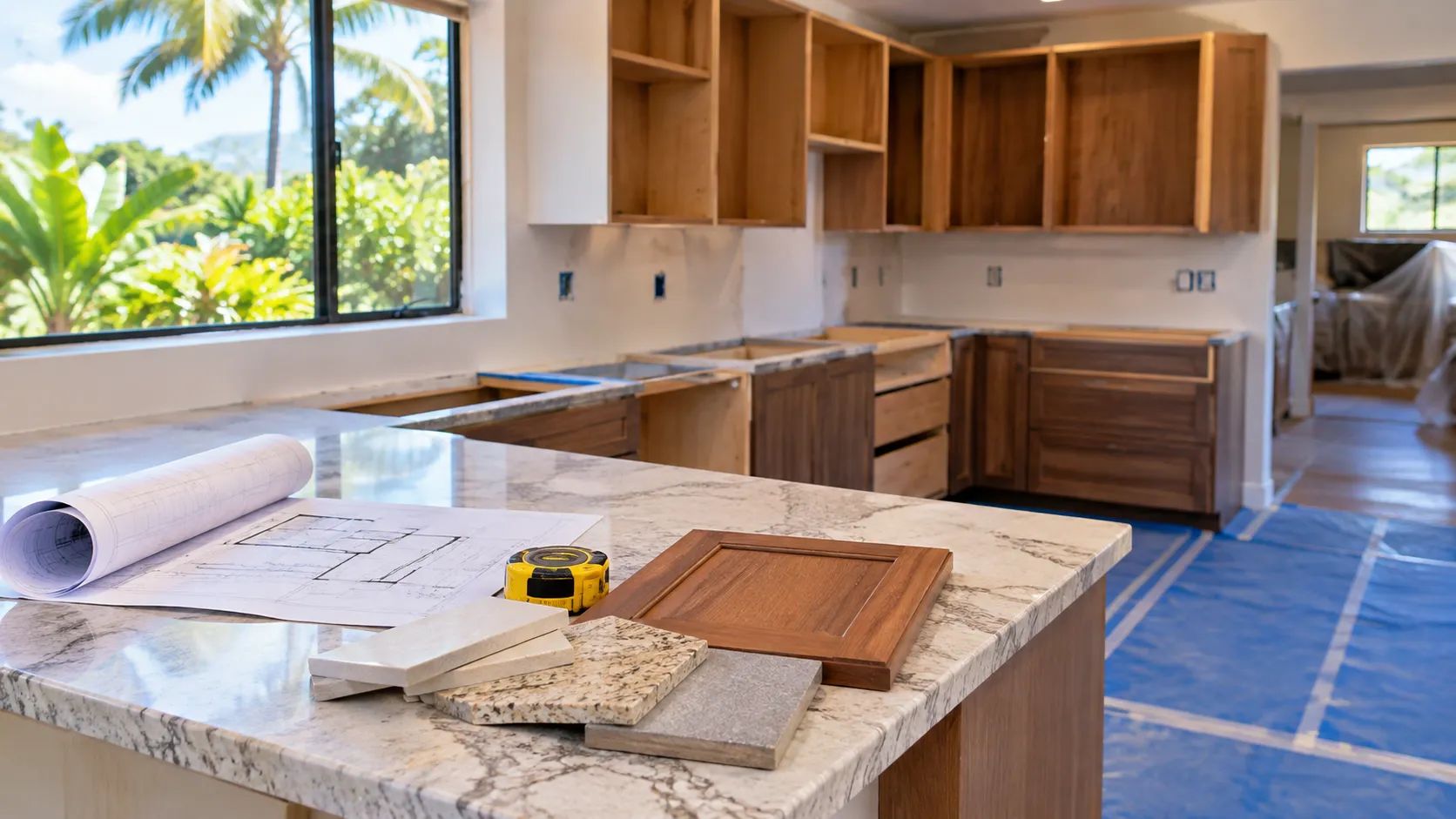
Typical Kitchen Remodeling Process
Planning and design: Confirm measurements, layout, materials, appliances, and scope.
Preconstruction: Coordinate permits, material orders, contractor schedules, and site preparation.
Demolition: Remove existing cabinets, countertops, fixtures, and other components included in the scope.
Rough-in work: Complete applicable plumbing, electrical, and ventilation modifications.
Inspections: Arrange required inspections before concealing regulated work.
Installation: Install cabinetry, countertops, flooring, fixtures, and appliances.
Final walkthrough: Review completed work, test systems, and document outstanding items.
Hawaii Construction Scheduling Considerations
Hawaii’s island geography can affect material delivery and availability.
Custom cabinets, specialty appliances, and imported finishes may require additional shipping time.
Confirm critical material lead times before establishing the construction start date.
For a kitchen remodel while living at home, ask your contractor which stages are expected to create the greatest disruption.
UCG Tip: Avoid starting demolition before critical materials and delivery schedules have been confirmed.
5. Protect Your Home From Construction Dust and Noise
Dust management is especially important during a kitchen remodel while living at home.
Demolition, cutting, sanding, and drilling can create dust that spreads into nearby living areas if appropriate precautions are not taken.
How to Reduce Construction Dust
Discuss the following measures with your contractor:
- Physical barriers between construction and occupied areas
- Protection for adjacent floors and furniture
- Appropriate dust extraction and ventilation
- Designated material storage areas
- Safe pathways through the property
- Regular construction cleanup
- Restricted access for children and pets
Older properties may require assessment for hazardous materials before disturbing existing building components.
Appropriate containment and remediation procedures depend on the materials involved and applicable requirements.
Managing Construction Noise
Ask your contractor about expected working hours and particularly noisy activities.
If you work from home, consider arranging important calls or meetings outside scheduled demolition periods.
UCG Tip: Establish clear expectations for work-zone separation, daily cleanup, and household access before construction begins.
6. Prepare for Plumbing and Electrical Interruptions
A kitchen remodel while living at home may involve temporary interruptions to water or electricity.
If your renovation includes moving the sink, installing new appliances, upgrading wiring, or changing the kitchen layout, utility coordination is essential.
Questions to Ask Before Construction
- Will the water supply be interrupted?
- When will the kitchen sink become unavailable?
- Will other rooms lose electricity?
- Which appliances can remain operational?
- How much advance notice will homeowners receive?
- Are temporary utility arrangements necessary?
Understanding these details helps homeowners prepare their schedules.
Why Professional Trade Coordination Matters
Kitchen renovations frequently involve multiple trades.
Plumbing, electrical, cabinetry, and countertop work must be coordinated to prevent installation conflicts.
Certain activities require appropriately licensed professionals and may require permits or inspections.
UCG Tip: Ask for advance notice of planned utility shutdowns so your household can make necessary arrangements.
7. Choose Kitchen Remodeling Materials Suitable for Hawaii
Material selection plays an important role in a successful kitchen remodel while living at home.
Hawaii’s humidity, rainfall, and coastal exposure can influence how certain materials perform over time.
However, environmental conditions vary by property location and building design.
Kitchen Cabinets
Consider cabinetry materials and finishes appropriate for the kitchen’s moisture exposure.
Proper installation and ventilation are important for maintaining cabinet performance.
Kitchen Countertops
Popular options include quartz, granite, and other manufactured or natural stone products.
Each material has different maintenance, heat-resistance, and durability characteristics.
Review manufacturer specifications before making a selection.
Kitchen Flooring
Tile and suitable resilient flooring products are options to evaluate for kitchens.
Consider moisture exposure, slip resistance, maintenance, and subfloor conditions.
Cabinet Hardware and Fixtures
Properties exposed to coastal conditions may benefit from hardware selected for appropriate corrosion resistance.
Product suitability should be based on actual exposure and manufacturer recommendations.
Explore United Construction Group’s kitchen remodeling services to learn more about kitchen layout improvements, cabinetry, countertops, flooring, and related renovation work.
8. Maintain Clear Communication With Your Contractor
Communication is essential during a kitchen remodel while living at home because construction directly affects your daily routine.
Before work begins, establish expectations for scheduling, access, deliveries, and project updates.
Important Topics to Discuss
Working hours: Confirm the expected construction schedule.
Household access: Identify areas that will remain available.
Material deliveries: Determine where supplies can be unloaded and stored.
Construction noise: Discuss activities that may require temporary adjustments to your routine.
Change orders: Establish how changes will be documented and approved.
Cleanup: Agree on appropriate daily housekeeping procedures.
Project updates: Identify the primary contact for questions.
Special Considerations for Hawaii Condominiums
Condominium renovations may involve additional building management requirements.
These can include contractor registration, elevator reservations, approved working hours, and restrictions on material deliveries.
Check applicable building rules before scheduling work.
UCG Tip: Request written confirmation of major project decisions to minimize misunderstandings.
9. Verify Kitchen Remodeling Permits in Hawaii
Before starting a kitchen remodel while living at home, determine whether the proposed work requires permits.
Permit requirements depend on the county and the specific construction activities involved.
Some cosmetic kitchen improvements may qualify for exemptions, while structural modifications and certain plumbing, electrical, or mechanical work may require permits.
Kitchen Remodeling Work That May Require Review
Examples include:
- Relocating plumbing fixtures
- Installing new electrical circuits
- Altering structural walls
- Modifying ventilation systems
- Changing major building systems
- Performing work subject to inspection requirements
For Oahu properties, consult the Honolulu Department of Planning and Permitting for information about applicable requirements.
For properties elsewhere in Hawaii, contact the relevant county permitting authority.
Why Permit Planning Matters
Identifying permit requirements early can help prevent scheduling problems.
Permits and inspections should be incorporated into the project schedule where applicable.
Important: Permit exemptions do not eliminate applicable building-code or trade-licensing obligations.
10. Complete a Final Kitchen Remodeling Walkthrough
The final stage of a kitchen remodel while living at home is reviewing the completed work.
Before closing out the project, arrange a walkthrough with your contractor.
Kitchen Remodeling Completion Checklist
Confirm that:
- Cabinet doors and drawers operate correctly.
- Countertops and backsplashes are installed as specified.
- Plumbing fixtures have been tested for leaks.
- Appliances are installed and operating properly.
- Lighting functions as intended.
- Ventilation systems have been checked.
- Flooring and finishing details are complete.
- Required inspections have been completed.
- Construction debris has been removed.
- Warranty and maintenance documents are available.
Document incomplete work or items requiring correction in a written punch list.
Keep Your Remodeling Documents
Maintain copies of:
- Approved plans
- Signed contracts
- Change orders
- Product selections
- Permits
- Inspection records
- Warranties
- Final payment documentation
These records may be useful for future maintenance or additional renovation work.
Should You Stay Home During a Kitchen Remodel?
Although a kitchen remodel while living at home is possible for many households, it is not appropriate for every project.
Your decision should depend on construction conditions, safety, access to essential facilities, and household requirements.
When Staying Home May Be Practical
Remaining at home may be reasonable when:
- Construction areas can be safely separated from living spaces.
- Essential utilities remain available or interruptions are manageable.
- A temporary kitchen can be established.
- Household members can accommodate construction noise.
- The planned work allows safe continued occupancy.
When Temporary Accommodation May Be Better
Consider alternative accommodation when:
- Extensive demolition affects multiple rooms.
- Essential utilities will be unavailable for prolonged periods.
- Hazardous-material remediation is required.
- Construction cannot be adequately separated from occupied areas.
- Household health or accessibility needs make staying impractical.
Discuss occupancy considerations with your contractor before finalizing your renovation plan.
Common Kitchen Remodeling Mistakes to Avoid
Even a well-planned kitchen remodel while living at home can become unnecessarily disruptive when homeowners overlook important decisions.
Common mistakes include:
- Starting demolition before critical materials arrive.
- Ordering cabinets without confirming appliance dimensions.
- Failing to establish a temporary kitchen.
- Underestimating construction dust and noise.
- Approving changes without written documentation.
- Overlooking permit requirements.
- Failing to budget for unexpected conditions.
- Not coordinating utility interruptions.
- Choosing finishes without considering maintenance.
- Skipping the final walkthrough.
Avoiding these issues can help create a more organized remodeling experience.
Frequently Asked Questions About Kitchen Remodeling in Hawaii
Can I complete a kitchen remodel while living at home?
Yes. A kitchen remodel while living at home is possible when construction areas can be safely separated, essential facilities remain accessible, and the household can manage temporary disruptions. Some projects may require alternative accommodation.
How long does a kitchen remodel take in Hawaii?
Kitchen remodeling timelines vary based on project scope, permits, materials, contractor availability, and existing building conditions. Request a project-specific schedule that identifies major construction stages and possible delays.
How do you cook during a kitchen renovation?
Create a temporary kitchen with a microwave, refrigerator, safe food preparation surface, and access to clean water. Prepare meals in advance and keep cooking activities away from construction areas.
Do I need a permit for kitchen remodeling in Hawaii?
Possibly. Permit requirements depend on your county and the proposed work. Some cosmetic improvements may qualify for exemptions, while structural changes and certain electrical or plumbing modifications may require permits.
How can I reduce construction dust during a kitchen remodel?
Discuss containment barriers, dust extraction, ventilation, work-zone separation, and regular cleaning with your contractor. Specialized work may require additional protective measures.
What is the best way to budget for a kitchen remodel?
Start with a clearly defined scope and written estimate. Include materials, labor, permits where applicable, temporary arrangements, and a contingency reserve appropriate to the project.
Should I buy kitchen appliances before remodeling?
Confirm appliance models and dimensions before finalizing cabinetry and utility layouts. Coordinate delivery timing with your contractor to avoid unnecessary storage and installation problems.
Can I remodel my kitchen in stages while living at home?
Sometimes. Phased construction may help maintain limited functionality, but it can also extend the overall schedule or create repeated disruptions. Ask your contractor to evaluate whether staging is practical.
What should I ask a kitchen remodeling contractor?
Ask about licensing, relevant experience, written scope, permits, scheduling, material availability, construction safety, change orders, communication procedures, and warranties.
Does United Construction Group offer kitchen remodeling services?
Yes. United Construction Group offers kitchen remodeling services in Hawaii, including kitchen layout improvements, cabinetry, countertops, flooring, lighting, plumbing, and related construction work.
Plan Your Kitchen Remodel With United Construction Group
A kitchen remodel while living at home requires thoughtful preparation, realistic expectations, and a construction plan that considers both your finished kitchen and your household’s daily needs.
From selecting materials to coordinating construction schedules, each decision contributes to a more organized renovation experience.
At United Construction Group, we help homeowners explore kitchen remodeling solutions based on their property, goals, and project requirements.
Whether you’re considering new cabinets, improved storage, updated countertops, or a complete kitchen renovation, understanding your options is the first step.
Ready to plan your kitchen remodel in Hawaii?
Explore our Kitchen Remodeling Services or contact United Construction Group to discuss your project and determine the next steps.
United Construction Group — Building With Purpose.