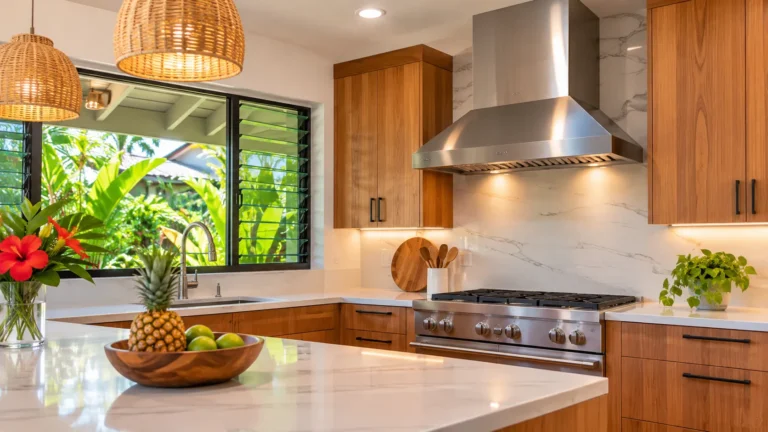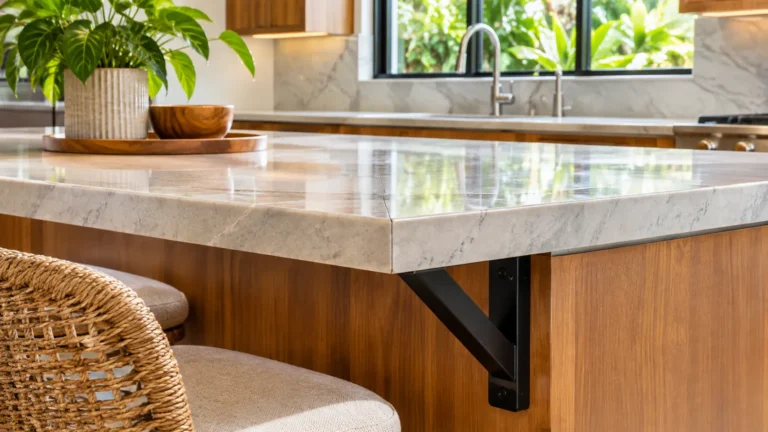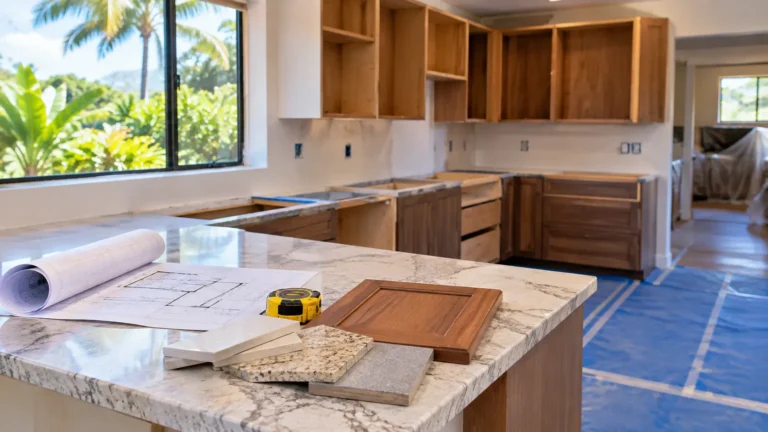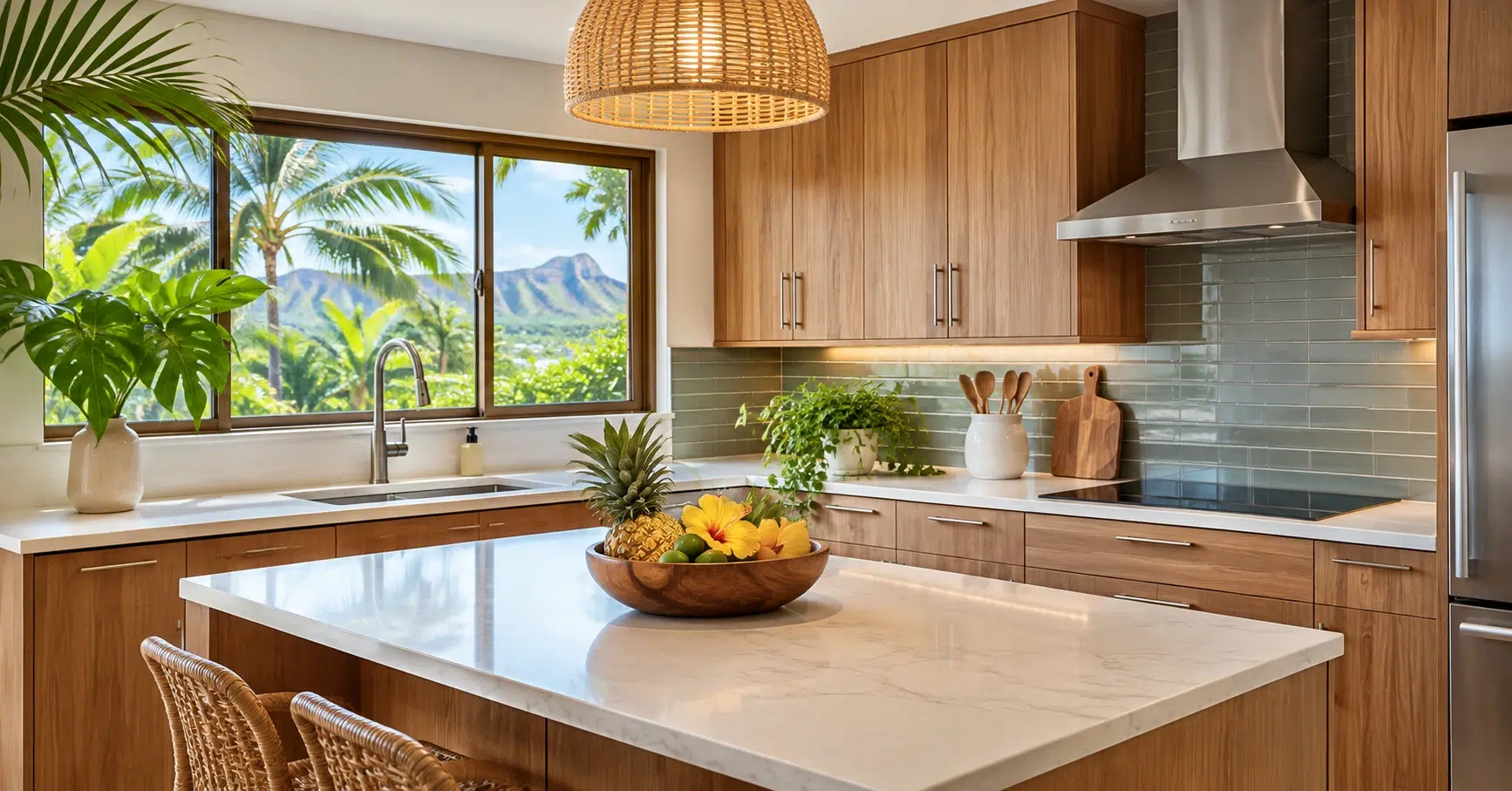
Choosing the right kitchen cabinets for humid climates in Hawaii is one of the most important decisions when planning a kitchen renovation. Hawaiʻi’s tropical weather, moisture, coastal salt exposure, and changing indoor humidity can affect cabinet materials, finishes, hardware, and long-term durability.
Whether you own a home in Honolulu, Kailua, Kapolei, or another part of Oʻahu, selecting the right kitchen cabinets can help protect your investment and reduce unnecessary maintenance.
Not all kitchen cabinets respond to humidity the same way. Some materials are more dimensionally stable, while others require additional protection against water exposure.
At United Construction Group, we encourage homeowners to consider cabinet construction, ventilation, installation conditions, and everyday functionality before making final selections.
In this guide, we’ll explore seven essential tips for choosing kitchen cabinets for humid climates in Hawaii, including suitable materials, moisture-resistant finishes, hardware, and installation considerations.
1. Choose the Best Kitchen Cabinets for Humid Climates in Hawaii
Cabinet material is one of the biggest factors affecting performance in a humid environment.
High humidity can cause certain wood-based materials to expand or contract. Direct water exposure can also cause swelling, deterioration, or delamination, particularly when cabinet edges and joints are unprotected.
Plywood kitchen cabinets
Cabinet-grade plywood is often a practical option for kitchen cabinet boxes.
Its cross-laminated construction provides dimensional stability and structural strength.
Benefits of quality plywood cabinetry include:
-
Good structural strength for cabinet boxes.
-
Dimensional stability under ordinary indoor conditions.
-
Compatibility with various protective finishes.
-
Options for custom cabinet construction.
-
Suitability for properly designed kitchen installations.
However, plywood is not waterproof. Its performance depends on the grade, adhesives, protective finishes, and installation details.
Solid wood kitchen cabinets
Solid wood offers a natural appearance and can be used for cabinet doors, frames, and decorative features.
However, wood responds to changes in humidity by absorbing and releasing moisture.
This natural movement may cause expansion, contraction, or changes in door alignment.
Proper joinery, finishing, and indoor moisture management help reduce these risks.
Moisture-resistant MDF cabinets
Moisture-resistant medium-density fiberboard can be suitable for certain painted cabinet components.
Its smooth surface makes it popular for modern cabinet doors.
However, moisture-resistant MDF is not waterproof. Prolonged exposure to water can still cause swelling or deterioration.
UCG Tip: When comparing kitchen cabinets for humid climates in Hawaii, ask suppliers for detailed material specifications rather than relying on general descriptions such as “premium quality” or “water-resistant.”
2. Select Moisture-Resistant Kitchen Cabinet Finishes
Even quality cabinet materials need suitable surface protection.
In Hawaiʻi kitchens, cabinets may encounter moisture from cooking steam, dishwashing, cleaning, and everyday household activities.
A protective finish helps reduce moisture absorption and makes cabinet surfaces easier to maintain.
Popular kitchen cabinet finishes
Factory-applied coatings
Factory-applied cabinet finishes can provide consistent coverage under controlled manufacturing conditions.
Their durability depends on the coating system, substrate, preparation, and application process.
High-pressure laminate
High-pressure laminate provides a decorative, cleanable surface that can perform well in kitchen applications.
However, exposed edges, seams, and the underlying substrate still require appropriate protection.
Painted cabinet finishes
Painted cabinetry offers flexibility in color and design.
Proper surface preparation, compatible coatings, and sufficient curing are important for long-term performance.
Natural wood finishes
Clear finishes preserve the appearance of wood while providing a protective surface.
Homeowners should follow manufacturer recommendations for cleaning and maintenance.
What should homeowners look for?
When selecting finishes for kitchen cabinets for humid climates in Hawaii, consider moisture resistance, cleaning requirements, coating adhesion, edge protection, and manufacturer warranties.
No finish can fully protect cabinetry from an unresolved plumbing leak or prolonged water exposure.
3. Protect Kitchen Cabinets From Water Damage
Water intrusion is one of the most important risks to address during kitchen remodeling.
Cabinets installed near sinks, dishwashers, refrigerators with water connections, and other plumbing fixtures may be more vulnerable to leaks.
Even small amounts of water can cause damage when moisture remains trapped against cabinet materials.
Areas that need extra protection
Pay attention to:
-
Sink cabinet floors and side panels.
-
Plumbing penetrations.
-
Dishwasher-adjacent cabinets.
-
Countertop seams and cutouts.
-
Cabinet toe-kick areas.
-
Unfinished or field-cut cabinet edges.
How to reduce cabinet moisture damage
Make sure exposed cabinet edges are protected according to the product manufacturer’s instructions.
Plumbing connections should be accessible for inspection and maintenance.
Where appropriate, cabinet liners or leak-containment trays may provide additional protection against small leaks.
Homeowners should also repair leaks promptly rather than allowing moisture to remain inside cabinetry.
UCG Tip: Before installing new kitchen cabinets, inspect the existing sink area, plumbing, and surrounding materials for signs of previous water damage.
4. Improve Kitchen Ventilation and Humidity Control
Choosing kitchen cabinets for humid climates in Hawaii involves more than selecting moisture-resistant materials.
Indoor humidity and ventilation also influence how cabinetry performs.
Cooking, boiling water, washing dishes, and other household activities release moisture into the air.
When moisture is not adequately managed, humidity may remain elevated around cabinet surfaces and other building materials.
How much indoor humidity is recommended?
The U.S. Environmental Protection Agency recommends keeping indoor relative humidity below 60%, ideally between 30% and 50% where practical, to help reduce moisture and mold-related problems.
However, indoor conditions vary, and maintaining these levels can require different strategies depending on the home.
Kitchen ventilation improvements
Consider the following:
-
Install a properly designed kitchen exhaust system.
-
Vent cooking moisture outdoors where appropriate.
-
Repair plumbing leaks promptly.
-
Maintain air-conditioning and ventilation equipment.
-
Use a hygrometer to monitor indoor humidity.
-
Consider dehumidification when moisture remains elevated.
Opening windows may help ventilation in some circumstances, but outdoor air in Hawaiʻi can also be humid.
Ventilation strategies should account for the home’s actual conditions.
For additional information, visit the EPA’s mold and moisture resources.
5. Choose Corrosion-Resistant Cabinet Hardware
Cabinet hinges, drawer slides, handles, and fasteners are important parts of kitchen cabinet construction.
For homes near the ocean, airborne salts can accelerate corrosion on susceptible metal components.
This makes hardware selection an important consideration when planning kitchen cabinets for humid climates in Hawaii.
Recommended considerations for kitchen cabinet hardware
Stainless steel components
Appropriately specified stainless steel can offer corrosion resistance, although performance depends on the grade and exposure conditions.
Corrosion-resistant coatings
Some cabinet hardware includes protective coatings designed to reduce corrosion.
The effectiveness of these coatings varies by manufacturer and product.
Quality hinges and drawer slides
Hardware should be rated for the cabinet doors and drawers it supports.
High-quality installation and proper alignment can also help maintain smooth operation.
What to ask your cabinet supplier
Ask whether the hardware is appropriate for humid or coastal environments, what corrosion testing has been performed, and what warranty coverage applies.
No cabinet hardware should be assumed to be completely corrosion-proof.
6. Plan a Functional Kitchen Cabinet Layout
Kitchen cabinet durability is important, but functionality matters just as much.
A well-designed kitchen should support everyday cooking, food preparation, cleaning, and storage.
Before ordering cabinets, homeowners should confirm appliance dimensions, plumbing locations, electrical requirements, and available space.
Important kitchen layout considerations
Storage accessibility
Frequently used kitchen items should be stored in locations that are practical and easy to reach.
Appliance clearances
Cabinet doors and drawers should not interfere with refrigerators, dishwashers, ovens, or other appliances.
Countertop preparation space
Adequate countertop space helps support everyday kitchen activities.
Ventilation requirements
Cabinet placement should account for appliance ventilation and manufacturer-required clearances.
Plumbing and electrical access
Cabinet layouts should allow appropriate access to relevant systems.
Custom vs. stock kitchen cabinets
Custom cabinetry can be useful when a kitchen has unusual dimensions or specific storage requirements.
Stock and semi-custom cabinets may offer practical alternatives when standard sizes fit the available space.
The best choice depends on the kitchen layout, desired features, product quality, and project budget.
Homeowners planning kitchen cabinets for humid climates in Hawaii should coordinate their cabinet selections with the overall renovation plan.
Explore United Construction Group’s kitchen remodeling services to learn more about kitchen renovation planning.
7. Hire a Qualified Hawaii Kitchen Remodeling Contractor
Choosing kitchen cabinets is only one stage of a successful kitchen renovation.
Proper installation, coordination, and site preparation are equally important.
Before cabinetry is ordered, the project team should verify measurements, appliance specifications, countertop requirements, plumbing connections, and electrical conditions.
Why professional installation matters
Qualified contractors can help identify issues that may affect the installation process.
These may include uneven walls, existing moisture damage, concealed plumbing problems, or incompatible appliance dimensions.
A coordinated renovation plan also helps reduce delays caused by late product changes.
Questions to ask your kitchen remodeling contractor
Before beginning your project, ask:
-
Which cabinet materials are appropriate for my property’s humidity conditions?
-
How will exposed cabinet edges be protected?
-
What finishes are suitable for the selected cabinet materials?
-
How will the cabinets be coordinated with plumbing and electrical work?
-
What cabinet and installation warranties apply?
-
What happens if concealed damage is discovered?
-
Are permits or inspections required for the proposed work?
Permit requirements vary by county and project scope.
Replacing cabinets without altering building systems may have different requirements from a kitchen remodel involving electrical, plumbing, ventilation, or structural changes.
Check the applicable county requirements and confirm that contractors hold the licenses appropriate for their work.
The Hawaiʻi Professional and Vocational Licensing Division provides information about professional licensing and license verification.
Kitchen Cabinet Materials Comparison for Hawaii Homes
When comparing kitchen cabinets for humid climates in Hawaii, consider how different materials respond to moisture and everyday use.
|
Cabinet material |
Advantages |
Considerations |
|---|---|---|
|
Cabinet-grade plywood |
Strength and dimensional stability |
Requires appropriate edge and surface protection |
|
Solid wood |
Natural appearance and repairability |
Expands and contracts with humidity |
|
Moisture-resistant MDF |
Smooth finish for painted cabinetry |
Not waterproof; vulnerable to prolonged wetting |
|
Standard particleboard |
Often lower initial cost |
Can swell when exposed to water |
|
Metal cabinetry |
Some products avoid wood-substrate swelling |
Corrosion resistance varies by material and finish |
The best kitchen cabinet material depends on the property, expected exposure, installation conditions, product specifications, and budget.
Common Mistakes When Choosing Kitchen Cabinets in Hawaii
Homeowners sometimes focus on cabinet appearance without considering the conditions that affect long-term performance.
Here are common mistakes worth avoiding.
Choosing cabinets based only on price
A lower initial price does not necessarily indicate better overall value.
Compare cabinet construction, material grades, hardware, finishes, and warranties before making a decision.
Ignoring moisture around sinks
Sink cabinet areas are particularly vulnerable to leaks and water exposure.
Inspect plumbing and surrounding materials before installing replacement cabinets.
Overlooking cabinet edge protection
Exposed substrate edges may allow water to enter the cabinet material.
Ask how the supplier and installer protect these areas.
Ordering cabinets before final measurements
Incorrect measurements can create installation conflicts and additional costs.
Confirm the kitchen layout and appliance selections before placing orders.
Neglecting ventilation
Even suitable cabinet materials can experience problems when moisture remains uncontrolled.
Ventilation and leak prevention should be part of the renovation plan.
Avoiding these mistakes can help homeowners make better decisions when selecting kitchen cabinets for humid climates in Hawaii.
Frequently Asked Questions About Kitchen Cabinets for Humid Climates in Hawaii
What are the best kitchen cabinets for humid climates in Hawaii?
Quality cabinet-grade plywood with an appropriate protective finish is often a practical choice for cabinet boxes. However, other cabinet materials can also perform well depending on product specifications, installation quality, and moisture exposure.
Are plywood cabinets good for Hawaii kitchens?
Plywood cabinets can be a suitable option because of their structural strength and dimensional stability. However, plywood is not waterproof and still requires proper protection against leaks and prolonged wetting.
Is MDF suitable for kitchen cabinets in Hawaii?
Moisture-resistant MDF may be suitable for certain cabinet doors and other components. Its performance depends on the product grade, finish, and exposure conditions. Standard MDF can swell when exposed to water.
How do I protect kitchen cabinets from humidity?
Use suitable cabinet materials and finishes, protect exposed edges, maintain ventilation, monitor indoor humidity, and repair leaks promptly.
Are waterproof kitchen cabinets available?
Some cabinet systems use highly water-resistant materials. However, homeowners should review specific manufacturer claims because cabinet hardware, joints, finishes, and installation details may have different moisture limitations.
What cabinet hardware is best for coastal Hawaii homes?
Hardware with documented corrosion resistance is worth considering. Appropriately specified stainless steel and other corrosion-resistant products may be suitable depending on exposure conditions.
How long do kitchen cabinets last in Hawaii?
Cabinet lifespan varies based on material quality, installation, moisture exposure, usage, maintenance, and product construction. There is no universal lifespan that applies to every Hawaiʻi home.
Do I need a permit to replace kitchen cabinets in Hawaii?
Permit requirements depend on the county and project scope. Work involving electrical, plumbing, mechanical, or structural changes may have different requirements from straightforward cabinet replacement.
Should I replace cabinets damaged by moisture?
The appropriate response depends on the extent and cause of the damage. Some minor issues may be repairable, while significantly swollen, deteriorated, or mold-affected materials may require replacement. Address the moisture source before installing new cabinetry.
Can United Construction Group help with kitchen remodeling in Hawaii?
United Construction Group offers kitchen remodeling services. Homeowners can contact the company to discuss project requirements, site conditions, and appropriate next steps.
Transform Your Kitchen With United Construction Group
Choosing the right kitchen cabinets for humid climates in Hawaii can help create a kitchen that is functional, attractive, and better suited to local environmental conditions.
From selecting suitable cabinet materials to coordinating finishes, ventilation, and installation, thoughtful planning can help reduce avoidable problems.
At United Construction Group, we understand that every kitchen renovation has different requirements.
Whether you’re updating your existing cabinetry, improving kitchen functionality, or planning a larger renovation, our team can discuss your goals and help identify the next steps.
Ready to plan your kitchen renovation?
Explore our Kitchen Remodeling Services or contact United Construction Group to start a conversation about your project.