Construction bids in Hawaii can look similar at first glance while covering very different amounts of work. One contractor may include demolition, debris removal, material delivery, and final cleanup. Another may leave some of those responsibilities to the property owner.
That is why comparing only the total price can lead to an incomplete picture of your project.
For homeowners and commercial property owners, the better approach is to compare what each contractor has included, how the work will be completed, and which costs remain uncertain. A clear proposal makes those differences easier to understand before you commit.
At United Construction Group, we encourage property owners to review the complete proposal and ask questions about anything that is unclear.
This guide explains seven practical ways to evaluate construction bids in Hawaii, with examples, questions to ask, and a checklist you can use during your review.
Before Comparing Construction Bids in Hawaii
Give every contractor the same project information. Without a shared starting point, you may receive prices for different versions of the work.
Prepare a short project brief that includes your goals, available plans, preferred materials, approximate budget, and desired completion date. Share photographs and arrange access so contractors can review the existing conditions.
If you change the project requirements after one contractor has submitted a proposal, give the other bidders the same update. Otherwise, your comparison may reflect different instructions rather than differences in pricing.
You should also ask how each contractor uses the terms estimate, bid, and proposal. The document’s wording matters more than its label. Confirm whether the price is fixed for a defined scope, preliminary, or based on time and materials.
Before making a decision, identify what could change the quoted amount and request written clarification.
1. Compare the Scope of Work Before the Total Price
The scope of work describes what the contractor is proposing to deliver. It should be specific enough for you to understand what is included and where responsibilities begin and end.
When reviewing construction bids in Hawaii, check whether each proposal covers the same rooms, areas, quantities, and construction tasks.
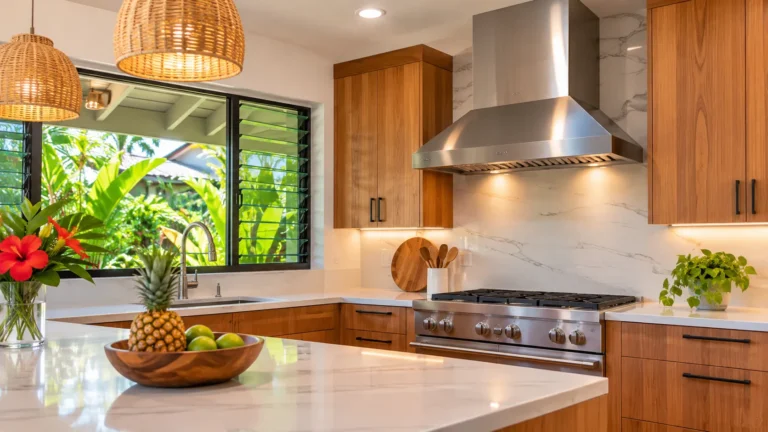
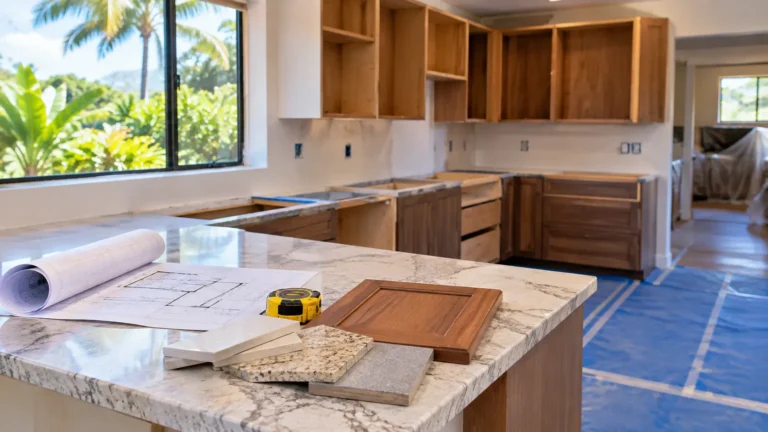
For a kitchen renovation, that may include demolition, cabinetry, countertops, plumbing, electrical work, flooring, painting, and appliance installation. However, individual proposals may handle those items differently.
One contractor might include repairing the wall surfaces after demolition. Another might price that work separately once the existing cabinets are removed.
Look for missing tasks and unclear descriptions
Phrases such as “complete renovation” or “standard installation” can leave room for interpretation. Ask the contractor to explain what those descriptions include.
Useful questions include:
- Does demolition include removing and disposing of existing materials?
- Are repairs to adjoining walls, ceilings, and floors included?
- Who protects the parts of the property that remain occupied?
- Are delivery, unloading, and material handling included?
- Does the proposal include final cleaning and debris removal?
Written exclusions deserve the same attention as included work. An excluded task is not automatically a problem, provided you understand who will handle it and what it may cost.
Clear construction bids in Hawaii should help you identify these responsibilities before work begins.
Request a revised proposal when needed
If an important item is missing, ask for an updated proposal rather than relying on a verbal explanation. Keep the final scope and any clarifications together so you can review the complete agreement.
This makes it easier to compare contractors fairly and reduces uncertainty about what you are purchasing.
2. Check Materials, Specifications, and Installation Details
Material choices can create substantial differences between construction bids in Hawaii. Two proposals may both include new flooring, for example, while allowing for different products, preparation methods, and installation requirements.
Compare more than the product name. Where relevant, look for the manufacturer, model, finish, quantity, dimensions, and installation method.
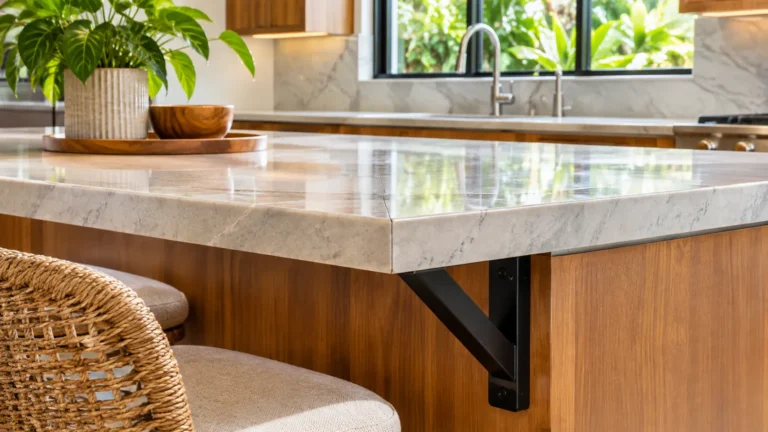
For cabinets, confirm the construction materials, hardware, finish, and accessories. For windows, ask about frame materials, glazing, installation details, and the requirements identified for your property.
A proposal that says “owner-selected tile” should also explain the selection budget and whether installation materials and labor are included.
Consider the property’s exposure and use
Properties across Hawaiʻi face different conditions. A coastal location, a sheltered inland home, and a busy commercial kitchen may call for different material considerations.
Ask contractors how their recommendations relate to the actual conditions at your property. Discuss exposure to moisture, salt air, sunlight, frequent cleaning, or heavy use where those factors apply.
Avoid assuming that a material described as “premium” is automatically the right choice. Ask what practical benefit it provides and what maintenance it requires.
Clarify substitutions before approving them
Construction bids in Hawaii may include assumptions about product availability. Ask what happens if a specified item becomes unavailable or its delivery date changes.
Request a written process for reviewing substitutions. That review should address differences in price, appearance, performance, warranty, and installation requirements.
Also confirm who purchases owner-supplied products, checks them for damage, stores them, and coordinates delivery. These details can affect both cost and scheduling.
A clear materials schedule gives you a stronger basis for comparing the actual finished result.
3. Understand Allowances, Exclusions, and Uncertain Costs
Allowances are amounts included for items that have not been fully selected or defined. They can help a contractor prepare a proposal while decisions are still being made, but they also introduce uncertainty.
Common examples include tile, fixtures, cabinetry, appliances, and decorative lighting.
When comparing construction bids in Hawaii, review the size and scope of every allowance. A lower allowance can reduce the initial total without reducing the eventual cost of your preferred selections.
Ask what each allowance covers
Confirm whether the allowance includes:
- Product purchase costs.
- Taxes and delivery charges.
- Installation labor.
- Installation accessories and consumables.
- Any applicable contractor markup.
For example, a fixture allowance may cover the product purchase only. Installation could appear elsewhere in the proposal or require a separate charge.
Ask how the contractor calculates an adjustment when your selection costs more or less than the allowance. Request an explanation of how credits are handled, too.
Compare the proposals using the same assumptions
Consider this hypothetical example:
| Comparison item | Proposal A | Proposal B |
|---|---|---|
| Initial price | $80,000 | $87,000 |
| Finish allowance | $4,000 | $9,000 |
| Debris removal | Excluded | Included |
| Painting | Owner responsibility | Included |
| Delivery charges | Not clearly stated | Included |
These figures are illustrative, not Hawaiʻi market estimates.
Proposal A has the lower starting price, but the two documents do not describe the same package. You need clarification and any missing prices before judging the difference.
Keep a separate contingency discussion
Construction bids in Hawaii should also distinguish allowances from a contingency budget. An allowance addresses a specified item with an uncertain selection or price. An owner’s contingency provides room in the overall budget for unforeseen needs.
Ask the contractor what uncertainties remain and discuss an appropriate reserve for your particular project. No proposal can eliminate every unknown, especially when existing conditions are concealed.
4. Review Site Conditions and Hawaii Logistics
The location and accessibility of a property can affect how a contractor plans the work.
A proposal for a ground-floor home with an open driveway may involve different logistics from a high-rise condominium renovation or a commercial space that remains occupied.
When reviewing construction bids in Hawaii, ask which site conditions the contractor has inspected and which assumptions remain unverified.
Discuss access and material handling
Relevant questions may include:
- Where can workers park and unload deliveries?
- Is there space to store materials securely?
- Are elevator reservations or restricted delivery hours involved?
- Must materials be carried through occupied areas?
- Are neighboring properties or shared access routes affected?
- Who coordinates access with building management?
These questions are particularly useful when work must fit around residents, customers, tenants, or business operations.
Building rules can also influence the sequence of work. Ask whether the proposal accounts for the rules already supplied to the contractor and how newly identified restrictions would be handled.
Review freight and delivery assumptions
Some construction bids in Hawaii may depend on materials arriving from another island or the mainland. Ask which products are already available and which require confirmed ordering and delivery arrangements.
Clarify whether the price includes freight, unloading, storage, and any special handling.
If an item arrives damaged, ask who handles the claim and coordinates its replacement. A replacement could affect more than the purchase cost if other work depends on that item.
Identify concealed-condition procedures
Existing walls, ceilings, and floors can hide conditions that are not visible during an initial visit.
Ask what happens if demolition reveals deterioration, damaged components, or previous work requiring further assessment.
A useful proposal explains how the contractor will document the discovery, communicate the options, and obtain approval before proceeding with additional work.
5. Compare Timelines, Permits, and Responsibilities
A completion date is useful only when you understand the assumptions behind it.
Construction bids in Hawaii should explain the expected sequence of work and identify the decisions, deliveries, and approvals that may affect the schedule.
Ask whether the proposed start date is confirmed, estimated, or dependent on other requirements being completed first.
Review milestones rather than one final date
Useful milestones may include:
- Finalizing the scope and selections.
- Completing plans or design coordination.
- Obtaining required approvals.
- Ordering long-lead materials.
- Beginning on-site work.
- Completing inspections where applicable.
- Conducting the final walkthrough.
Ask what you must provide at each stage. Delayed selections or unavailable owner-supplied products can affect the schedule just as much as contractor-side issues.
For an occupied home or operating business, discuss when utilities, entrances, kitchens, bathrooms, or work areas may be unavailable.
Clarify permit coordination
Do not assume that every proposal includes the same approval-related services.
Ask who will identify applicable requirements, prepare or coordinate documents, submit applications, pay fees, and arrange inspections.
Verify project-specific requirements with the relevant county authorities. For condominium or managed properties, also clarify any building-management or association approvals.
Construction bids in Hawaii should state which approval-related costs are included and which remain outside the quoted amount.
Ask how delays will be communicated
Weather, product availability, newly discovered conditions, and approval timing can affect a project.
Request an explanation of how schedule changes will be documented and communicated. Ask who will provide updates and how frequently you can expect them.
A realistic schedule with clear dependencies provides a more useful planning tool than an early finish date unsupported by the proposal.
6. Verify Contractor Qualifications and Project Management
The company behind the proposal matters as much as the document itself.
When comparing construction bids in Hawaii, review the contractor’s qualifications, relevant project experience, communication process, and approach to supervision.
Use the Hawaiʻi DCCA Contractors License Board as an official starting point for contractor licensing information and access to professional verification resources. cca.hawaii.gov
Request current insurance documentation and ask questions about the coverage relevant to your project.
Look for experience with similar work
A contractor’s experience should relate to the type and complexity of your project.
For a commercial renovation, ask about coordinating work around business operations, tenant requirements, and specialty trades. For a residential renovation, discuss protecting occupied areas and managing access.
Request examples of comparable completed projects and references where available.
Questions for previous clients might include:
- Was the proposed scope clearly explained?
- How were unexpected issues communicated?
- Were changes documented before the work proceeded?
- Did the contractor provide useful schedule updates?
- How were final corrections handled?
Answers can help you understand how the contractor operates beyond the initial sales conversation.
Identify your main point of contact
Construction bids in Hawaii should be supported by a clear communication structure.
Ask who will supervise the work, coordinate subcontractors, answer questions, and review decisions with you. Confirm whether your initial contact will remain involved during construction.
Also ask how selections, questions, photographs, and approvals will be recorded. A dependable process helps both parties keep track of decisions.
The goal is to understand who is responsible for moving the project forward and how you will stay informed.
7. Review Payment Terms, Changes, and Project Closeout
Before accepting a proposal, make sure you understand how payments relate to the work and how changes will be approved.
Construction bids in Hawaii may use different payment structures. Compare the stated deposit, progress payments, invoicing process, and final payment conditions.
Ask the contractor to explain the purpose of each payment and the milestone or deliverable associated with it.
Establish a written change process
Changes can result from owner requests, revised selections, or conditions discovered during construction.
Ask for a process that records:
- The reason for the change.
- The added or removed work.
- The price adjustment.
- Any effect on the schedule.
- The required approval before work proceeds.
For example, moving a fixture after rough-in work is completed may involve several trades and additional finishing work. A written change description helps you understand the full effect before deciding.
When comparing construction bids in Hawaii, ask whether change pricing can include supervision, overhead, or other charges. Knowing the approach in advance makes future decisions easier to evaluate.
Define completion and handover
The proposal should also explain what happens when the main construction work is finished.
Discuss the final walkthrough, the recording of outstanding items, and the process for completing corrections. Clarify what documents or information will be handed over.
Depending on the work, these may include product manuals, warranty information, care instructions, and relevant inspection records.
Ask who to contact if an issue appears after handover and how it will be assessed.
A clear closeout process helps you compare the complete service rather than focusing only on the period when workers are on site.
A Practical Checklist for Comparing Construction Bids in Hawaii
Use a simple comparison sheet to organize the information from each contractor. Mark every item as included, excluded, allowance, or needs clarification.
| Review area | What to confirm |
|---|---|
| Scope | Same work areas, tasks, and quantities |
| Materials | Comparable specifications and finishes |
| Allowances | Amounts, coverage, and adjustment method |
| Exclusions | Missing work and owner responsibilities |
| Logistics | Delivery, access, storage, and disposal |
| Schedule | Milestones, dependencies, and updates |
| Approvals | Coordination, fees, and inspection responsibilities |
| Qualifications | License information, insurance, and experience |
| Payments | Deposit, progress milestones, and final payment |
| Changes | Written pricing and approval process |
| Closeout | Walkthrough, corrections, and handover documents |
Send each contractor a consolidated list of questions. Written responses make construction bids in Hawaii easier to compare and reduce the chance of overlooking an important detail.
Avoid treating an unanswered question as an included service. If the proposal does not say who is responsible, ask.
How to Make Your Final Decision
Once the proposals cover comparable work, review the price alongside the remaining uncertainties.
The lowest price may offer good value when the scope is complete, the assumptions are reasonable, and the contractor is suited to the project. A higher price needs a clear explanation of the additional work, materials, or services it includes.
Compare how each contractor responds to your questions. Specific, documented answers help you evaluate whether the proposed approach matches your priorities.
For construction bids in Hawaii, your final review should consider the expected finished result, the practical delivery plan, and the costs you may still need to carry separately.
Choose with a clear understanding of the agreement rather than relying on a total at the bottom of a page.
Frequently Asked Questions
How do I compare construction bids in Hawaii fairly?
Give every contractor the same project brief, plans, and selection information. Then compare scope, materials, allowances, exclusions, logistics, schedule, and responsibilities. Request written clarification wherever the proposals differ before comparing their totals.
Why do construction bids in Hawaii vary so much?
Contractors may price different scopes, products, labor requirements, site arrangements, and project assumptions. Allowances and exclusions can also change the starting total. Ask each bidder to explain the main factors behind the price rather than assuming all proposals include the same work.
Should I automatically reject the lowest construction bid?
No. A lower bid can be competitive and complete. Check whether it covers the required work and uses realistic assumptions. The concern is an unexplained gap in scope or pricing, rather than the lower price itself.
How many proposals should I request?
Several detailed proposals can help you understand the available approaches. However, the usefulness of your comparison depends on receiving comparable information. A small number of well-defined proposals may be more useful than many estimates based on different instructions.
What is the difference between an allowance and a fixed price?
An allowance is an included amount for a specified item whose final selection or cost remains uncertain. A fixed price applies to the scope described in the agreement, subject to its stated terms. Ask how allowance adjustments and scope changes affect the final amount.
Can a detailed bid prevent every unexpected cost?
No. Detailed proposals reduce uncertainty, but concealed conditions, requested changes, and other project-specific issues may still arise. Review the contractor’s assumptions and agree on a written process for documenting additional work, pricing, and schedule effects.
What should I ask before accepting a proposal?
Ask what remains unresolved. Confirm missing selections, excluded work, delivery assumptions, approval responsibilities, payment milestones, and change procedures. Request an updated document that reflects the agreed scope before making your final decision.
Discuss Your Project With United Construction Group
Comparing construction bids in Hawaii starts with a clear understanding of your project and the work each contractor proposes.
United Construction Group offers residential and commercial construction services, including remodeling, home additions, custom home building, and commercial construction. Build Smart
Explore our construction services to learn about the available options, or connect with United Construction Group to discuss your plans.
Bring your project goals, available drawings, photographs, and questions so the conversation can focus on your property and priorities.