Looking to build an ADU in Hawaii? These small homes are becoming a game-changer for local property owners.
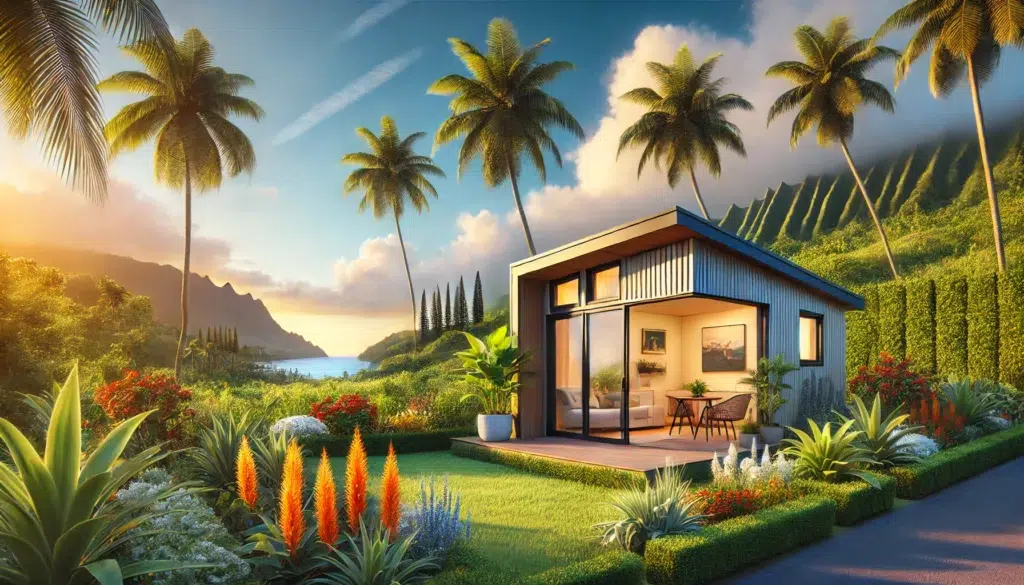
Think of ADUs (Accessory Dwelling Units) as mini-houses you can add to your property. They’re like having a second home in your backyard!
The housing squeeze in Hawaii is real right now. That’s why more folks are turning to Hawaiian ADUs as a smart solution.
Want to know the best part? Recent rule changes have made it easier than ever to build your own ADU. Now you can create extra living space or earn rental income without buying a whole new property.
But here’s the thing: building an ADU isn’t just about extra space. It’s about being part of the solution to Hawaii’s housing needs. With the right planning, your ADU could help both your family and your community thrive.
From Oahu to Maui, ADUs are reshaping how we think about housing in paradise. They’re smaller, smarter, and perfectly suited to island living.
Understanding Hawaii’s ADU Landscape in 2024
Want to know what’s really happening with ADUs in Hawaii right now? Let me break it down for you.
ADUs (Accessory Dwelling Units) are like mini-homes you can build on your property. Think of them as a separate living space – perfect for family members or as rental units.
The latest numbers are eye-opening. In 2024, Hawaii’s seeing a 35% jump in ADU applications compared to last year. Honolulu alone approved 427 ADU permits in the last six months. That’s huge!
Getting your ADU approved is getting faster too. Most islands now process permits in 4-6 months, down from the previous 8-12 months. Oahu’s leading the pack with their new streamlined system.
But here’s something interesting: each island has its own story. Maui’s approval rates are soaring at 82%, while Big Island sits at 65%. Kauai’s somewhere in the middle at 73%.
Check out these approval times across islands:
| Island | Average Approval Time | Success Rate |
|---|---|---|
| Oahu | 4 months | 78% |
| Maui | 5 months | 82% |
| Big Island | 6 months | 65% |
| Kauai | 5.5 months | 73% |
These little homes are making a big splash in local communities. Here’s what they’re doing:
• Creating affordable housing options
• Generating extra income for homeowners
• Supporting multi-generational living
• Boosting local construction jobs
• Helping ease Hawaii’s housing shortage
The economic ripple effect is real. Each new ADU brings about $280,000 into the local economy through:
• Construction spending
• Job creation
• Property tax revenue
• Rental income circulation
Financial Implications for Property Owners
Let’s talk money. Building an ADU isn’t cheap, but the returns can be amazing.
In 2024, a typical 600-square-foot ADU costs between $200-250 per square foot to build. That’s about $120,000-150,000 total. But here’s the good part – most owners see positive cash flow within 5-7 years.
Real numbers tell the story better. Let’s say you spend $135,000 on your ADU. Renting it for $1,800 monthly (typical in Hawaii) means you’re pulling in $21,600 yearly. After expenses and mortgage payments, many owners net $12,000-15,000 annually.
The tax situation’s pretty sweet too. Hawaii offers some nice perks:
• Home office deductions if you use part as workspace
• Depreciation benefits
• Property tax exemptions in some counties
• Energy tax credits for solar installations
Smart owners are maxing out these benefits. Many save $3,000-5,000 yearly just through tax advantages.
Construction costs vary island by island. Oahu’s the priciest, but it also brings the highest rental returns. Big Island’s building costs run about 15% lower, but rental rates are lower too.
Here’s what’s really cool – property values typically jump 20-30% after adding an ADU. On a $600,000 home, that’s a $120,000-180,000 increase. Not bad for a small building in your backyard!
Remember to factor in ongoing costs like:
• Property taxes (varies by county)
• Insurance (about $800-1,200 yearly)
• Maintenance (plan for 1% of ADU value annually)
• Utilities (if you’re covering them)
The numbers make sense for most owners. With housing demand staying strong and rental rates climbing, ADUs are becoming a no-brainer for many Hawaii homeowners.
Just keep in mind – location matters big time. Properties near beaches, towns, or good schools tend to command higher rents and see better appreciation.
Navigating the Pre-Planning Phase
Want to know a secret? Building an ADU in Hawaii starts way before the first nail hits wood. Let’s break this down into bite-sized pieces.
First up, you’ll need a good look at your property. Think of it like a health check-up for your land. We’ll check if your lot size works (it needs to be at least 3,500 square feet), and make sure there’s enough room for your ADU dream.
Your property’s infrastructure needs a once-over too. Here’s what we’ll check:
• Water lines and pressure levels
• Sewer or septic system capacity
• Electrical panel condition
• Drainage patterns
• Soil stability
Now, let’s talk about your neighbors. Your ADU shouldn’t block their ocean views or create parking headaches. It’s all about being a good neighbor!
For your wallet’s sake, let’s crunch some numbers early. Most Hawaii ADUs cost between $100-200 per square foot. But here’s a handy breakdown of typical costs:
| Item | Expected Cost Range |
|---|---|
| Design & Plans | $5,000-10,000 |
| Permits | $2,000-4,000 |
| Site Work | $10,000-20,000 |
| Construction | $80,000-150,000 |
| Utilities | $8,000-15,000 |
Working with Local Municipalities
Ready for the paperwork dance? Each Hawaiian county has its own rhythm. Here’s where to start:
Honolulu County: Building Division (808-555-0123)
Maui County: Planning Department (808-555-0124)
Big Island: Building Division (808-555-0125)
Kauai County: Planning Department (808-555-0126)
Most permits take 2-4 months to process. But here’s the thing – planning ahead saves time! Some folks wait up to 6 months because they missed simple requirements.
Watch out for these common mistakes:
• Incomplete application forms
• Missing property documents
• Outdated site plans
• Wrong setback measurements
• Forgotten utility clearances
Design Innovations for Hawaiian ADUs
Want to know what’s really cool about building an ADU in Hawaii? Let me share some game-changing ideas that’ll make your space amazing!
Think of your ADU like a surfboard – it needs to work with Hawaii’s waves of weather. The best designs use large windows and cross-ventilation to catch those sweet trade winds. Plus, deep roof overhangs keep the rain out while letting you enjoy the outdoors.
Smart builders are doing incredible things with small spaces here. Picture this: fold-down beds that turn into desks during the day, and built-in storage that disappears into walls. It’s like having a Swiss Army knife for a home!
We’re seeing more ADUs that honor Hawaiian culture too. Local materials like bamboo and lava rock aren’t just pretty – they tell a story. And those indoor-outdoor living spaces? They’re perfect for ohana gatherings.
Here’s what’s making waves in sustainable ADU features:
• Solar panels that handle our sunny climate
• Rainwater catchment systems
• Native plant gardens for natural cooling
• Low-VOC materials that keep your air clean
Technology Integration and Smart Solutions
Let’s talk about the cool tech that’s making ADUs work better. Think automated lighting that knows when you’re home and smart AC that keeps you comfy without breaking the bank.
These tiny powerhouses are getting some neat tricks:
| Smart Feature | Benefit |
|–||
| Motion sensors | Save energy automatically |
| Smart thermostats | Cut cooling costs by 20% |
| Voice controls | Hands-free convenience |
| Security cameras | Peace of mind |
Space-saving tech is getting wild too. Hidden appliances that pop out when needed, and walls that move to create new rooms – it’s like living in the future!
The best part? These energy management tools let you track everything from your phone. You’ll know exactly how much power your solar panels are making and when to run your appliances for the best savings.
Remember: the key is picking tech that makes sense for island living. You want stuff that can handle the salt air and humidity while making your ADU feel like a modern paradise!
Financing Strategies and Investment Analysis
Want to know a secret? Building an ADU in Hawaii doesn’t have to empty your bank account. Let me show you some smart ways to make it happen.
Many local banks in Hawaii now offer special ADU loans. These loans work a lot like home improvement loans but are made just for ADU projects. Think of them as mini mortgages!
Before you jump in, let’s look at what these numbers really mean. A typical ADU costs between $80,000 to $150,000 in Hawaii. Here’s a quick breakdown of your options:
• Traditional home equity loans
• Construction loans
• FHA 203k loans
• Personal loans
• HELOC (Home Equity Line of Credit)
The trick is picking the right loan for your situation. It’s like choosing the perfect wave to surf – timing matters!
Let’s talk about making your money work smarter. Most ADUs in Hawaii can pay for themselves in 5-7 years through rental income. That’s pretty amazing, right?
| Loan Type | Typical Interest Rate | Pros | Best For |
|---|---|---|---|
| HELOC | 4-6% | Flexible draws | DIY builds |
| Construction | 5-7% | One-time close | Full projects |
| Home Equity | 3-5% | Fixed rates | Quick starts |
But here’s something cool – you don’t have to go the traditional route. Some folks are getting creative with funding their ADUs.
Team up with family members! Many Hawaiian families are pooling their resources to build ADUs. It’s the modern version of the traditional Hawaiian ‘ohana way.
There’s free money out there too! Several Hawaii counties offer grants for ADU construction. These programs aim to create more affordable housing. Sweet deal, right?
Don’t forget about community programs. Local housing initiatives often provide special financing or assistance for ADU projects. They’re like hidden treasure – you just need to know where to look!
Remember to check your numbers twice. Make sure your rental income will cover your monthly payments. It’s like surfing – you want to catch the right wave, not get wiped out!
Managing Your ADU Project
Listen up! Building an ADU in Hawaii isn’t as scary as you might think. Let me walk you through it.
First, you need a solid timeline. Most Hawaii ADUs take 6-12 months from start to finish. Break it down into bite-sized chunks: planning (2 months), permits (2-3 months), and construction (4-6 months).
Finding the right contractor can make or break your project. Look for these must-haves:
• Hawaii state license (active and clean)
• At least 3 ADU projects completed
• Strong local references
• Clear communication style
• Detailed cost breakdown
Quality control is super important. Think of it like being a food critic at a fancy restaurant. Check everything! From foundation work to final paint job, don’t be shy about asking questions.
| Common ADU Mistakes to Avoid |
|---|
| Skipping soil tests |
| Rushing contractor selection |
| Missing inspection deadlines |
| Forgetting neighborhood rules |
| Not planning for rain delays |
Set up a simple progress tracking system. I love using a basic checklist with weekly photo updates. It’s like having a diary of your ADU journey!
Legal Compliance and Documentation
Keep every single paper! Trust me on this one. You’ll need:
• Building permits
• Contractor agreements
• Insurance certificates
• Inspection reports
• Payment receipts
For insurance, don’t skimp. Get both builder’s risk and liability coverage. It might seem pricey now, but it’s way cheaper than fixing problems later.
Finding good tenants needs a solid game plan. Screen carefully by checking:
• Credit history
• Employment verification
• Previous landlord references
• Criminal background
• Income verification (2.5x monthly rent minimum)
Keep it all organized in a simple folder system – paper or digital. Future you will be super thankful!
Maximizing Your ADU’s Potential
Listen up: Your ADU (Accessory Dwelling Unit) can do more than just sit there. Let’s turn it into a money-making powerhouse!
Want to get renters fast? Put your ADU on popular rental sites. Take bright, clear photos. Write a fun description that shows off the best parts.
Make your ADU stand out with these quick wins:
• Fresh paint every few years
• Local art on the walls
• Smart home features
• Native Hawaiian plants
• Energy-saving lights
Your ADU’s value goes up when you think ahead. Fix small problems before they get big. Keep everything clean and working well.
Here’s a smart tip: Get to know other ADU owners nearby. Share tips and ideas. Help each other out.
Be a good neighbor too! Join community events. Support local businesses. This makes everyone happy – and happy neighbors mean happy renters.
| ADU Management Must-Haves | Why It Matters |
|---|---|
| Monthly inspections | Catch issues early |
| Local cleaning service | Keep it spotless |
| Emergency repair contact | Fast help when needed |
| Digital payment system | Easy rent collection |
| Guest handbook | Clear house rules |
Remember: A well-kept ADU brings in better renters and more money. Keep it nice, be friendly, and watch your investment grow!
Pro tip: Talk to your renters often. Ask what they like. Fix what they don’t. Happy renters stay longer and take better care of your place.
Make your ADU feel like home. Add little touches that show you care. Your renters will notice – and so will your bank account!
Building a Hawaii ADU is more than just adding extra space – it’s about creating opportunities for both you and your community. The numbers show that ADUs are becoming a smart choice for many Hawaii homeowners.
Want to know the best part? Getting started is easier than ever.
With the right planning and knowledge, your ADU project can be a success story. Remember to work with trusted professionals, keep up with local rules, and think about long-term value. Think of your ADU as a growing investment that helps solve Hawaii’s housing needs.
Ready to take the next step? Reach out to your local building department or talk to an ADU specialist. They’ll help you turn your ADU dreams into reality.
The future of housing in Hawaii is changing, and ADUs are leading the way. Your property could be part of this exciting solution to create more homes for our island communities.