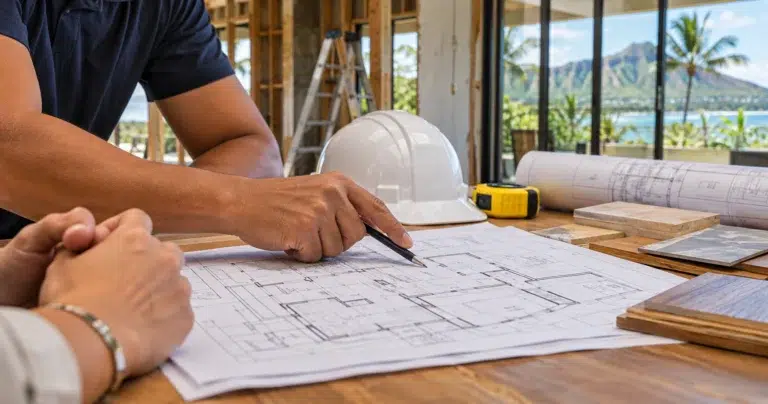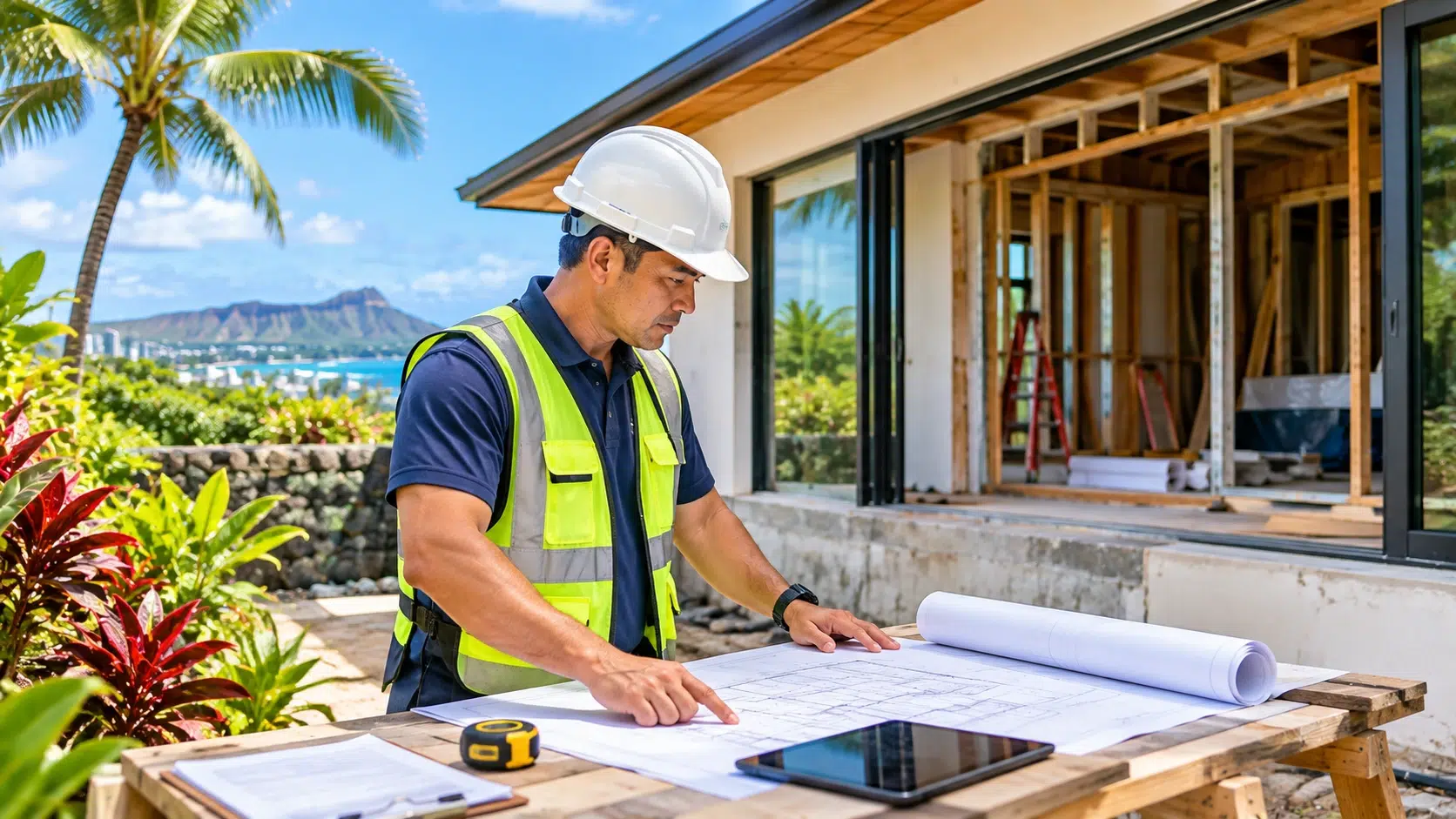
Questions to ask before signing a renovation contract in Hawaii should be at the top of every property owner’s checklist before starting a residential renovation or commercial improvement project. A well-defined contract establishes expectations for construction costs, project timelines, materials, permits, and contractor responsibilities. Understanding the questions to ask before signing a renovation contract in Hawaii can help property owners avoid unexpected costs and establish clearer expectations.
Renovating a property in Hawaii may involve additional considerations, including coastal exposure, rainfall, material availability, building access, and county-specific construction requirements. Understanding these factors before signing can help reduce misunderstandings and avoid preventable expenses.
At United Construction Group, we believe successful construction projects begin with clear communication, realistic planning, and a detailed understanding of the proposed work.
This guide covers 10 critical questions to ask before signing a renovation contract in Hawaii, helping property owners make informed decisions before construction begins.
1. Is the Contractor Properly Licensed and Insured?
One of the most important questions to ask before signing a renovation contract in Hawaii involves verifying contractor credentials and insurance coverage.
Before entering into an agreement, verify that the contractor holds the appropriate license for the proposed work.
The Hawaii Department of Commerce and Consumer Affairs (DCCA) provides resources for checking contractor licenses and understanding licensing requirements.
Property owners can verify licensing through the Hawaii DCCA contractor licensing resources.
Important questions include:
- What is your contractor license number?
- Is your license classification appropriate for this project?
- Can you provide current insurance documentation?
- Who will perform specialized electrical or plumbing work?
- Will licensed subcontractors be involved?
Ask about general liability insurance, workers’ compensation coverage where applicable, and any additional coverage appropriate to the project.
Why it matters: Verifying contractor credentials helps property owners make informed hiring decisions and understand the responsibilities of the construction team.
2. Is the Renovation Scope of Work Clearly Defined?
A detailed scope of work is essential before signing a renovation contract.
The agreement should explain exactly what construction activities are included and identify any exclusions.
For example, a kitchen renovation may involve demolition, cabinetry, plumbing, electrical improvements, flooring, painting, and appliance installation.
However, these services should not be assumed to be included unless specifically documented.
Ask your contractor:
- What work is included in the quoted price?
- What materials and finishes are specified?
- Are demolition and debris removal included?
- Who supplies appliances, fixtures, and specialty products?
- What work is excluded from the agreement?
- How will unexpected repairs be handled?
Approved drawings, material specifications, and written scope documents should be incorporated into the agreement where appropriate.
Why it matters: A clearly documented scope helps prevent misunderstandings about the work being purchased and the responsibilities of each party.
3. What Is the Total Renovation Cost?
Understanding construction pricing is another important consideration when reviewing questions to ask before signing a renovation contract in Hawaii.
A renovation estimate should clearly identify the agreed contract amount and explain any allowances, exclusions, or conditions that may affect the final cost.
Ask whether the proposal includes:
- Labor and construction materials.
- Equipment and delivery expenses.
- Demolition and waste disposal.
- Permit-related expenses.
- Subcontractor work.
- Material allowances.
- Applicable taxes.
- Site protection and cleanup.
Also ask whether pricing is fixed or based on another agreed arrangement.
A lower estimate may not represent better value if important construction activities have been excluded.
Why it matters: Reviewing the complete pricing structure helps property owners compare proposals and understand their financial commitments.
4. How Will Renovation Payments Be Scheduled?
Reviewing payment terms is another essential part of understanding the questions to ask before signing a renovation contract in Hawaii. Payment terms should be clearly explained before signing a renovation agreement.
Ask how much is due initially, when subsequent payments will be required, and what work must be completed before each payment.
Important questions include:
- Is an initial deposit required?
- Are payments connected to construction milestones?
- How will completed work be verified?
- What happens if work is delayed?
- When is the final payment due?
- How will additional approved work be billed?
The Hawaii DCCA recommends considering payment schedules that correspond to completed work and retaining a portion of payment until project completion.
Avoid assuming that a payment arrangement is appropriate simply because it appears in a standard contract.
Why it matters: Clearly documented payment terms help property owners understand when payments are due and what each payment represents.
5. What Is the Expected Construction Timeline?
A renovation contract should establish an anticipated start date and completion period.
Construction schedules may depend on permit approvals, material availability, subcontractor coordination, and existing property conditions.
Ask your contractor:
- When is construction expected to begin?
- How long is the project expected to take?
- What milestones will be used to track progress?
- How will schedule changes be communicated?
- What happens if materials arrive late?
- How will delays affecting the completion date be addressed?
In Hawaii, delivery arrangements and project accessibility may influence scheduling, depending on the location and materials required.
Why it matters: Understanding the proposed timeline helps property owners prepare for construction activities and anticipate possible disruptions.
6. Who Is Responsible for Construction Permits?
Questions to ask before signing a renovation contract in Hawaii should also address permit responsibilities and county-specific requirements. Permit responsibilities should be established before work begins.
Depending on the renovation scope and location, building, electrical, plumbing, or other approvals may be necessary.
For projects on Oahu, property owners can consult the Honolulu Department of Planning and Permitting.
Other islands have their respective county permitting authorities.
Ask:
- Does the proposed renovation require permits?
- Who will prepare the required documents?
- Who will submit permit applications?
- Are permit fees included in the contract?
- Who will coordinate required inspections?
- How will permit-related delays affect scheduling?
A contractor should not assume that every renovation requires the same approval process.
Why it matters: Clarifying permit responsibilities helps prevent uncertainty about required documentation, approvals, and inspections.
7. How Will Unexpected Repairs and Change Orders Be Handled?
Existing buildings may contain concealed conditions that are not visible during an initial inspection.
Examples include hidden moisture damage, deteriorated framing, or outdated building systems.
These conditions may require additional evaluation or changes to the proposed work.
Before signing, ask:
- How will unforeseen conditions be documented?
- Who determines whether additional work is necessary?
- Will a written estimate be provided?
- Who must approve the additional cost?
- How will changes affect the construction schedule?
- What happens if the parties disagree about a proposed change?
A written change-order process should explain how revisions are priced, approved, and incorporated into the contract.
Why it matters: A clear change-order procedure helps reduce disputes over unexpected work and additional expenses.
8. Who Will Manage the Project and Subcontractors?
Understanding project management responsibilities is an important part of reviewing questions to ask before signing a renovation contract in Hawaii.
Renovation projects may involve multiple trades, suppliers, designers, and inspectors.
Ask your contractor:
- Who will serve as the primary project contact?
- Who supervises daily construction activities?
- Which portions of the work will be subcontracted?
- How frequently will progress updates be provided?
- Who coordinates inspections and material deliveries?
- How will concerns or questions be addressed?
For residential renovations, discuss access arrangements and how occupied areas will be protected.
For commercial projects, establish how construction activities will be coordinated with business operations.
Why it matters: Clearly assigned responsibilities help property owners understand who is accountable for communication and construction coordination.
9. What Warranties and Protections Are Included?
Before signing a renovation contract, review the warranty provisions and understand what protections apply.
Hawaii’s homeowner contract rules require disclosure of the terms of any warranty offered.
Ask about:
- Workmanship warranty terms.
- Manufacturer product warranties.
- Warranty exclusions.
- Procedures for reporting concerns.
- Responsibility for correcting covered defects.
- Documentation provided at project completion.
Property owners should also understand applicable lien disclosures and bonding options.
Under Hawaii Revised Statutes Section 444-25.5, licensed contractors performing covered home improvements must provide required disclosures and a written contract.
The Hawaii Department of Commerce and Consumer Affairs provides additional consumer guidance.
Why it matters: Understanding warranty coverage and contractual protections helps clarify responsibilities after construction is completed.
10. What Happens When the Renovation Is Complete?
The final question to ask before signing a renovation contract in Hawaii concerns project completion and closeout.
A renovation agreement should establish how completed work will be reviewed and what documentation will be provided.
Ask whether the closeout process includes:
- A final walkthrough.
- A list of outstanding corrective items.
- Required final inspections.
- Applicable permit closeout documentation.
- Product manuals and warranty information.
- Final payment requirements.
- Site cleanup and debris removal.
- Agreed handover documentation.
A punch list can help identify incomplete or corrective work before the project is formally closed.
Why it matters: A documented completion process helps both parties understand when contractual obligations have been satisfied.
Hawaii-Specific Considerations Before Signing a Renovation Contract
In addition to the 10 critical questions, property owners should discuss site-specific conditions that may influence their renovation.
Coastal Exposure and Material Selection
Some properties experience salt-air exposure that can affect certain construction materials.
Ask whether proposed products are suitable for the property’s actual environmental conditions.
Rainfall and Moisture Management
Existing drainage, waterproofing, and moisture conditions may influence renovation requirements.
Discuss known leaks or water-related concerns before finalizing the scope.
Construction Access and Material Deliveries
Restricted parking, narrow entrances, stairs, and limited storage areas may affect construction logistics.
Confirm how materials, equipment, and debris will move through the property.
County Requirements
Permit and inspection requirements vary depending on project scope and jurisdiction.
Confirm the applicable requirements with qualified professionals and the relevant county authority.
These considerations should be evaluated individually rather than assumed to apply to every Hawaii property.
Documents to Review Before Signing Your Renovation Contract
Before signing, request a complete copy of the proposed agreement and its supporting documents.
Depending on the project, these may include:
- Contractor identification and license information.
- Detailed scope of work.
- Approved plans and specifications.
- Material selections and allowances.
- Contract price and payment schedule.
- Anticipated construction timeline.
- Permit responsibilities.
- Subcontractor information.
- Change-order procedures.
- Insurance documentation.
- Warranty terms.
- Completion and closeout requirements.
For covered homeowner construction contracts, Hawaii Administrative Rules Section 16-77-80 establishes specific written contract requirements.
Property owners should review the entire agreement carefully and seek qualified legal advice when contractual terms are unclear.
Frequently Asked Questions About Renovation Contracts in Hawaii
What are the most important questions to ask before signing a renovation contract in Hawaii?
Ask about contractor licensing, insurance, the detailed scope of work, total cost, payment schedule, construction timeline, permits, change orders, warranties, and completion requirements. These topics help clarify contractual responsibilities before work begins.
Is a written renovation contract required in Hawaii?
Hawaii law requires licensed contractors performing covered home construction or improvements to provide homeowners with a written contract containing specified information. Requirements may differ for certain service-type work and commercial arrangements.
Should I pay the full renovation cost upfront?
The Hawaii DCCA advises consumers to avoid paying the entire contract amount upfront and recommends considering payment schedules tied to completed work. Review the proposed payment terms before signing.
Who is responsible for obtaining renovation permits?
Responsibility should be clearly stated in the construction contract. Permit requirements depend on the proposed work and applicable county regulations.
Can a renovation contract price change after signing?
Yes, depending on the contract terms. Approved scope changes, concealed conditions, and other documented project requirements may affect the final price. Review the change-order process carefully.
What should I do if I do not understand part of the renovation contract?
Ask the contractor to explain the provision and request written clarification. For legal questions or significant contractual concerns, consult a qualified Hawaii attorney before signing.
Work With United Construction Group
Understanding the questions to ask before signing a renovation contract in Hawaii can help property owners approach construction planning with clearer expectations. These questions to ask before signing a renovation contract in Hawaii provide a practical starting point for evaluating proposals and planning your renovation.
From defining the project scope to discussing permits, pricing, timelines, and construction responsibilities, careful preparation supports more informed decisions.
United Construction Group provides residential and commercial construction services in Hawaii.
Explore our construction services or contact United Construction Group to discuss your renovation plans and next steps.