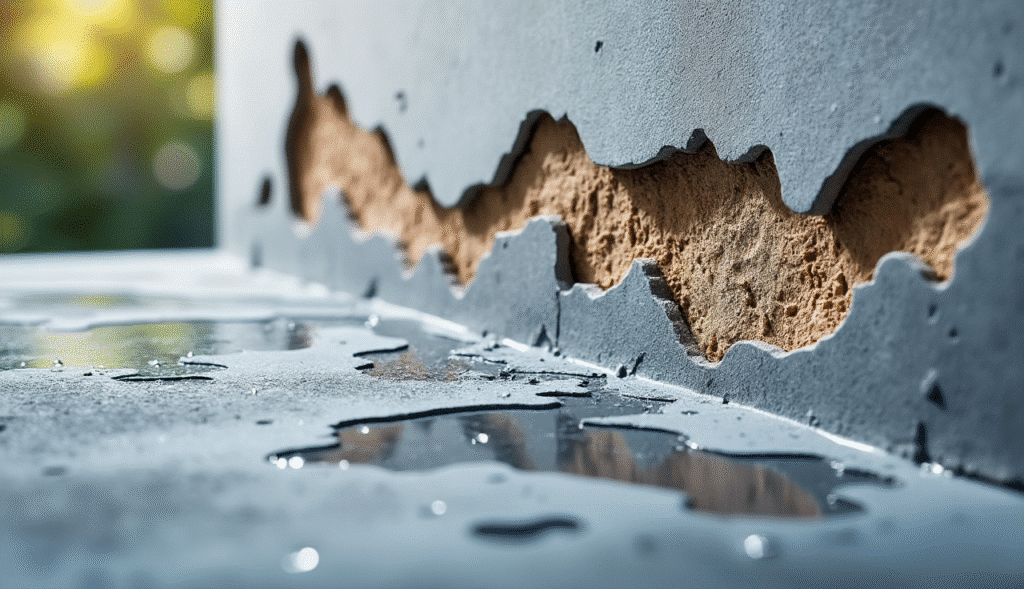
Spalling Waterproofing in Hawaii: What Homeowners Need to Know
Spalling waterproofing is a critical consideration for Hawaii homeowners dealing with concrete deterioration caused by moisture, salt exposure, and tropical weather conditions. Understanding why spalling occurs and how proper waterproofing prevents structural damage helps protect long-term property value.
In Hawaii’s coastal climate, salt air, heavy rainfall, and humidity accelerate concrete wear on lanais, driveways, foundations, and retaining walls. This guide explains causes, prevention strategies, costs, and professional solutions so homeowners can plan confidently and avoid expensive structural repairs.
Understanding Spalling Waterproofing for Hawaii Homes
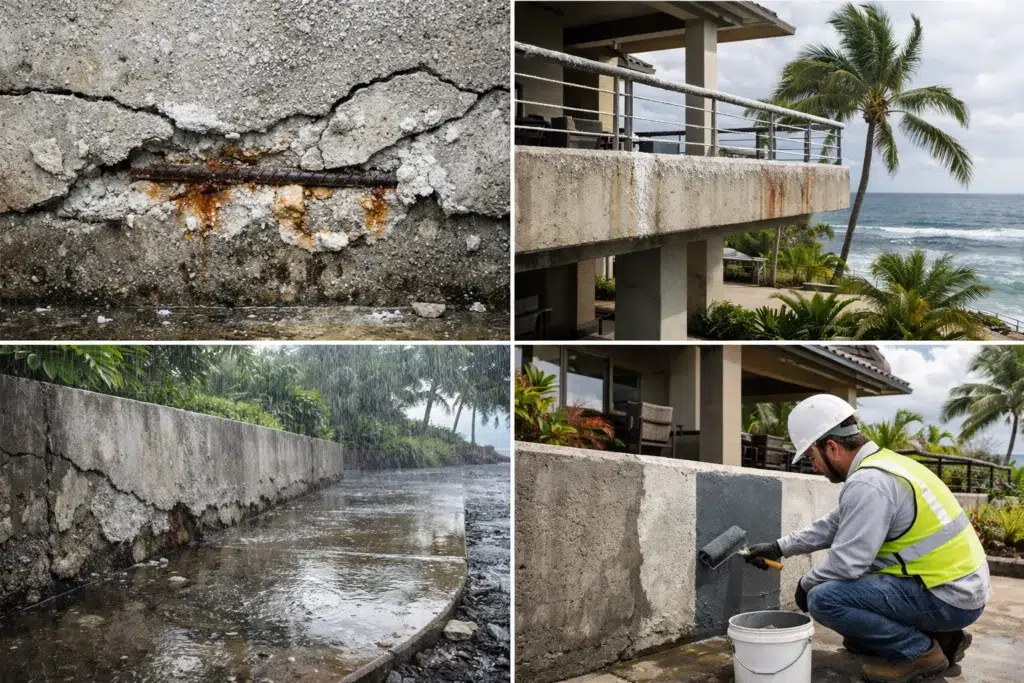
Spalling waterproofing refers to protective methods that prevent moisture intrusion from weakening concrete surfaces, reinforcing steel, and structural components in Hawaii homes exposed to persistent humidity, salt air, and seasonal downpours.
How Moisture Causes Concrete Spalling
Spalling waterproofing becomes necessary when water penetrates porous concrete, reaches embedded steel reinforcement, and triggers corrosion. As metal expands, internal pressure forces concrete to crack, flake, or break away. In Hawaii’s damp coastal climate, this deterioration accelerates without protective sealing systems.
Salt Air and Coastal Exposure Risks
Spalling waterproofing is especially important for homes near the ocean, where airborne salt settles on lanais, foundations, and exterior walls. Salt draws moisture into concrete surfaces, increasing corrosion risks and weakening structural integrity over time if not properly treated.
Heavy Rainfall and Drainage Challenges
Spalling waterproofing helps address Hawaii’s intense rainfall, which can saturate concrete slabs, walkways, and retaining walls. Poor grading or clogged drainage systems allow standing water to seep into surfaces, creating long-term damage that often begins unnoticed beneath the exterior finish.
When Homeowners Should Act
Spalling waterproofing should be considered at the first signs of cracking, bubbling paint, rust stains, or flaking concrete. Early intervention prevents more serious structural damage, protects reinforcing steel, and reduces the likelihood of more extensive demolition and reconstruction later.
Key Benefits of Spalling Waterproofing for Homeowners
Investing in spalling waterproofing provides more than cosmetic improvement. It strengthens structural durability, prevents costly repairs, and safeguards your home against Hawaii’s aggressive environmental conditions. Proper systems extend the life of concrete surfaces while preserving safety and property value.
- Prevents corrosion of embedded steel reinforcement
- Extends the lifespan of lanais, foundations, and driveways
- Reduces long-term structural repair costs
- Protects against mold and moisture intrusion
- Improves property value and resale appeal
- Enhances safety by eliminating loose or falling concrete
- Supports compliance with Hawaii building standards
Popular Spalling Waterproofing Options in Hawaii
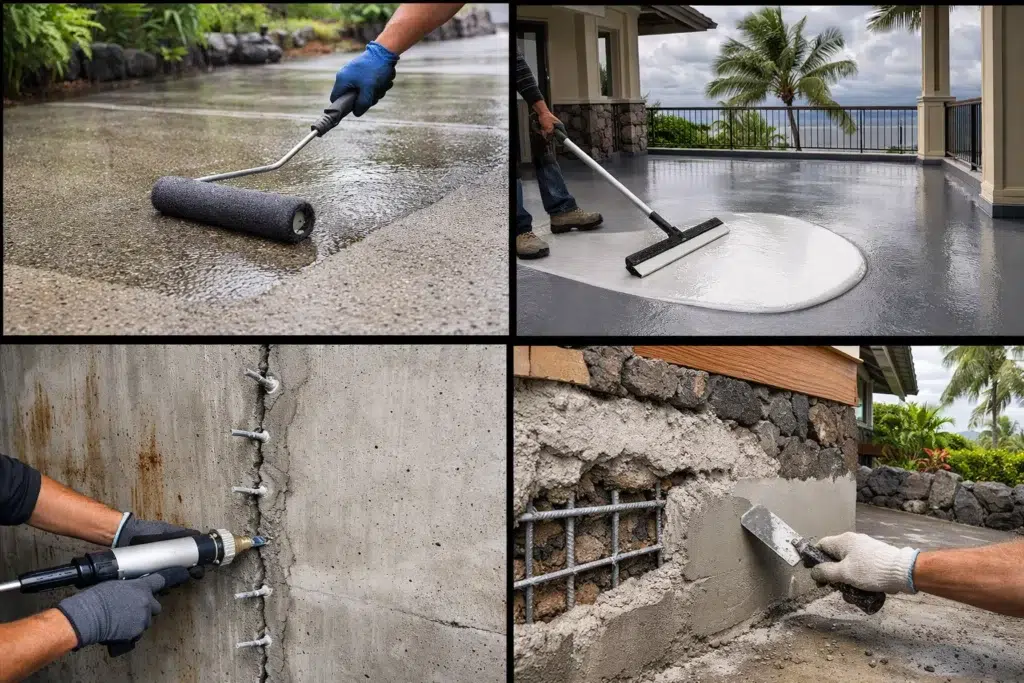
Hawaii homeowners can choose from several spalling waterproofing solutions depending on damage severity, location, and budget. The right approach balances durability, environmental resistance, and long-term maintenance needs.
Surface Sealers and Penetrating Coatings
Spalling waterproofing often begins with high-quality sealers that penetrate concrete pores and block moisture intrusion. These coatings are ideal for early-stage damage and preventative maintenance, especially for driveways, walkways, and lanais exposed to frequent rainfall.
Elastomeric Waterproof Membranes
Spalling waterproofing systems using elastomeric membranes create flexible barriers that accommodate minor structural movement. These are commonly applied to elevated decks and exterior walls, offering added protection against heavy rain and prolonged humidity common throughout Hawaii.
Crack Injection and Structural Repairs
Spalling waterproofing may involve epoxy or polyurethane crack injections to restore structural integrity before surface treatments are applied. This method addresses underlying damage and prevents further water infiltration into foundations, retaining walls, or load-bearing components.
Full Concrete Restoration Systems
Spalling waterproofing sometimes requires comprehensive restoration, including removal of deteriorated concrete, treatment of corroded rebar, patching, and protective coatings. This option is best for advanced deterioration where structural performance must be fully restored and reinforced.
Cost Factors to Consider Before Starting Your Project
Planning for spalling waterproofing requires understanding variables that influence overall investment. Hawaii’s labor costs, material transport, and permitting requirements can affect project scope and scheduling.
| Cost Factor | What Influences It |
|---|---|
|
Scope of Damage |
Surface-level flaking versus structural deterioration |
|
Materials |
Sealers, membranes, patch compounds, corrosion inhibitors |
|
Permits |
Required for structural repairs or multi-unit properties |
|
Labor |
Skilled concrete repair and waterproofing specialists |
|
Timeline |
Weather delays and curing periods |
Minor preventative sealing projects require less labor and material, while structural restoration demands specialized expertise and longer timelines. An on-site assessment ensures accurate evaluation without unrealistic cost guarantees.
Why Professional Contractors Matter in Hawaii
Spalling waterproofing in Hawaii requires local knowledge, technical expertise, and familiarity with coastal environmental stressors that differ significantly from mainland construction conditions. Professional contractors understand how humidity, salt exposure, and rainfall patterns impact long-term performance.
- Local expertise in Hawaii’s climate and building standards
- Proper permitting and code compliance guidance
- Safe removal of deteriorated concrete materials
- Application of marine-grade waterproofing systems
- Long-term durability planning for island conditions
- Liability protection and workmanship accountability
Spalling Waterproofing: 6 Proven Expert Solutions
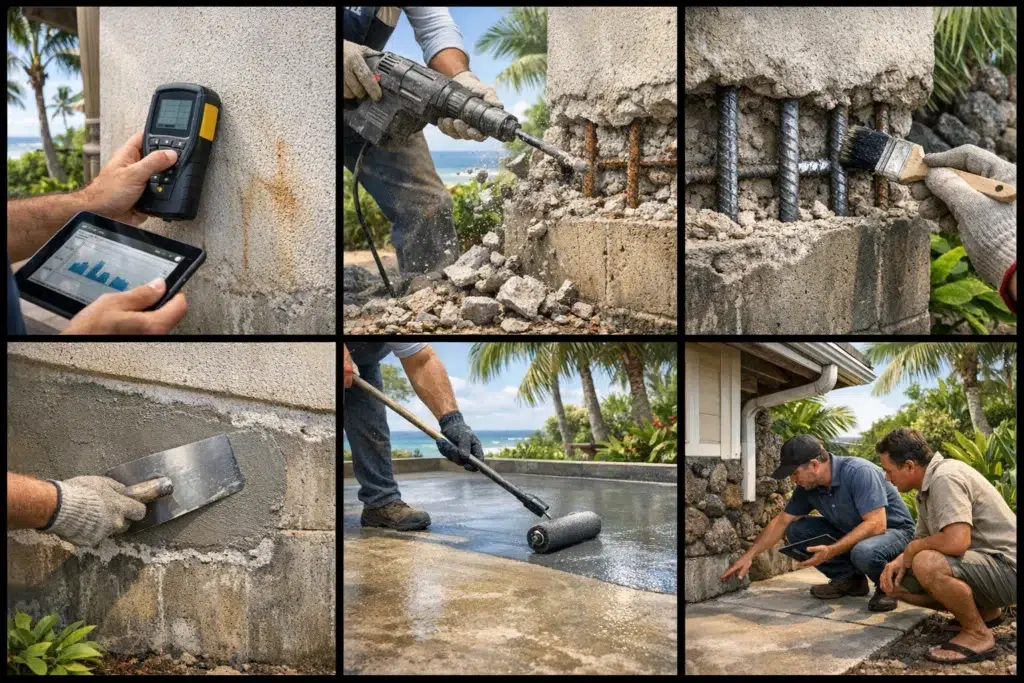
1. Surface Moisture Assessment and Testing
Professional spalling waterproofing begins with detailed moisture testing and structural evaluation. Identifying hidden water intrusion, chloride contamination, and reinforcement corrosion ensures the correct repair method is selected, preventing repeated failures and protecting structural components long-term.
2. Removal of Deteriorated Concrete
Effective spalling waterproofing requires removing all compromised concrete around corroded steel. This step eliminates weak material, exposes reinforcement for treatment, and creates a stable surface for patching compounds and protective systems to bond properly.
3. Rebar Treatment and Corrosion Protection
Spalling waterproofing includes cleaning and treating exposed steel reinforcement with corrosion inhibitors or protective coatings. Addressing active rust prevents continued expansion inside concrete and significantly extends the life of repaired structural elements in coastal Hawaii environments.
4. Structural Patching and Reinforcement
High-quality patching materials are applied during spalling waterproofing to restore structural integrity and surface continuity. Proper curing, bonding agents, and reinforcement ensure repairs match existing strength while resisting future cracking or moisture penetration.
5. Waterproof Membrane or Protective Coating Application
Spalling waterproofing systems conclude with durable membranes or coatings designed for Hawaii’s climate. These barriers prevent water intrusion, resist UV exposure, and accommodate minor movement, ensuring repaired surfaces remain protected for years.
6. Ongoing Maintenance and Inspection Planning
Long-term spalling waterproofing success depends on routine inspections and maintenance. Scheduling periodic evaluations helps detect early warning signs, maintain protective coatings, and address drainage issues before minor wear develops into significant structural deterioration.
Why Homeowners Trust United Construction Group Hawaii
United Construction Group Hawaii brings years of hands-on experience repairing and protecting concrete structures across Oahu and neighboring islands. Our team understands local environmental stressors and delivers carefully planned spalling waterproofing solutions that prioritize structural integrity, safety, and long-term durability.
Homeowners value our transparent communication, detailed assessments, and commitment to craftsmanship. Every project begins with a thorough evaluation and ends with dependable workmanship designed specifically for Hawaii’s coastal climate and building standards.
Testimonials
“Brandon and the United Construction crew are very professional and they know what they are doing!” – Alvaro Guarana Jr.
“Brandon and his team are fantastic! Their response time is always quick, and the quality of their work is consistently excellent. Both myself and my clients have been very happy with the results. Highly recommend them for their professionalism and reliability. Thank you!” – Miki Kojima
“You would be hard pressed to find a more honest, reliable, and fair priced company to work with than UCG! Consider yourself lucky if you have the opportunity to work with Brandon and his company!” – Jesse Alverio
How It Works: Our Step-by-Step Process
Step-1: On-Site Evaluation and Moisture Testing
We conduct a comprehensive inspection of affected concrete areas, perform moisture testing, and assess reinforcement exposure. This evaluation identifies underlying causes and determines whether preventative sealing or full structural restoration is required.
Step-2: Detailed Repair Plan and Transparent Estimate
After assessment, we provide a clearly outlined scope of work explaining repair methods, materials, permitting requirements, and projected timelines so homeowners understand each phase before construction begins.
Step-3: Concrete Removal and Structural Repair
Damaged concrete is carefully removed, reinforcement treated, and structural patching completed using proven techniques designed to withstand Hawaii’s humid and coastal conditions.
Step-4: Waterproofing System Installation
We apply high-performance membranes or protective coatings tailored to the structure’s exposure level, ensuring long-term resistance to moisture, salt air, and UV degradation.
Step-5: Final Inspection and Maintenance Guidance
Before project completion, we perform a quality inspection and provide maintenance recommendations to help homeowners preserve repairs and prevent recurring spalling issues.
Frequently Asked Questions
How much does spalling waterproofing cost in Hawaii?
How long does a spalling waterproofing project take?
Do I need permits for spalling repairs?
Can I stay in my home during repairs?
How can I prevent future concrete spalling?
Schedule Your Spalling Waterproofing Consultation in Hawaii
If you’ve noticed cracking, flaking concrete, or moisture-related damage, scheduling a professional evaluation can help you protect your home before repairs escalate. Contact United Construction Group Hawaii to discuss your concerns, explore practical solutions, and develop a plan tailored to your property’s needs.