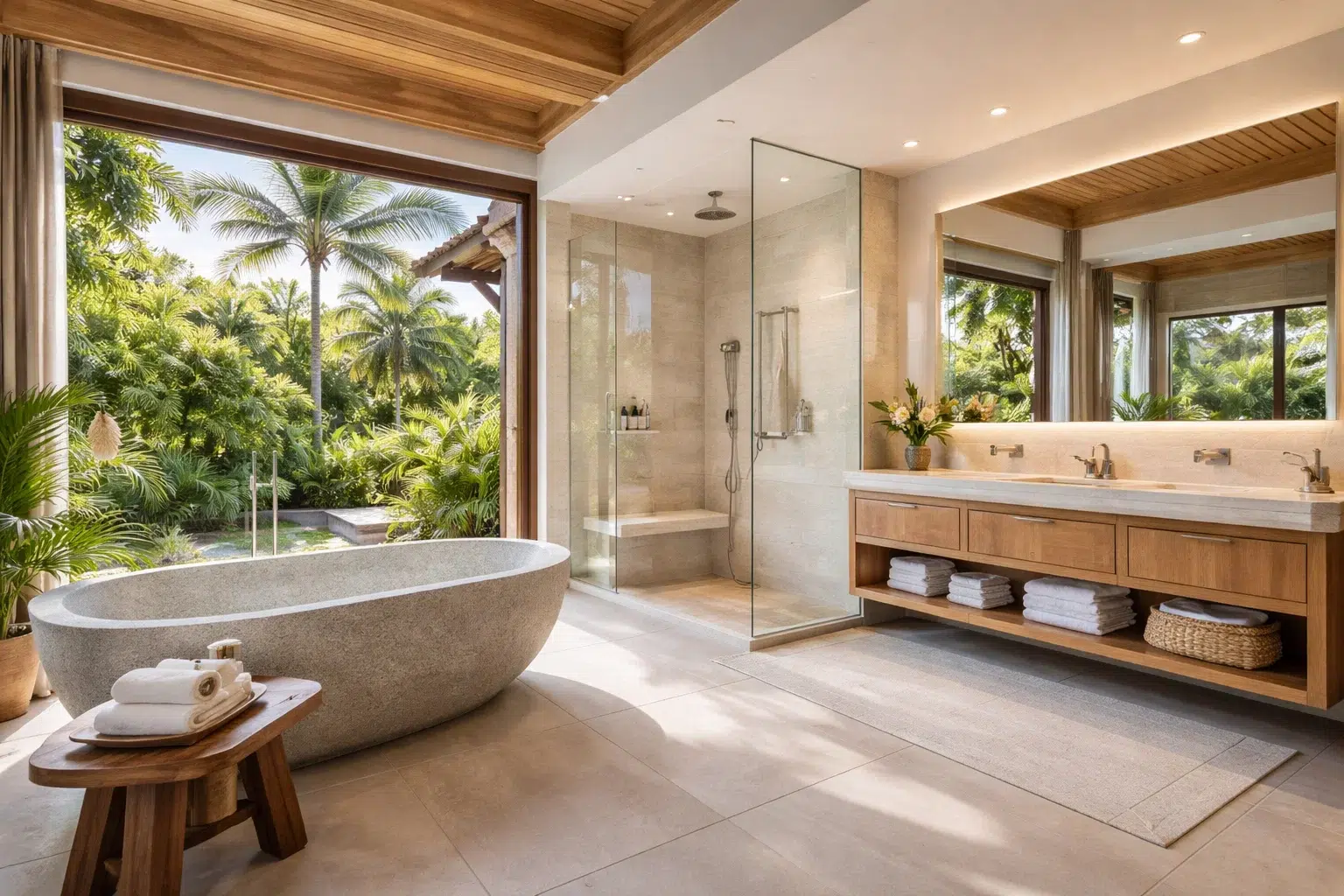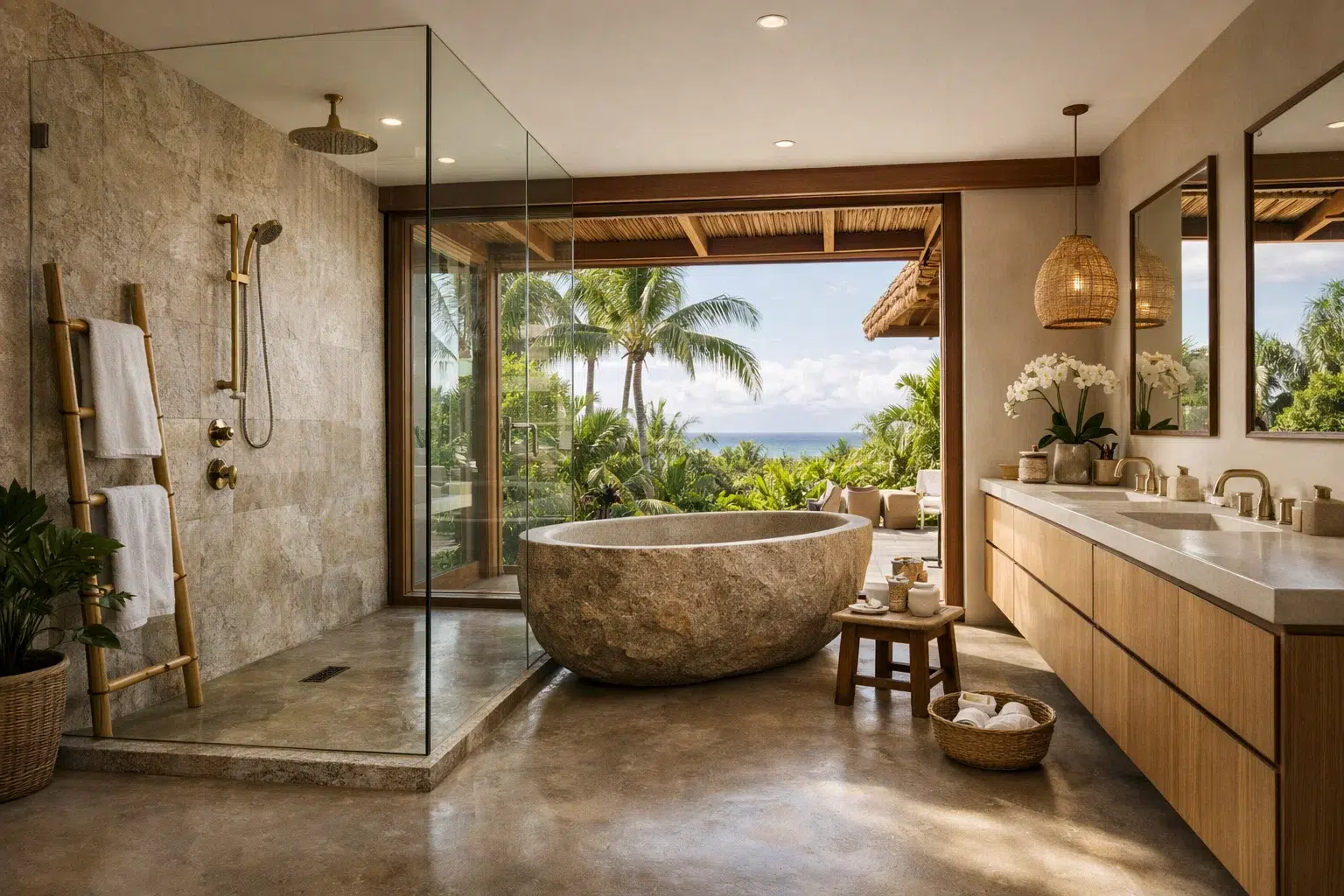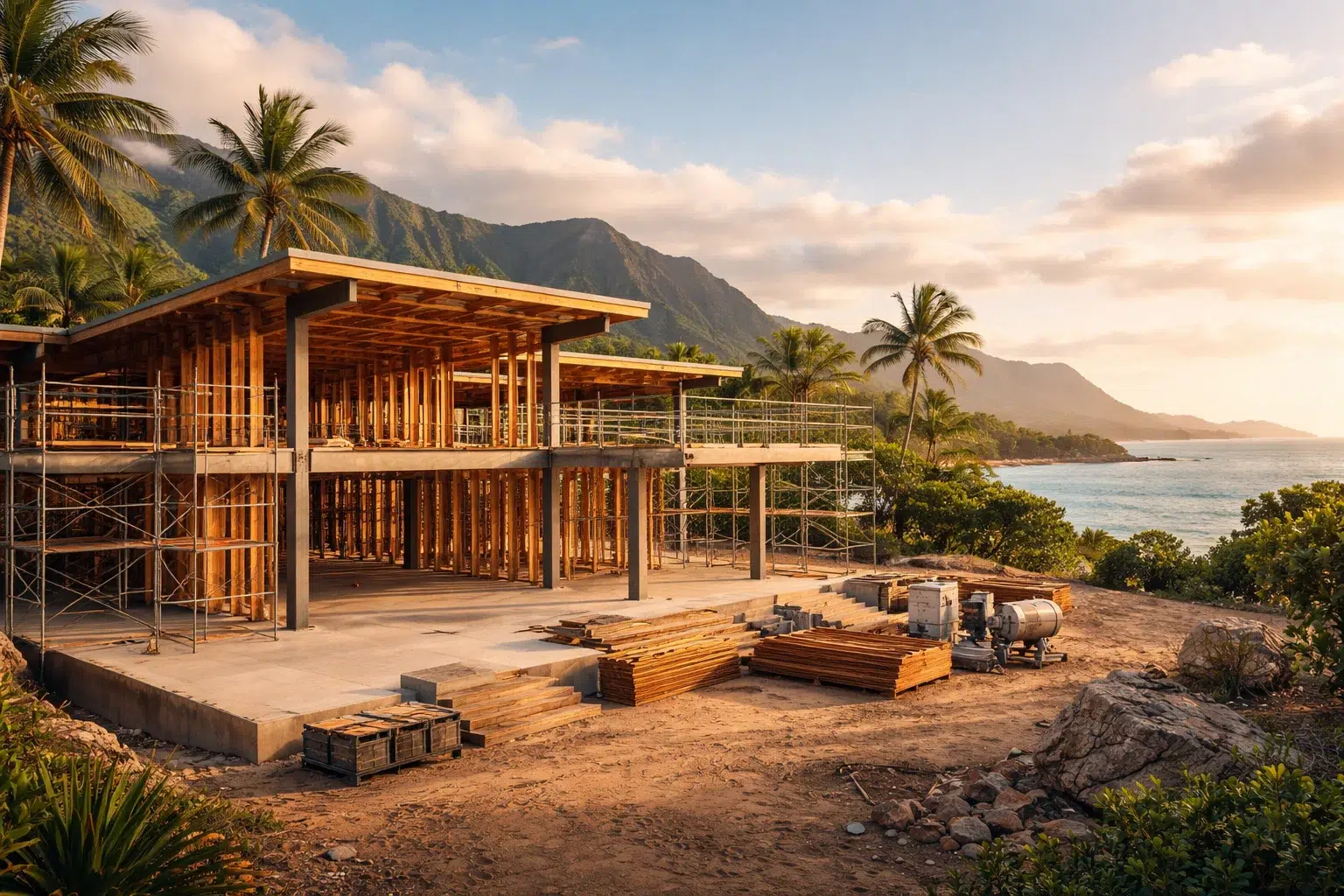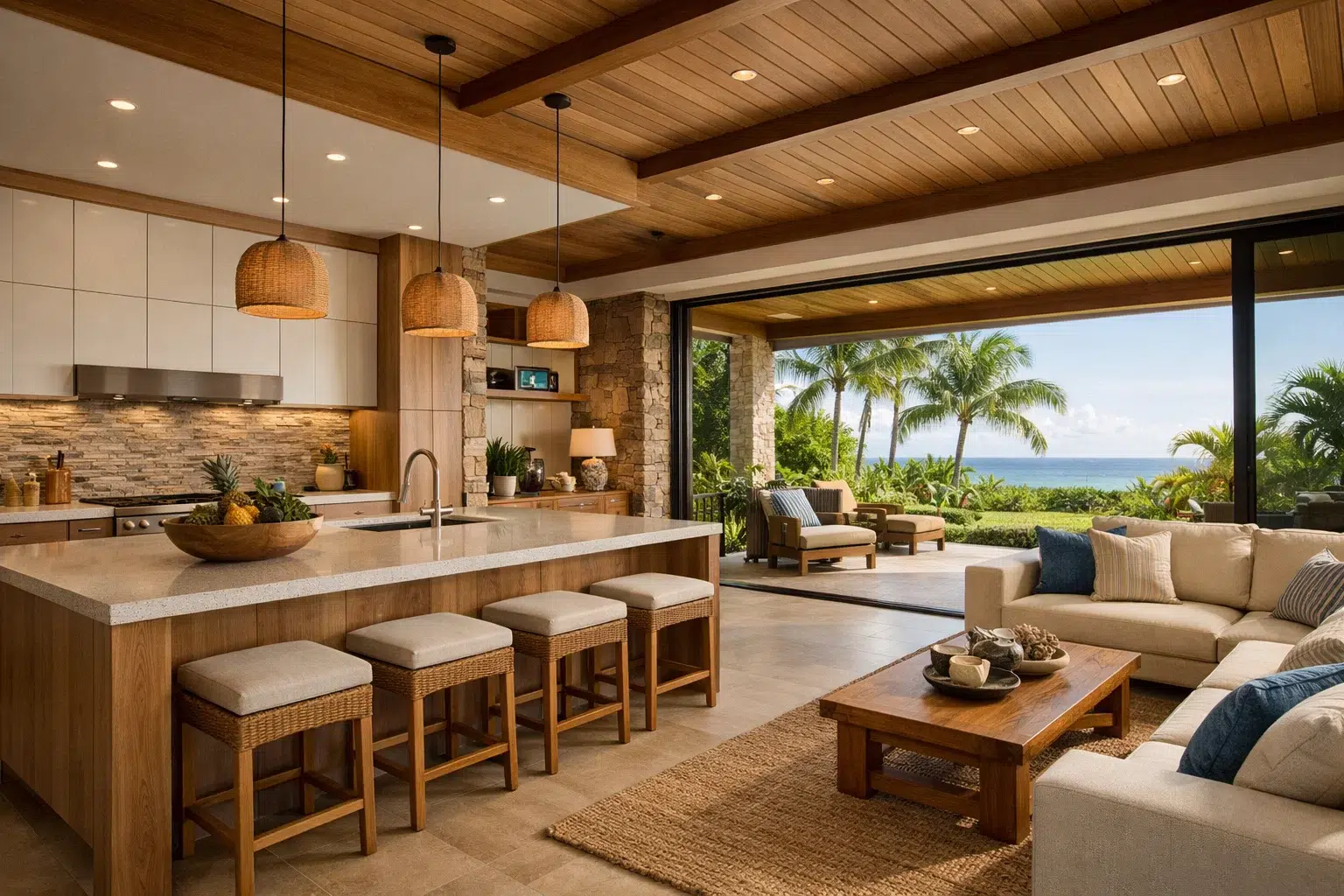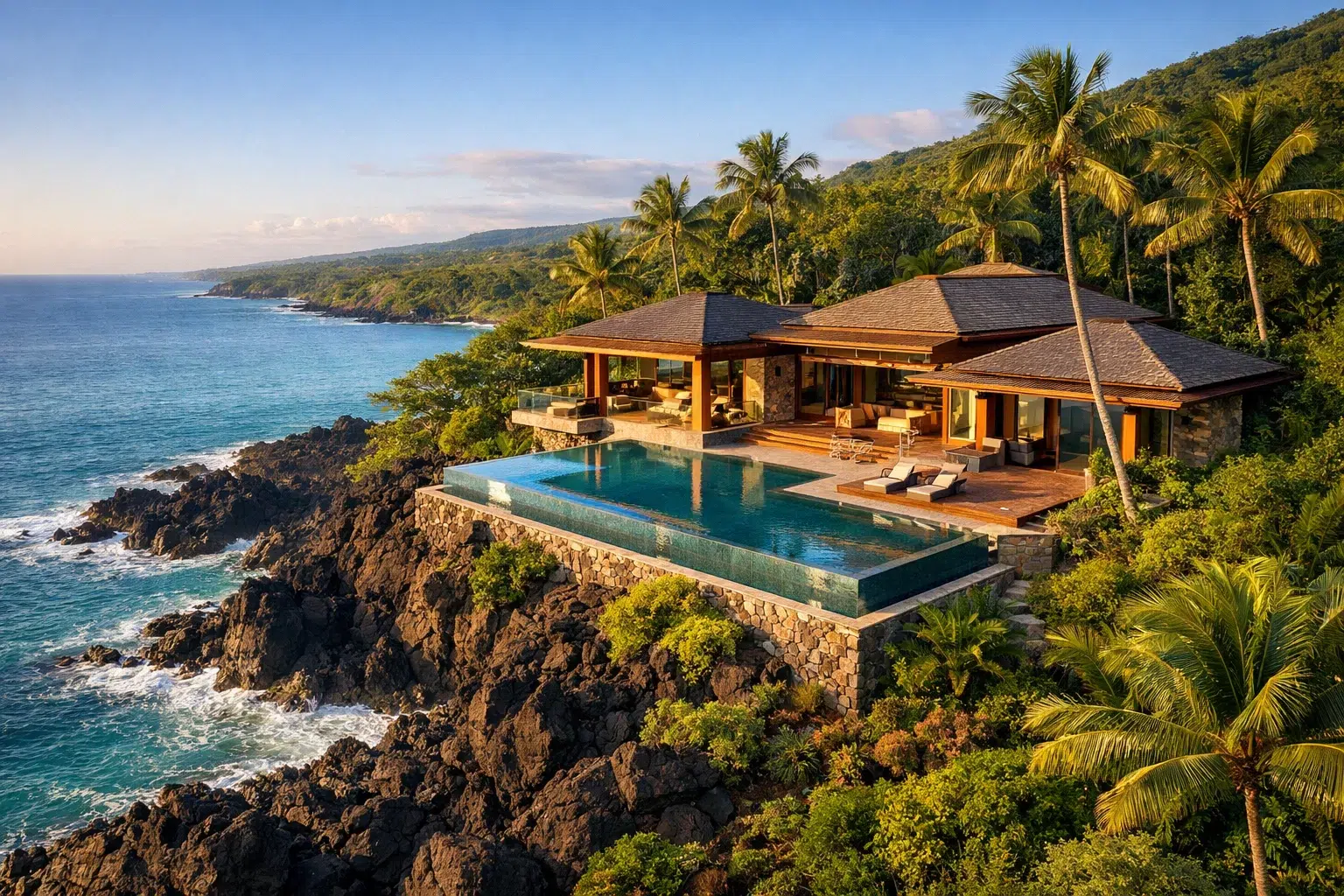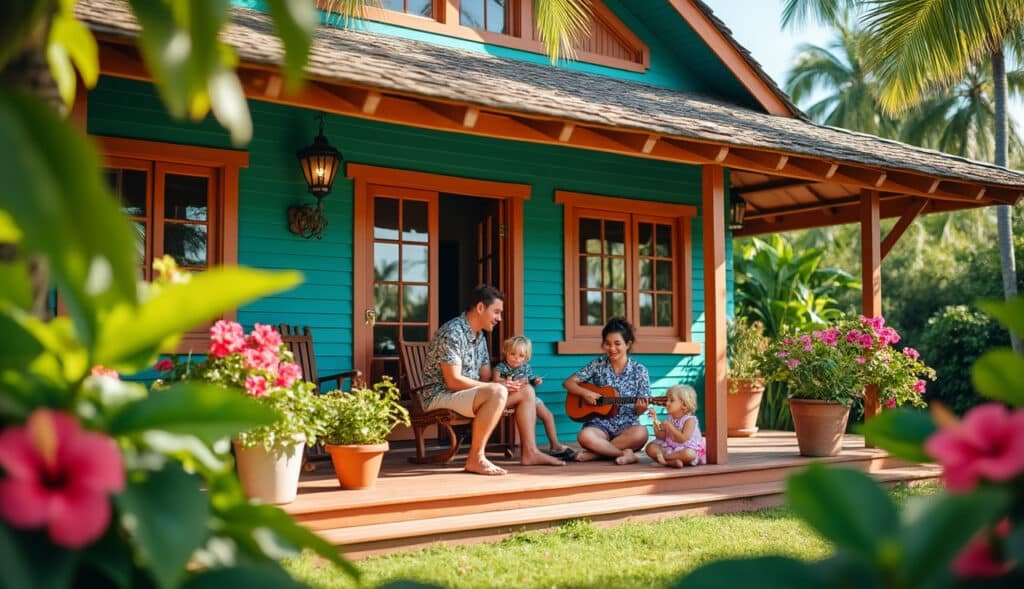
Hawaiian home styles blend island charm with practical design for tropical living. These homes feature open layouts that welcome cool breezes and connect indoor spaces with nature. From traditional Polynesian-inspired huts to modern beachfront properties, Hawaiian homes share key elements like large windows, natural materials, and outdoor living areas.
The signature lanai (covered porch) serves as an extension of the home where families gather and enjoy the island climate. Many homes showcase local craftsmanship through hand-carved wooden details and native art that tells stories of Hawaiian culture.
Whether you’re dreaming of a vacation home or planning to live in paradise full-time, understanding these unique architectural styles helps you create an authentic island retreat. Hawaiian homes aren’t just beautiful; they’re built to work with the tropical environment while honoring rich cultural traditions.
The Evolution and Signature Elements of Hawaiian Home Styles
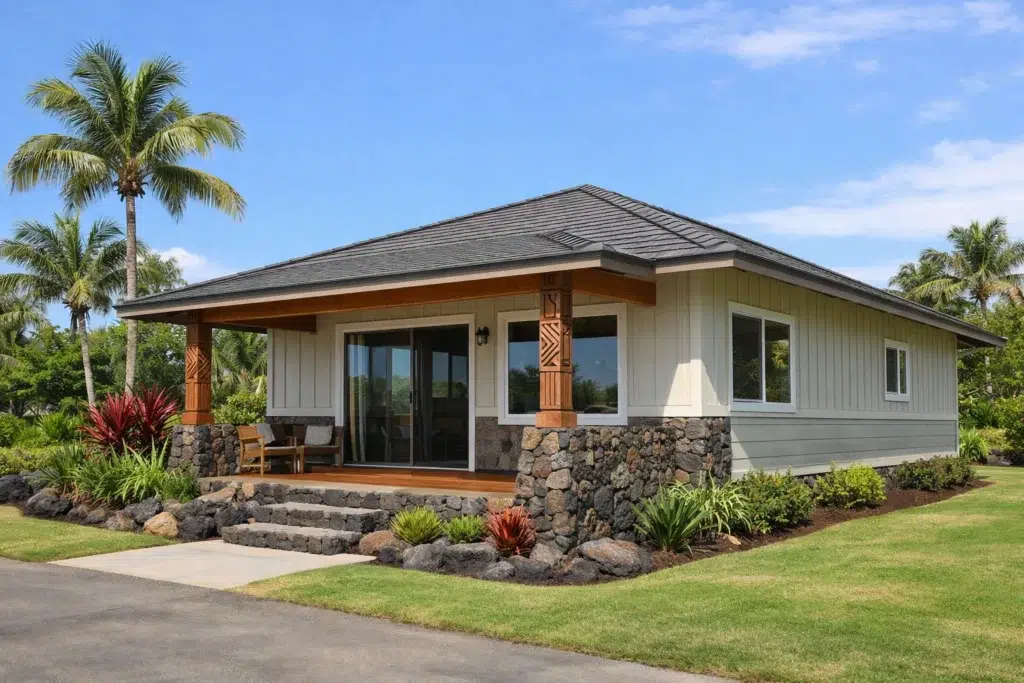
Hawaiian home styles blend rich cultural history with natural beauty. These island homes draw from native Hawaiian traditions and Polynesian roots. The result is a unique tropical architecture that feels both timeless and refreshing.
Traditional Hawaiian design embraces the island’s climate and landscape. Open floor plans allow cool breezes to flow through the home. Large windows bring in natural light and showcase ocean views. The famous lanai (covered porch) creates a smooth flow between indoor and outdoor living.
Local materials play a key role in authentic Hawaiian homes. Lava rock, bamboo, and native woods add natural texture and connect buildings to the land. These elements honor Hawaii’s volcanic origins while creating homes that look like they belong in their setting.
Embracing Polynesian Influence and Traditional Patterns
Polynesian style brings bold patterns and meaningful symbols to Hawaiian homes. You’ll see these in:
- Carved wooden posts and beams
- Woven wall coverings
- Geometric textile designs
- Thatched roof elements
These traditional patterns tell stories of Hawaiian culture and history. Many designs show respect for nature, family ties, and ancient gods. Modern Hawaiian homes often include these patterns in updated ways through artwork, fabrics, and architectural details.
The thatched roof style remains an iconic element, though modern materials now make it more durable. This distinctive roofing creates the classic island silhouette that says “Hawaiian home” at first glance.
Local Craftsmanship and Hand-Carved Accents
What truly sets Hawaiian homes apart is the emphasis on local craftsmanship. Island artisans create one-of-a-kind elements that mass production simply cannot match.
Hand-carved accents add character throughout Hawaiian homes. Door frames, support beams, and furniture showcase skilled woodworking. These pieces often feature:
- Ocean motifs like waves and fish
- Native plants and flowers
- Traditional Hawaiian symbols
- Nature-inspired patterns
The use of native materials by local craftspeople creates an authentic island feel. Koa wood, known for its rich color and beautiful grain, appears in special furniture pieces. Volcanic stone forms sturdy walls and outdoor features.
This focus on custom craftsmanship means each Hawaiian home tells its own story. The blend of traditional techniques with modern comfort creates spaces that honor the past while embracing island living today.
Combining Traditional Hawaiian Design with Modern Island Living
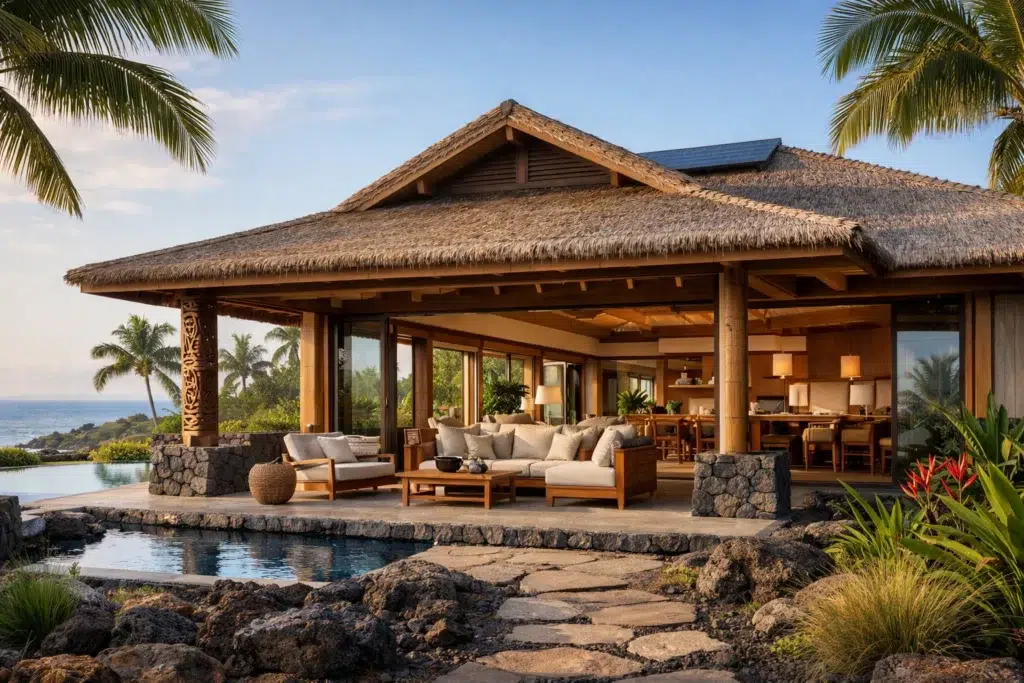
Hawaiian homes have changed over time, but they keep their special island feel. Traditional Hawaiian design uses natural materials like bamboo, thatched roofs, and lava rock. These homes connect with nature and honor local culture. Today’s modern Hawaiian homes blend old and new styles for a fresh look.
Modern homes in Hawaii often have open floor plans that let cool breezes flow through. Walls slide open to connect indoor and outdoor spaces. Large windows frame ocean views in oceanfront homes. These features create the perfect indoor-outdoor flow that island living is known for.
Coastal home design in Hawaii takes advantage of the beautiful setting. Homes are built to catch trade winds for natural cooling. They use wide roof overhangs to provide shade. Many new homes include sustainable materials and solar power while still looking like they belong in paradise.
Fusion of Tropical Architecture with Open Floor Plan
Tropical architecture works perfectly with modern open designs. Huge windows bring natural light inside and make rooms feel bigger. High ceilings help hot air rise and escape, keeping homes cool naturally.
Many new Hawaiian homes feature natural ventilation systems that reduce the need for air conditioning. Cross-breezes flow through carefully placed windows and doors. Some homes include organic architecture elements where the building seems to grow from the landscape.
Island homes today often have:
- Living areas that open directly to lanais
- Sliding glass walls that disappear completely
- Outdoor showers surrounded by tropical plants
- Kitchens that serve both indoor and outdoor spaces
Innovation in Hawaiian Interior Design and Lanai Design
Hawaiian interior design brings the outdoors in with natural textures and colors. Modern homes might use bamboo accents alongside sleek furniture. Wall colors often reflect the ocean, sand, and tropical plants.
The lanai (covered porch) remains essential in modern Hawaiian homes. Today’s lanais serve as outdoor living rooms with comfortable furniture, outdoor kitchens, and even entertainment systems. These outdoor entertaining spaces extend the home’s living area and take advantage of Hawaii’s perfect climate.
Designers now blend Polynesian influence with modern style in creative ways. Traditional patterns appear on contemporary fabrics. Hand-carved details add warmth to modern spaces. The result is homes that feel both timeless and current, perfect for island living today.
Popular Hawaiian Home Styles in Hawaii
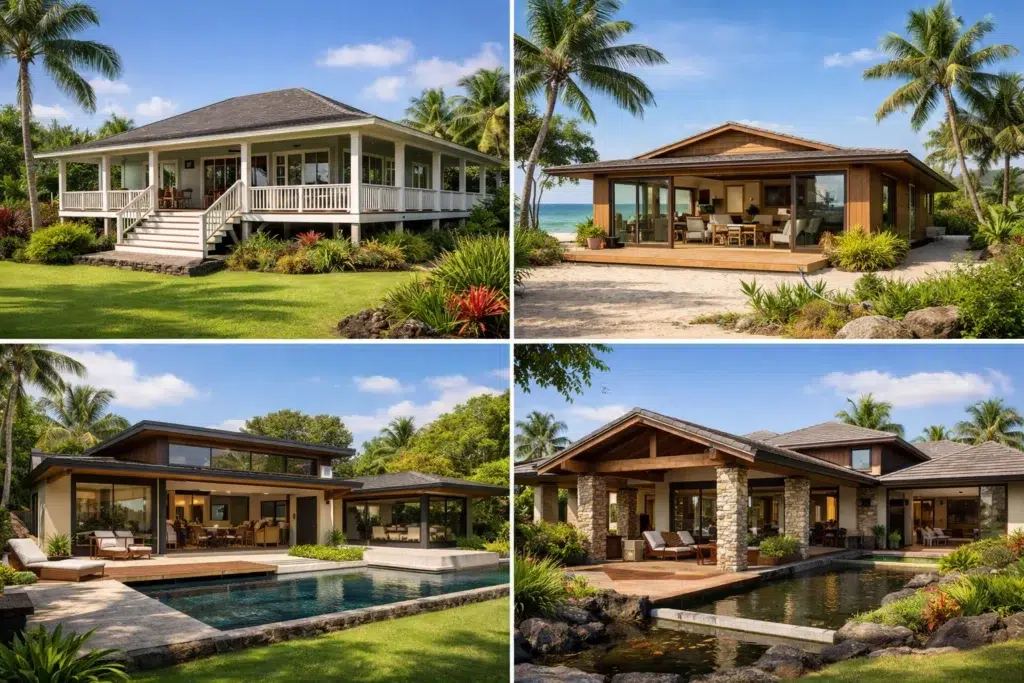
Hawaiian home styles range from traditional to contemporary, offering options that suit different budgets, locations, and lifestyle goals. Selecting the right style depends on climate exposure, lot size, neighborhood context, and homeowner priorities.
1. Plantation-Style Homes
Plantation-style homes feature elevated foundations, wide lanais, simple rooflines, and symmetrical layouts. Originally built for ventilation and practicality, these homes remain popular for their charm, affordability, and adaptability to renovations, making them ideal for many Hawaii homeowners.
2. Beach Bungalows
Beach bungalows emphasize casual island living with compact layouts, open interiors, and strong connections to outdoor spaces. Often found near coastal areas, these homes prioritize airflow, relaxed aesthetics, and easy maintenance, making them appealing for primary residences or vacation properties.
3. Modern Tropical Homes
Modern tropical homes blend contemporary design with island principles. Clean lines, large glass openings, sustainable materials, and advanced building systems combine with lanais and courtyards to create efficient, visually striking homes suited for Hawaii’s climate and modern lifestyles.
4. Island Contemporary Homes
Island contemporary homes merge traditional Hawaiian elements with modern comfort. These designs balance natural materials, shaded outdoor areas, and flexible interiors, offering homeowners a refined yet relaxed living environment that works well across diverse island neighborhoods.
Cost Factors to Consider Before Starting Your Project
Planning a Hawaiian home-style project requires careful consideration of multiple cost factors. Understanding how design choices affect budget helps homeowners make informed decisions while avoiding unexpected expenses during construction or renovation.
| Cost Factor | Description |
|---|---|
|
Project Scope |
New construction, additions, or remodels significantly affect overall complexity and cost. |
|
Materials |
Climate-resistant materials often cost more initially but reduce long-term maintenance needs. |
|
Permits |
Hawaii’s permitting process varies by county and influences timelines and administrative costs. |
|
Labor |
Skilled local labor ensures code compliance and quality workmanship but impacts budgeting. |
|
Timeline |
Extended timelines can increase carrying costs, labor expenses, and material price fluctuations. |
Balancing these factors helps homeowners prioritize durability, efficiency, and long-term value rather than focusing solely on upfront costs, which can be misleading in Hawaii’s construction environment.
Why Professional Contractors Matter in Hawaii
Professional contractors play a critical role in successfully executing Hawaiian home styles. Local expertise ensures designs translate effectively into durable structures that meet environmental demands, regulatory requirements, and homeowner expectations throughout the building process.
- Knowledge of local zoning, permitting, and inspection processes across different Hawaii counties.
- Experience selecting materials suitable for humidity, salt air, termites, and intense sun exposure.
- Proper sequencing of construction activities to minimize delays caused by weather or inspections.
- Compliance with safety standards, insurance requirements, and liability protections for homeowners.
- Long-term value protection through quality workmanship and code-compliant construction practices.
Hawaiian Home Styles: 6 Ultimate Proven Designs for Island Homes
1. Traditional Hawaiian Hale Design
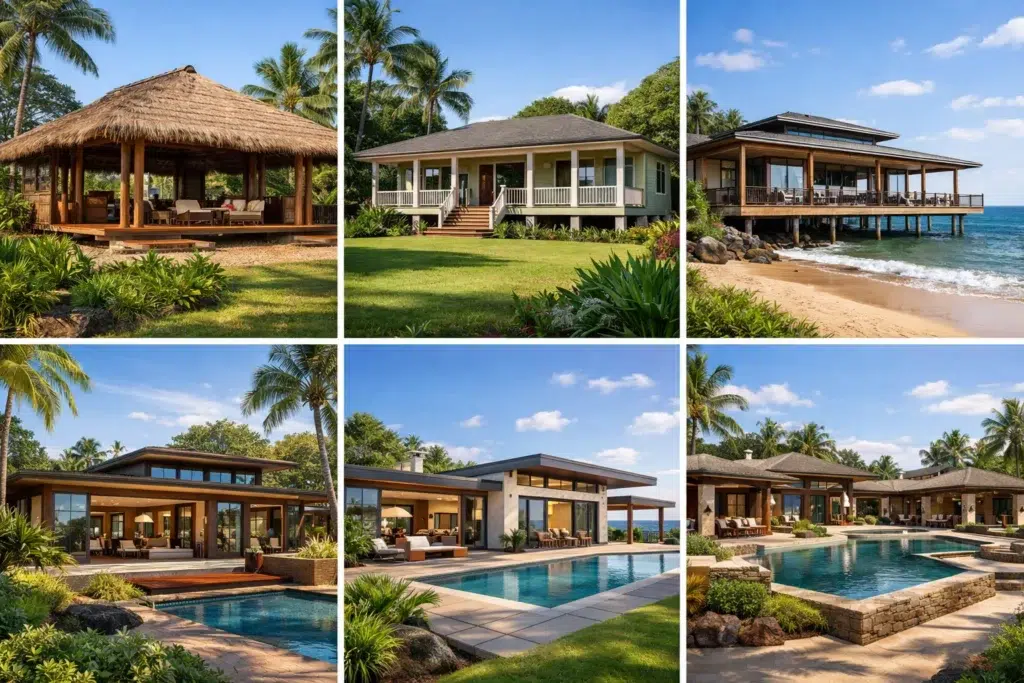
Traditional Hawaiian hale designs emphasize simplicity, natural materials, and strong environmental awareness. These structures prioritize airflow, shade, and harmony with the surrounding landscape, influencing many modern Hawaiian home styles focused on sustainability and climate responsiveness today.
2. Plantation-Inspired Residences
Plantation-inspired residences reflect Hawaii’s agricultural history through raised floors, long rooflines, and expansive lanais. Their adaptable layouts and timeless appearance make them practical for renovations while preserving architectural character valued across many island communities.
3. Coastal Beachfront Homes
Coastal beachfront homes focus on maximizing ocean views while protecting interiors from salt air and storms. Design strategies include elevated foundations, durable exterior materials, and shaded outdoor spaces that balance luxury, comfort, and environmental resilience.
4. Mid-Century Island Homes
Mid-century island homes combine postwar architectural trends with tropical adaptations. Open plans, clerestory windows, and integration with outdoor spaces create comfortable, efficient living environments that remain popular among homeowners seeking retro-inspired island designs.
5. Contemporary Island Architecture
Contemporary island architecture emphasizes sustainability, technology, and clean aesthetics. Energy-efficient systems, modern materials, and flexible spaces support evolving lifestyles while maintaining core Hawaiian principles of indoor-outdoor living and climate adaptability.
6. Luxury Tropical Estates
Luxury tropical estates showcase expansive layouts, resort-style amenities, and premium materials. These homes prioritize privacy, outdoor entertaining, and seamless transitions between interior and exterior spaces while requiring careful planning to meet Hawaii’s regulatory and environmental standards.
Why Homeowners Trust United Construction Group Hawaii
United Construction Group Hawaii has built a reputation for delivering thoughtful, well-executed projects that respect Hawaii’s environment and homeowner goals. Their experience across renovations, custom builds, and additions allows clients to navigate complex projects with clarity, confidence, and consistent communication.
Homeowners trust United Construction Group Hawaii for transparent planning, skilled craftsmanship, and dependable project management. Their commitment to quality, safety, and long-term value ensures each project aligns with local requirements while supporting comfortable, durable island living solutions.
Testimonials
“Brandon and the United Construction crew are very professional and they know what they are doing!” – Alvaro Guarana Jr.
“Brandon and his team are fantastic! Their response time is always quick, and the quality of their work is consistently excellent. Both myself and my clients have been very happy with the results. Highly recommend them for their professionalism and reliability. Thank you!” – Miki Kojima
“You would be hard pressed to find a more honest, reliable, and fair priced company to work with than UCG! Consider yourself lucky if you have the opportunity to work with Brandon and his company!” – Jesse Alverio
How It Works: Our Step-by-Step Process
Step-1: Initial Consultation
The process begins with a detailed consultation to understand homeowner goals, property conditions, budget considerations, and preferred Hawaiian home styles while discussing feasibility, timelines, and regulatory factors unique to the project’s location.
Step-2: Design and Planning
Design development integrates chosen Hawaiian home styles with site conditions, building codes, and material selection, ensuring plans support durability, efficiency, and long-term performance while aligning with homeowner lifestyle and aesthetic preferences.
Step-3: Permitting and Approvals
Permit preparation and submission address county-specific requirements, zoning regulations, and inspections. Professional management helps reduce delays and ensures all approvals are secured before construction begins, minimizing costly interruptions later.
Step-4: Construction Phase
During construction, skilled trades execute plans with attention to detail, safety, and quality. Ongoing communication keeps homeowners informed while adapting to weather conditions and inspections common in Hawaii projects.
Step-5: Final Walkthrough and Completion
The project concludes with a comprehensive walkthrough, addressing final details, inspections, and homeowner questions, ensuring the completed home meets expectations, complies with regulations, and supports comfortable island living long-term.
Frequently Asked Questions
How much do Hawaiian home styles cost to build?
How long does construction typically take in Hawaii?
Do Hawaiian home styles require special permits?
Can homeowners live on-site during renovations?
Are Hawaiian home styles suitable for modern living needs?
Start Planning Your Hawaiian Home Style Project Today
Exploring Hawaiian home styles is the first step toward creating a comfortable and durable island home. Scheduling a professional consultation for your home construction helps clarify design options, costs, and timelines, ensuring your project aligns with Hawaii’s unique environment and long-term living goals.