Understanding the ADU Permits Honolulu Process for a Smooth and Compliant Build
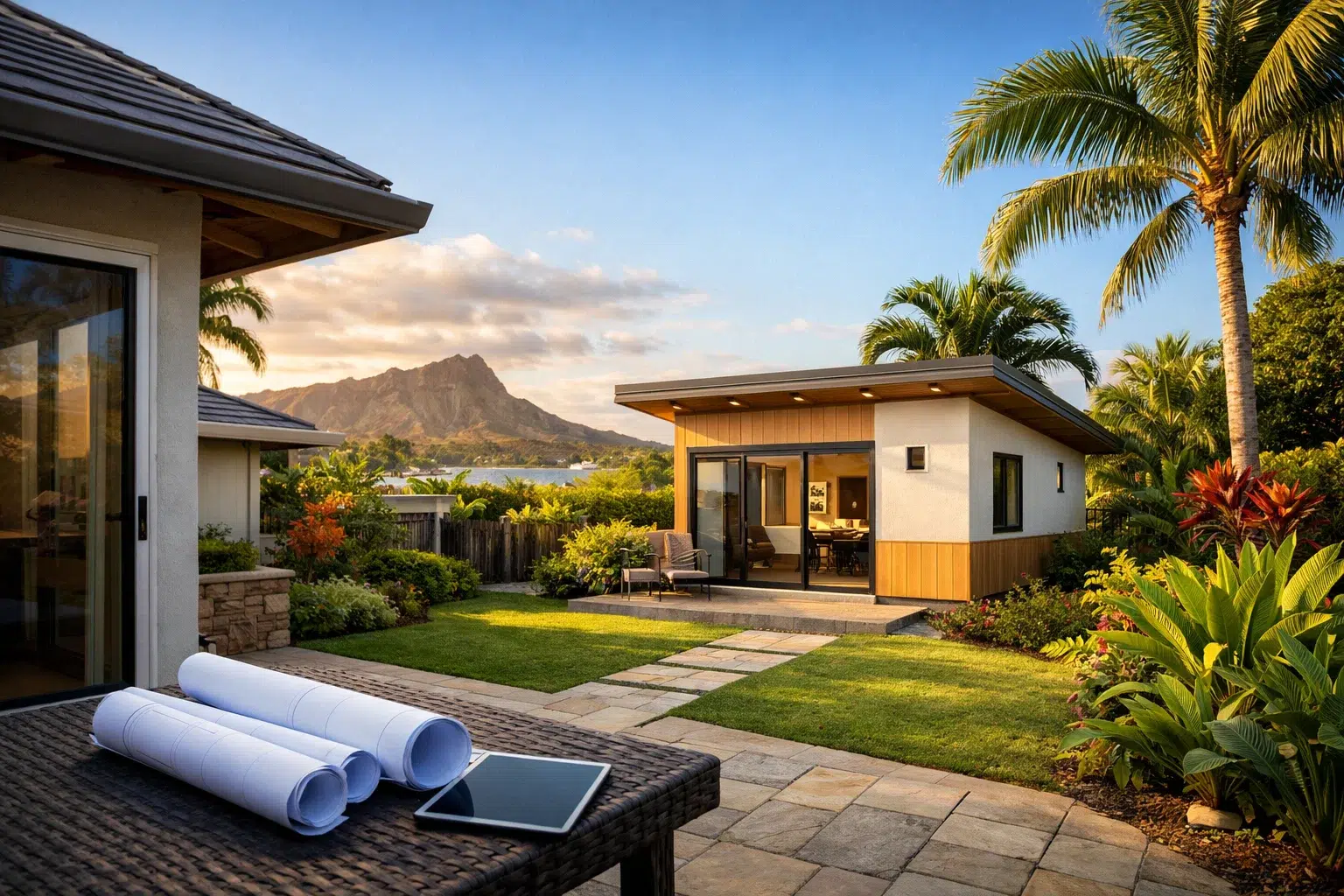
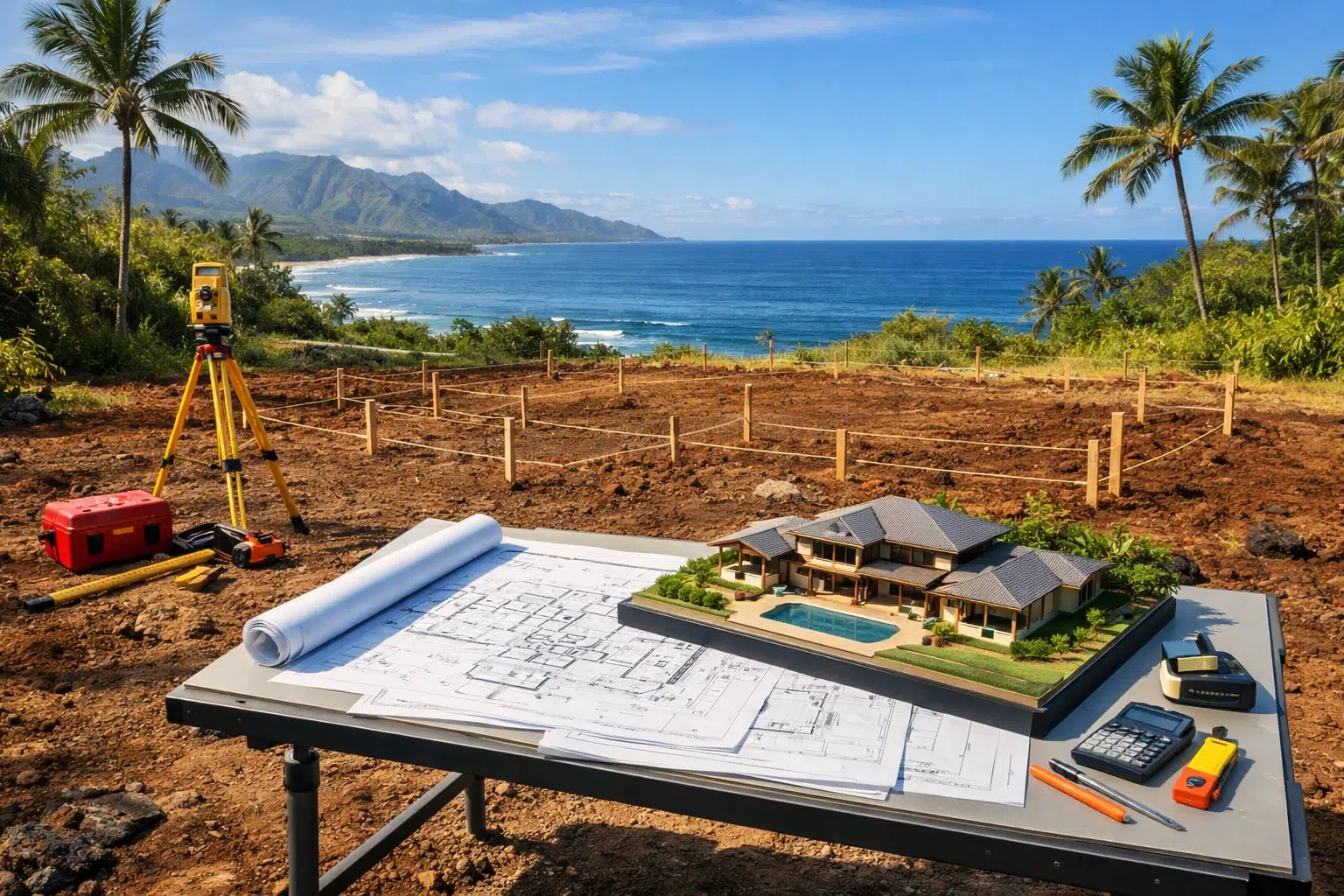
Navigating the adu permits Honolulu process can feel like an overwhelming task for many homeowners. In 2026, the city and county of Honolulu introduced updated rules aimed at increasing housing density, but these changes come with a complex set of required compliance standards. To achieve a successful build, you need a professional approach that prioritizes pre-construction planning Hawaii and expert construction project management.
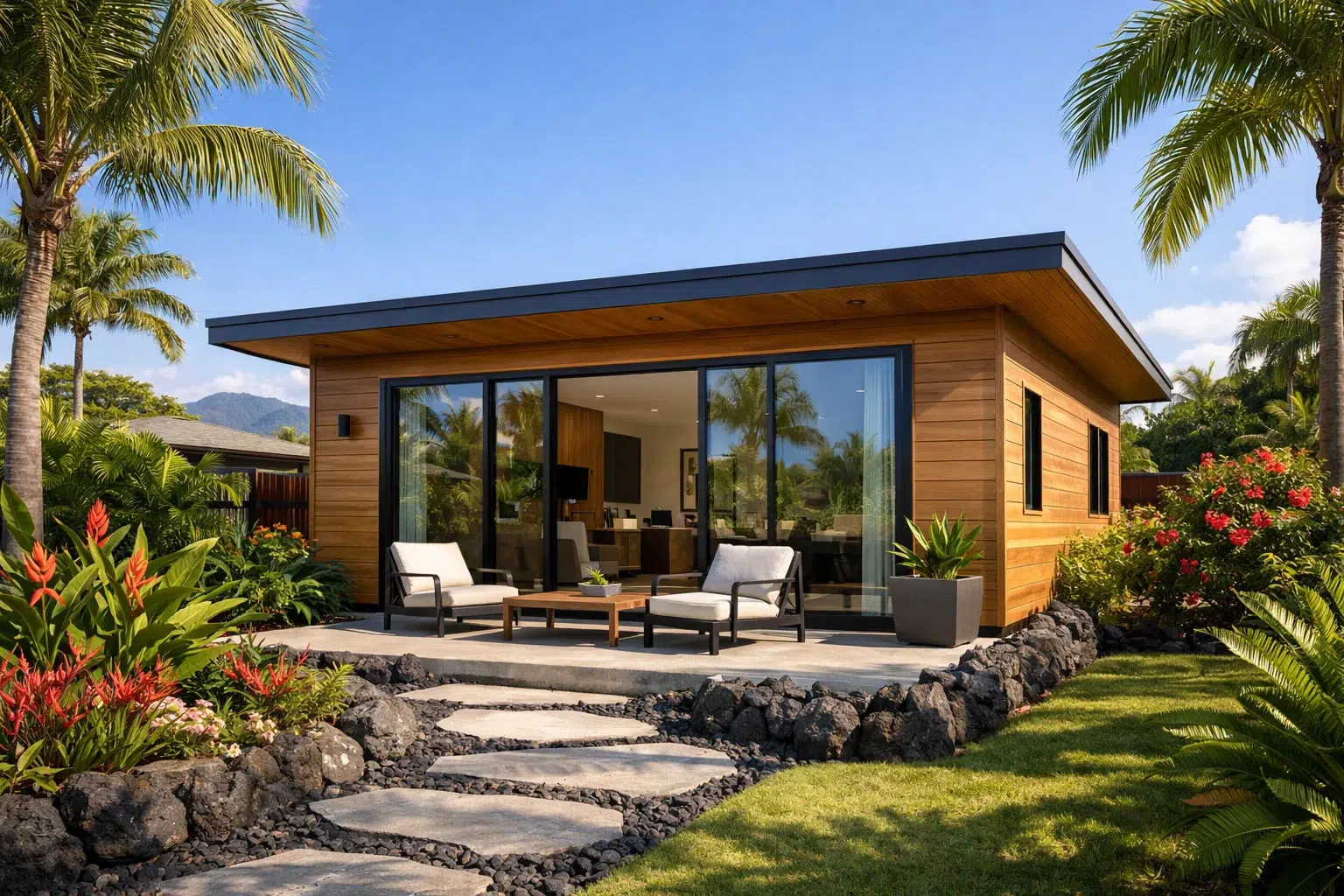
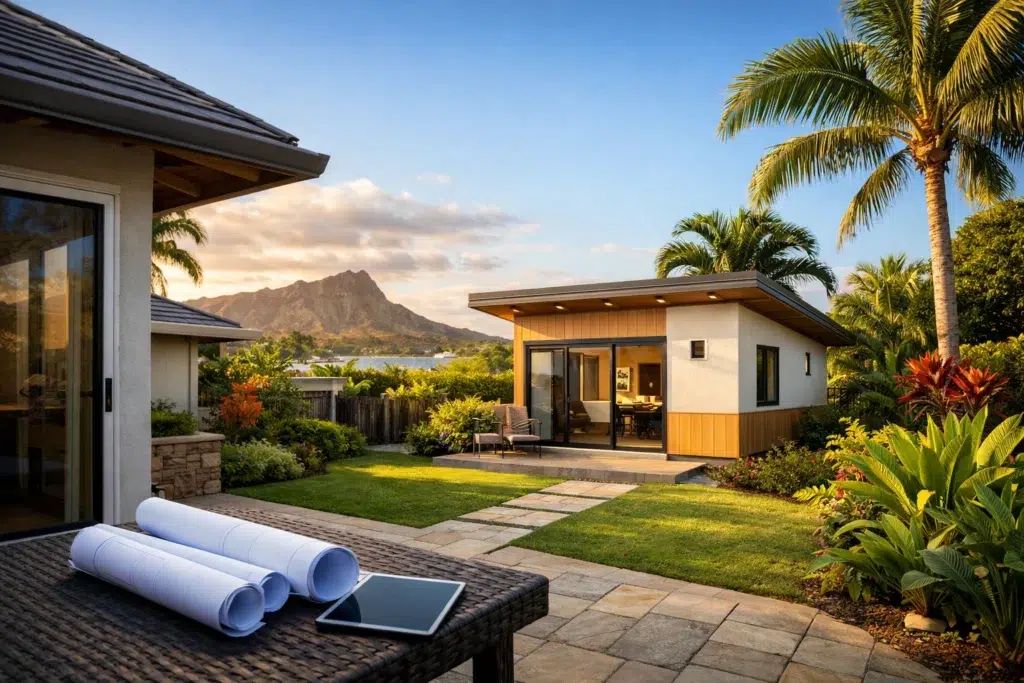
At UCG Hawaii, we specialize in guiding you through the entire construction process, from the initial site layout to the final certificate of occupancy. Whether you are adding a detached accessory dwelling or an attached unit, our team ensures your project meets every code compliance metric.
The Impact of the 2026 Honolulu ADU Law Updates
The landscape for construction projects in the county of Honolulu has shifted significantly. Recent state mandates now require the county to allow for multiple dwellings on most residentially zoned lots. For Honolulu residents, this means more value can be unlocked from your property, but it also means the building permit applications are more scrutinized for utility capacity.

New Size and Bathroom Regulations
Under current development rules, the allowable square footage for an accessory dwelling unit has been simplified. For a zoning lot under 5,000 square feet, you can typically build an adu up to 500 square feet. For a larger lot size, the scope increases to 1,000 square feet. During the pre-construction phase, our architect and engineers will verify your specific TMK to ensure your plan matches these limits.
Utility and Sewer Adequacy
A major focus for the city in 2026 is sewer adequacy. Adding an additional dwelling increases the demand on the county system. Part of our pre-construction planning Hawaii involves obtaining a Sewer Adequacy Memo to confirm the system can handle the new ADU.
If your existing land is on a cesspool, state law now mandates a transition to a septic system or sewer connection. Our team of consultants handles these technical details early to prevent unforeseen challenges with your permit application.
The Step-by-Step Honolulu ADU Permit Process

To protect your budget and maintain momentum, UCG Hawaii follows a structured organization for every project.
Step-1: Pre-Construction Planning and Feasibility
We begin with a detailed consultation to establish the feasibility of your accessory dwelling. This stage includes a review of your property setbacks, lot coverage, and site access. We use 3D design to help you visualize the structure and ensure it meets your family’s needs. We also verify the legality of any existing ohana unit or main house additions to ensure they are approved.
Step-2: Coordinating with the DPP and Submitting Applications
Submitting building permit applications to the Honolulu Department of Planning and Permitting (DPP) is now handled through the HNL Build digital system. Our team takes control of this process, ensuring all construction documents and files meet city standards. We coordinate with the Board of Water Supply to confirm that your water meter and water supply are applicable for the added unit.
Step-3: Plan Review and Permit Issuance
The plan review stage is where the city performs a deep review of your approved plans. We stay engaged with the agencies involved to address any corrections or clearance notice items. Once permit issuance is complete and all fees are obtained, the construction stage can begin.
Step-4: Construction Management and Inspections
Our construction project management team oversees the procurement of materials and manages the contractors on-site. We schedule all required inspections with the county at key milestones to ensure the work meets the highest quality standards.
ADU Permits Honolulu: 6 Smart and Amazing Tips
Building an accessory dwelling unit can be a rewarding investment, but understanding local regulations is essential. These practical insights will help homeowners confidently navigate approvals and successfully secure ADU permits Honolulu the smart way.

1. Understand Honolulu’s Zoning Requirements
Before starting your project, research residential zoning rules that impact lot size, setbacks, and building height. Carefully reviewing local ordinances helps streamline ADU permits Honolulu applications, and prevents costly revisions or frustrating construction delays later.
2. Prepare Complete and Accurate Documentation
Submitting organized plans, surveys, and supporting paperwork reduces review time significantly. Incomplete submissions are the most common reason ADU permits Honolulu get delayed, so double-check architectural drawings, engineering details, and required application forms beforehand.
3. Work with Experienced Local Professionals
Hiring architects and contractors familiar with Honolulu regulations can simplify the entire process. Professionals who regularly handle ADU permits Honolulu understand city expectations, anticipate compliance issues, and help you avoid expensive corrections during reviews.
4. Budget for Fees and Processing Timelines
Permit costs, utility connections, and inspection fees should be factored into your financial plan. Planning for ADU permits Honolulu expenses ensures smoother approval timelines and prevents unexpected financial strain midway through construction.
5. Schedule Inspections Strategically
Honolulu requires inspections at multiple construction stages to confirm safety and code compliance. Staying organized and booking inspections promptly helps keep ADU permits Honolulu active and avoids project slowdowns caused by missed approvals.
6. Stay Updated on Regulation Changes
Building codes and housing policies can evolve, affecting design and approval requirements. Regularly checking official updates related to ADU permits Honolulu helps homeowners stay compliant and avoid setbacks triggered by outdated information.
Why Professionalism Matters in Hawaii Construction
Lorem ipsum dolor sit amet, consectetur adipiscing elit. Ut elit tellus, luctus nec ullamcorper mattis, pulvinar dapibus leo.
In Hawaii, the complexity of the construction process is high. Choosing a professional company like UCG Hawaii provides several value-added benefits:
Financial Clarity: We establish a realistic budget and use value engineering to protect you from cost overruns.
Transparent Communication: We communicate progress through regular updates, so you always know the timing of the next phase.
Regulatory Compliance: We ensure your approved adu meets all safety, fire, and health codes, allowing for a smooth completion.
Frequently Asked Questions (FAQs)
How long does it take for permit issuance in Honolulu in 2026?
Can I build an ADU on a property under a Condominium Property Regime (CPR)?
What are the parking requirements for a new ADU?
Does the Board of Water Supply require a new water meter?
How do you handle a zoning adjustment?
Start Your ADU Journey with Confidence
Building an ADU is one of the best ways to provide for your family and increase your property value in Hawaii. By partnering with UCG Hawaii, you get a team dedicated to professionalism, quality, and clear communication. Contact UCG Hawaii today to start your secondary suite (ADU) journey with confidence and turn your vision into reality.