A Complete 2026 Guide to Building in Hawaii: Costs, Timelines, and What to Expect
Turning your vision of a Hawaiian home into reality requires navigating a construction process unlike anywhere else in the United States. From shipping delays that add weeks to your timeline to permits that can stall for months, building a house in Hawaii demands realistic expectations and a solid team of local professionals.
This guide breaks down everything you need to know about building in Hawaii as of 2026—from actual costs per square foot to permit timelines, material choices, and financing strategies that work in the islands.
Is It Better to Buy or Build in Hawaii Right Now?

The buy-versus-build decision in Hawaii comes down to trade-offs between speed, cost, and control. As of early 2026, median single-family resale prices on Oʻahu hover between $950,000 and $1,100,000 for homes typically built in the 1970s–1990s. These properties often come with deferred maintenance, potential termite damage, outdated aluminum wiring, and galvanized plumbing prone to corrosion in Hawaii’s humid climate.
Meanwhile, move-in-ready new construction or a custom home can exceed $1.2–$1.5 million total when land is included. On the Big Island and rural Kauaʻi, total costs trend lower, but the gap between resale and new construction remains significant.
Pros of Buying An Existing Home
Faster move-in (30-day escrow versus 12–24 months for construction), known neighborhood, established landscaping, and immediate occupancy during competitive bidding markets where some listings receive 20–50 offers.
Pros of Building A New Home
Current code compliance for hurricanes and energy efficiency, customization for multigenerational living with ʻohana units, no hidden termite damage or renovation surprises, passive cooling design that can reduce AC costs by 30%, and modern materials that last 50+ years in Hawaii’s climate.
In some cases, buying an older home on a superior lot (then planning a major remodel or tear-down) offers a strategic path to home building in Hawaii’s land-constrained markets, especially on Oʻahu where inventory sits at just 2–3 months’ supply.
What It Really Costs to Build in Hawaii (2026)
Hawaii construction costs run 30–50% higher than mainland averages, driven by imported building materials, labor costs averaging 20–30% above national rates, shipping surcharges adding 15–25% to material prices, and mandatory code enhancements for corrosion resistance and hurricane resilience.
Statewide cost ranges per square foot (2026):
Modest owner-builder or kit homes on the Big Island: $220–$300
Mainstream licensed-contractor builds: $300–$500
Luxury coastal construction: $600+
Sample budget for a 2,000 sq ft home:
| Line Item | Big Island | Oʻahu |
|---|---|---|
|
Land acquisition |
$200,000–$400,000 |
$500,000–$800,000 |
|
Site work (grading, septic, driveway) |
$50,000–$100,000 |
$50,000–$150,000 |
|
Building shell and finishes |
$500,000–$600,000 |
$500,000–$800,000 |
|
Permits and fees |
$15,000–$30,000 |
$20,000–$50,000 |
|
Design and engineering |
$25,000–$50,000 |
$30,000–$60,000 |
|
Contingency (15%) |
$75,000–$120,000 |
$100,000–$175,000 |
|
Total |
$865,000–$1,300,000 |
$1,200,000–$2,035,000 |
Recurring fees include county building permits (1–2% of project valuation), impact fees up to $20,000 in high-growth zones, water meter installation ($5,000–$10,000), HECO electrical connections ($8,000–$15,000), and HOA fees in resort communities adding $500–$2,000 annually.
A note on owner-builder paths: While Hawaii allows owner-builders under certain conditions, most lenders require a licensed general contractor for construction loans. This affects your financing options and shifts risk onto you for code compliance, worker safety, and trade coordination.
Key Factors That Drive Your Final Price
Site conditions can swing your budget by $50,000–$200,000 before you even break ground on the building process.
- Slope and excavation: Lots with greater than 15% slope require pier foundations and extensive excavation, adding $50,000–$200,000 versus $20,000 for a flat slab.
- Lava and flood zones: Big Island lava zones 1–2 near Kīlauea face insurance denials or $50,000+ annual premiums. Flood zone construction requires elevation to base flood elevation plus 1–2 feet, adding $30,000–$80,000.
- Coastal and high-wind zones: North Shore Oʻahu and parts of Maui mandate 140 mph wind design, galvanized hurricane hardware, and laminated impact glass—adding $20,000–$50,000 to your project.
- Remote site logistics: Puna or rural Kauaʻi lots may cost $100,000–$200,000 less for land, but utility extensions, catchment roofs, and off-grid solar systems ($40,000–$70,000) can offset those savings.
- Material choices matter for longevity: Standing-seam metal roofs cost $25,000–$40,000 for 2,000 sq ft but last 50 years—versus $15,000 for asphalt that fails in 20. Aluminum windows ($800–$1,200 each) resist salt corrosion; vinyl ($400 each) often fails within years.
Plan a 10–20% contingency for supply chain volatility and change orders. Post-2024 global shipping disruptions continue affecting Hawaii’s Pacific trade routes.

Understanding Hawaii’s Permits, Codes, and Cultural Requirements
Hawaii follows the 2018 International Building Code with state and county amendments, plus a 2021 energy code requiring solar water heating or equivalent efficiency measures on most new homes. These codes exist for good reason—Hawaii’s unique climate, hurricane exposure, and seismic activity demand higher standards.
Typical approval sequence:
County zoning confirmation
Subdivision/CPR review (if applicable)
Building permit application via ePlans (most counties)
Septic or wastewater approval through Board of Water Supply
Shoreline setback or flood zone reviews for coastal lots
HOA design review in planned communities
Multiple comment rounds and corrections
Final permit issuance after all fees paid
Realistic permitting timelines by county:
Oʻahu: 4–8 months for straightforward single-family; 12+ months for coastal or historic-adjacent projects
Maui County: 3–6 months rural, longer for post-fire Lahaina rebuilds
Big Island: 2–4 months in lava zones 3–6 without special triggers
Kauaʻi: 4–9 months with strict agricultural zoning reviews
Cultural and archaeological requirements: Projects in certain areas trigger State Historic Preservation Division (SHPD) reviews under HRS Chapter 6E. Archaeological surveys for Native Hawaiian burials or artifacts can add 3–6 months and $10,000–$50,000 in monitoring costs. Seek recommendations from local architects familiar with these processes before purchasing land.
Practical tips for obtaining permits faster: Submit complete, code-compliant plans the first time. Use a local architect or permit expediter who knows your county’s system. Track status online where available. Budget time for several comment rounds before approval.
Inspections and Compliance During Construction
County building departments require staged inspections throughout construction: footings, slab, framing, rough-in electrical and plumbing, insulation, roofing, and final. Work must pause until each inspection passes—failing to schedule properly can add weeks to your timeline.
Coastal or high-risk zones trigger extra inspections for flood elevations, hurricane tie-downs, and special engineering compliance. Third-party inspectors ($5,000–$15,000 total) are advisable if you’re a mainland resident managing a project from close proximity but not on-site.
Failing to obtain final inspection and Certificate of Occupancy delays move-in, financing conversion to permanent mortgage, and utility activation. Schedule inspections proactively with your builder to avoid these bottlenecks.
4 Proven Building in Hawaii Tips for a Smooth Build
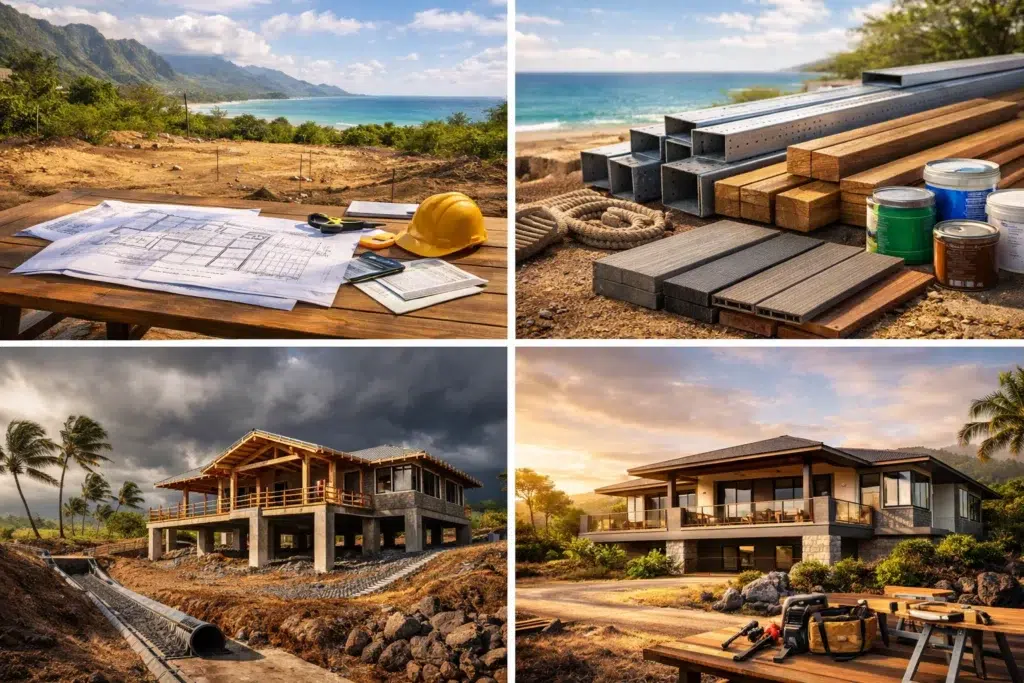
Building in Hawaii comes with unique challenges, from climate conditions to regulations. Understanding these factors early helps you avoid delays and costly mistakes while ensuring your project runs smoothly from planning to completion.
1. Understand Local Regulations and Permits
Building in Hawaii requires navigating strict local zoning laws and permit processes. Research county-specific rules, secure approvals early, and work with professionals familiar with regulations to prevent delays and ensure compliance throughout your project timeline.
2. Choose Materials Suited for Tropical Conditions
Building in Hawaii means selecting materials that withstand humidity, salt air, and strong sun exposure. Opt for corrosion-resistant metals, treated wood, and durable finishes to extend longevity and reduce long-term maintenance costs for your property.
3. Plan for Weather and Environmental Factors
Building in Hawaii involves accounting for heavy rains, strong winds, and potential volcanic activity depending on location. Designing with proper drainage, elevation, and structural reinforcements helps protect your investment and maintain safety over time.
4. Work with Experienced Local Contractors
Building in Hawaii is smoother when you collaborate with contractors who understand island logistics, supply chains, and labor conditions. Their local expertise helps avoid common pitfalls, streamline construction timelines, and ensure high-quality results.
Step‑by‑Step: From Idea to Move‑In
From initial research to move-in, most Hawaii building projects reasonably take 12–24 months, significantly longer than the mainland’s seven-month average. Understanding each phase helps set realistic expectations.
Phase 1: Research and goals (1–2 months)
Define your budget based on 28–36% debt-to-income ratio, targeting $4,000–$7,000 monthly payments including property taxes and insurance.
Phase 2: Land search and due diligence (2–6+ months)
Evaluate lots for utilities, slope, zoning, and environmental factors. Budget $5,000–$10,000 for surveys, perc tests, and title review.
Phase 3: Design and pre-permit engineering (3–6 months)
Work with a local architect ($3–$5 per square foot) to adapt plans for trades winds, lanais, and multigenerational floor plan options.
Phase 4: Permitting (4–12 months)
Submit via county ePlans systems, respond to comments, coordinate inter-agency approvals.
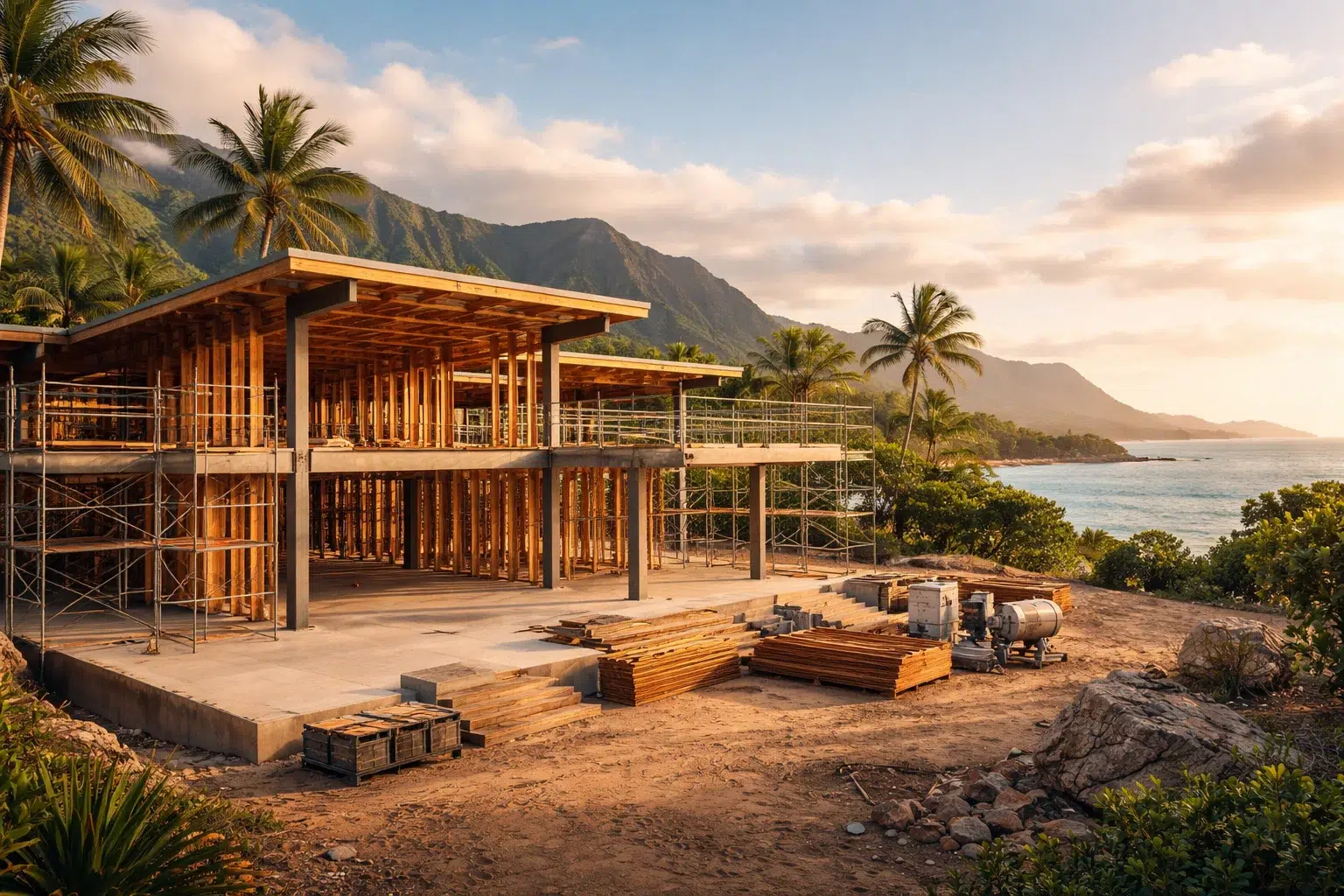
Phase 5: Vertical construction (6–12 months)
Foundation through finishes, with potential delays during rainy seasons and Kona storms.
Phase 6: Final inspections and punch list (1–2 months)
Certificate of Occupancy, utility activation, and move-in.
Example timeline: Starting land search in early 2026, submitting permits by mid-2026, and realistically moving into your new home sometime in late 2027—assuming no major delays.
Overlap tasks where possible: get loan preapproval during design, begin preliminary design while evaluating lots. For interim housing, budget $5,000–$10,000 monthly for Oʻahu short-term rentals, or consider building an ʻohana unit first as phased construction.
Designing for Hawaii’s Climate, Lifestyle, and Longevity

Successful Hawaiian home design prioritizes passive cooling, cross-ventilation, shade, and durable exterior materials over maximizing interior square footage. A well-designed 1,800 sq ft home with generous lanais can feel more spacious than a 2,500 sq ft mainland box.
Foundation Considerations
Flood zones and tsunami evacuation areas often require elevated pier foundations 18–36 inches above ground, affecting stair design, parking arrangements, and potential under-house storage or workshop space.
Roof Design
Hip roofs with wide 4–6 foot overhangs shed rain, provide shade, and resist hurricane uplift. Standing-seam metal roofing excels for durability, solar panel mounting, and water catchment systems in areas without municipal water.
Corrosion and Termite Protection
Use borate-treated lumber, stainless or hot-dipped galvanized hardware rated for salt environments, and concrete or masonry for ground contact. Budget for ongoing pest control—termites are relentless.
Lifestyle Features
Design for indoor-outdoor living with large lanais (often 20% of footprint), garage or shed space for surfboards and gear, outdoor showers, and ʻohana units for multigenerational family or rental income up to $2,500–$4,000 monthly.
Energy, Solar, and Water Considerations
The state’s push toward 100% renewable energy by 2045 means most new homes are planned with solar-ready roofs, conduit pathways, and space for inverters and batteries. The 2021 energy code already requires solar water heating or equivalent efficiency measures.
In rural Big Island areas and some outer islands, catchment systems replace municipal water. Design implications include adequate roof area (2,000–5,000 sq ft for 10,000-gallon cisterns), proper filtration systems, and ongoing maintenance responsibilities.
Frequently Asked Questions
How long does it usually take to get a building permit in Hawaii?
Can I be an owner‑builder in Hawaii to save money?
Is it cheaper to build on the Big Island than on Oʻahu or Maui?
Do I need special insurance if I build near the ocean or in a flood zone?
Can I live in my existing home while I build a second dwelling (ʻohana/ADU) on the same lot?
Start Your Journey Building in Hawaii with Confidence
Ready to begin building in Hawaii? Take the next step with confidence by planning your construction wisely, choosing the right team, and understanding local challenges. Smart building decisions today ensure a smoother construction process and a successful island home tomorrow.