The Rise of Eco-Friendly Construction Trends in Hawaii for Sustainable Building
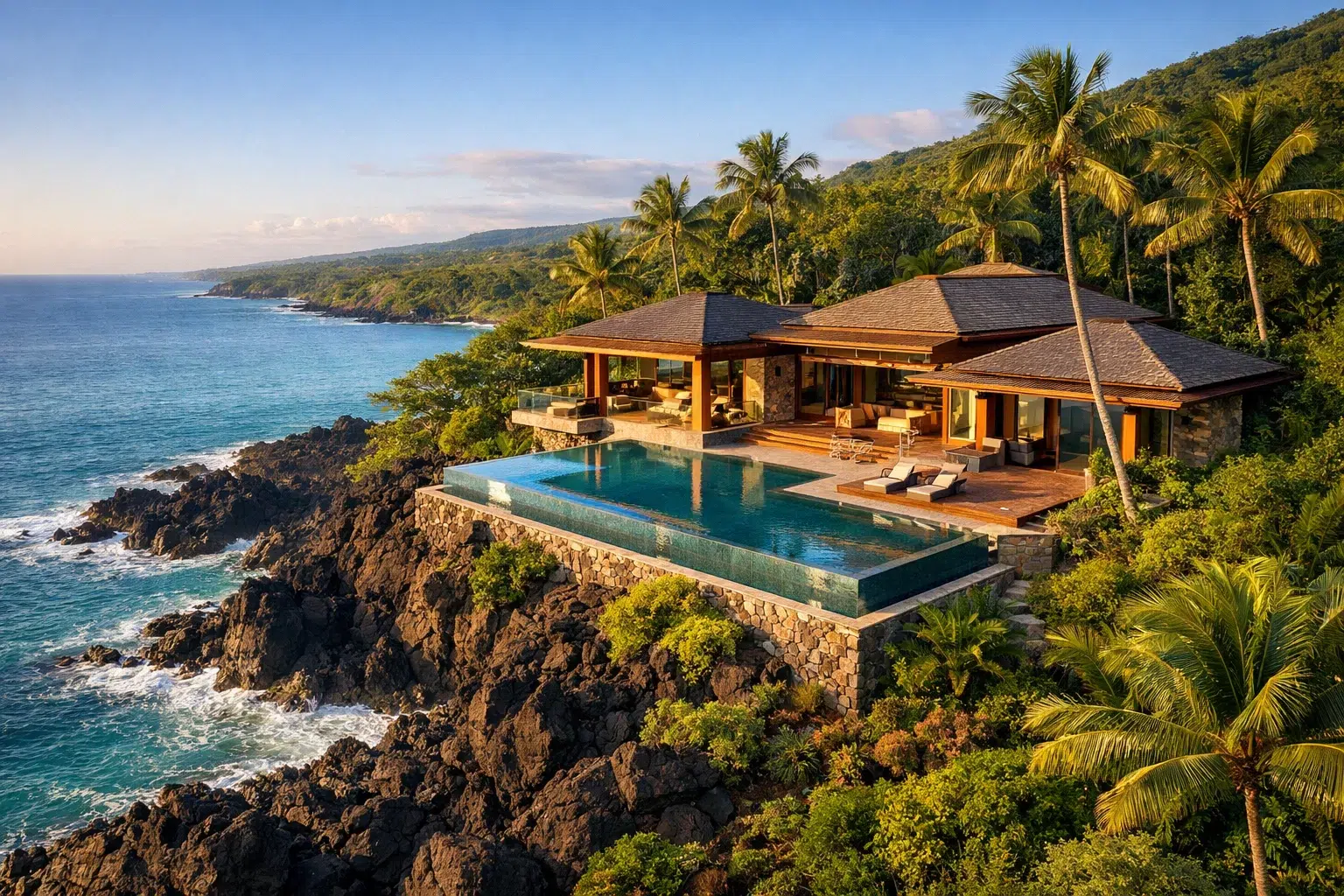
The year 2026 marks a new era for the construction industry in the islands. As climate change continues to impact our coastal properties, there is a growing demand for sustainable building practices that protect the environment while creating resilient spaces. Eco-friendly construction trends in Hawaii have shifted from being a niche preference to a core requirement for any new construction project.
At UCG Hawaii, our commitment to sustainable development is reflected in our leadership in energy and environmental design. We understand that homeowners and developers are looking for buildings that offer high functionality without compromising the island’s unique culture and natural beauty. By maintaining a strict focus on LEED (Leadership in Energy and Environmental Design) standards, we help our clients generate long-term value while preserving the land for future generations.
The Evolution of Sustainable Construction and LEED Standards

Sustainable construction in Hawaii is no longer just about adding a few solar panels; it is a holistic approach to environmental design. The LEED framework has become the primary benchmark for green building in Honolulu. By pursuing LEED certification, a single-family home or a large-scale commercial development can demonstrate a verifiable commitment to sustainability.
Leadership in Energy and Environmental Design (LEED) involves a deep review of how buildings interact with their surroundings. This includes planning for waste reduction and recycling during the construction phase to minimize environmental impact.
For example, by creating a plan for recycling metal and wood waste, we can significantly reduce the amount of debris sent to local landfills. This emphasis on waste management is a cornerstone of sustainable living in an island community with limited land.
Energy Efficiency and the New Era of Renewables
In 2026, energy use is a top concern for residents facing rising energy costs. Sustainable building trends now prioritize extreme energy efficiency to reduce reliance on the grid and imported gas. Creating energy-efficient buildings requires a combination of smart environmental design and advanced technology.

Solar Power and Smart Storage
Solar power remains a pillar of sustainability goals in Hawaii. Most new construction projects now include high-efficiency solar panels coupled with battery storage. These investments allow homeowners to capture energy during the day and use it at night, drastically lowering energy use from non-renewable sources. Additionally, federal and state tax credits and utility incentives make these systems more affordable than ever.
Energy Efficient Appliances and HVAC
To further lower energy use, we integrate energy-efficient appliances and high-seer air conditioning units into our properties. In an era of remote work, where people spend more time at home, maintaining a comfortable climate without skyrocketing energy costs is essential. By creating spaces with energy-efficient lighting and smart home features, we help clients achieve significant energy savings.
Water Conservation and Green Infrastructure
Water conservation is a critical aspect of sustainable living in Hawaii. Our commitment to green building includes creating systems that use less water while maintaining lush aesthetics.

Rainwater Harvesting Systems and Low-Flow Fixtures
Integrating rainwater harvesting systems into a single-family home or commercial project allows for the collection of rainwater to be used for non-potable needs. Combined with low-flow fixtures, these systems drastically reduce overall water usage. Creating a house that uses less water is a vital part of preserving our precious freshwater aquifers.
Drought-Resistant Landscaping and Community Gardens
Landscaping plays a major role in a property’s environmental impact. We specialize in drought-resistant landscaping that utilizes native Hawaiian plants. These plants require less water and maintenance while providing beautiful aesthetics. Many of our new construction properties also feature community gardens, fostering a sense of community and supporting local food sustainability.
6 Awe-Inspiring Eco-Friendly Construction Trends in Hawaii
Hawaii’s commitment to sustainability is transforming how homes and buildings are designed and built. These eco-friendly construction trends in Hawaii highlight innovative materials, renewable energy integration, and climate-conscious design strategies shaping a greener future.

1. Sustainable Local Building Materials
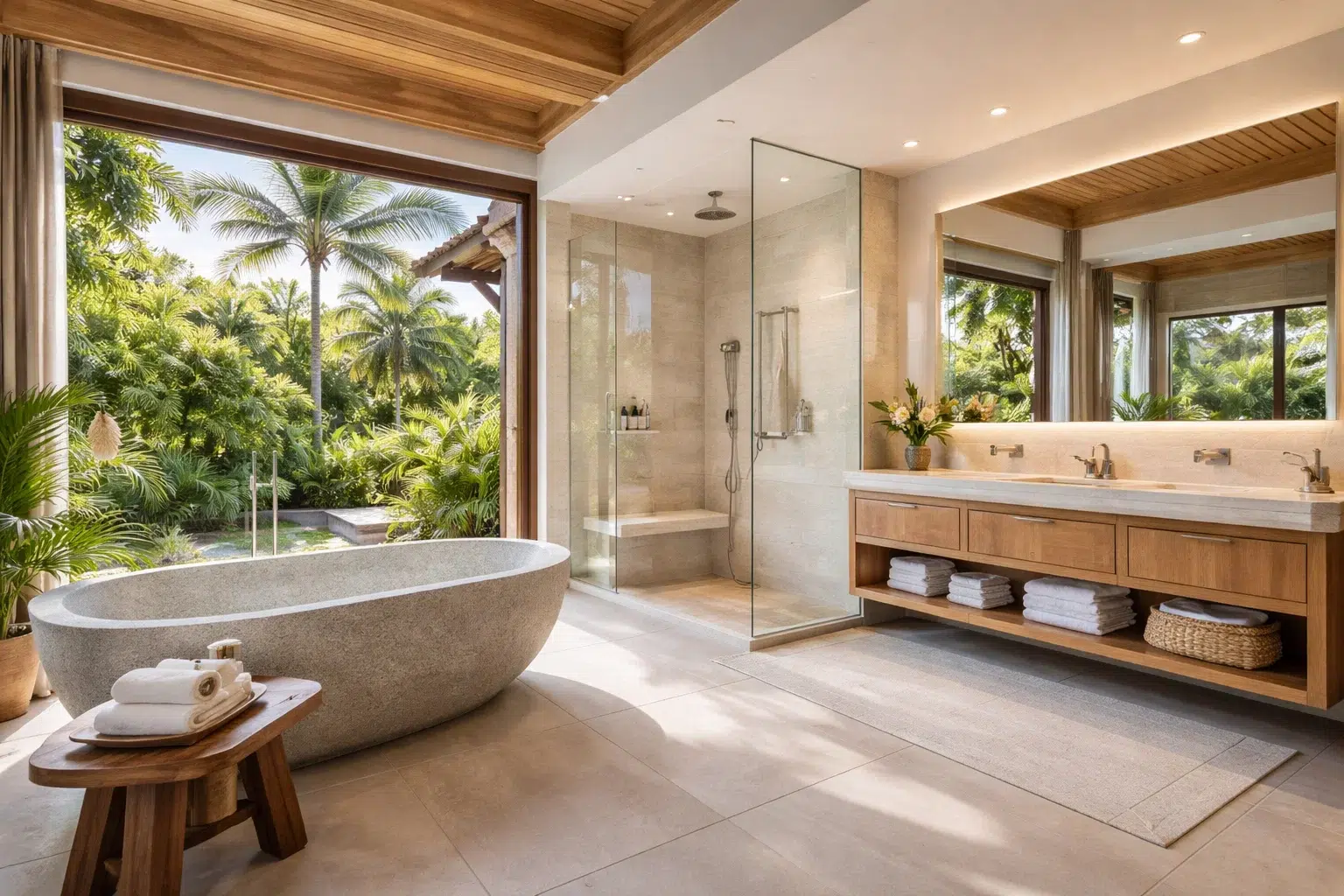
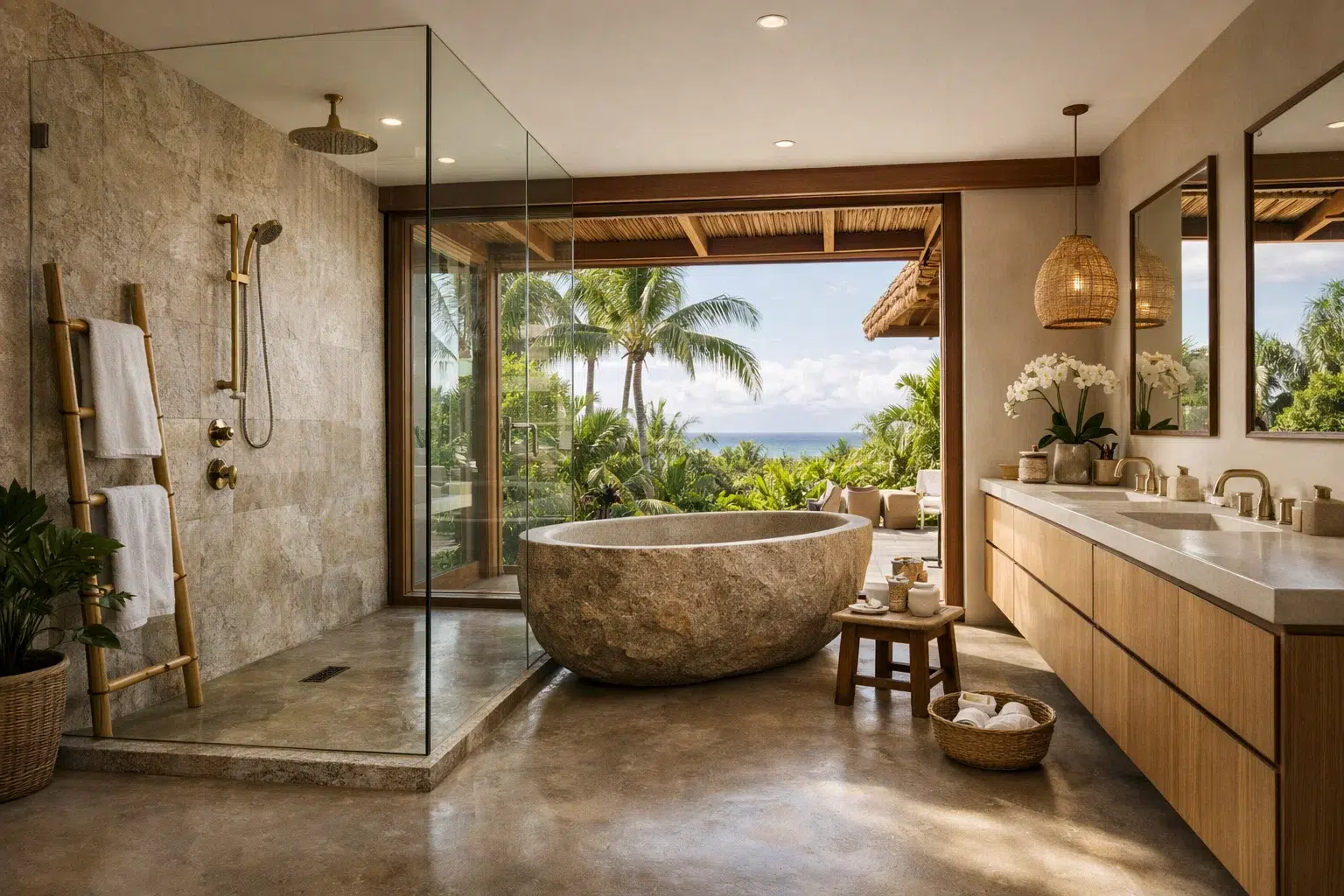
Using locally sourced materials like bamboo, reclaimed wood, and volcanic stone reduces transportation emissions and supports local industries. These eco-friendly construction trends in Hawaii help builders create durable structures while preserving natural resources and respecting the islands’ unique environment.
2. Solar-Integrated Home Designs
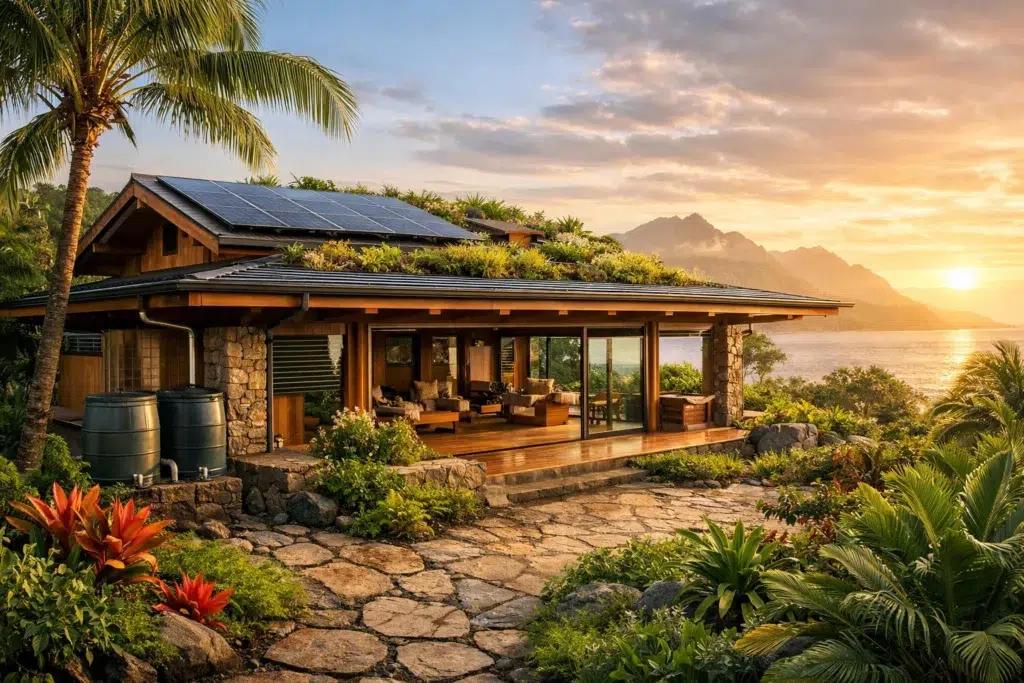
Solar power is central to eco-friendly construction trends in Hawaii, with rooftops designed to maximize sun exposure. Integrated photovoltaic systems and battery storage allow homes to generate clean electricity, reducing dependence on imported fossil fuels.
3. Passive Cooling Architecture
Passive cooling is among the most practical, eco-friendly construction trends in Hawaii. Strategic window placement, cross-ventilation, reflective roofing, and shaded lanais reduce indoor heat, lowering energy consumption while maintaining comfort in the tropical island climate.
4. Rainwater Harvesting Systems
Rainwater collection systems are increasingly incorporated into eco-friendly construction trends in Hawaii. Captured rainwater can supply irrigation, flushing, and sometimes household use, helping reduce freshwater demand and promoting responsible water management across the islands.
5. Green Roofs and Living Walls
Green roofs and living walls are gaining popularity in eco-friendly construction trends in Hawaii. Vegetated surfaces improve insulation, manage stormwater runoff, and create natural cooling effects while enhancing biodiversity and blending buildings into the surrounding landscape.
6. Smart Energy-Efficient Technologies
Advanced technologies play a key role in eco-friendly construction trends in Hawaii. Smart thermostats, efficient lighting, and energy-monitoring systems allow homeowners to optimize electricity use, reduce carbon emissions, and maintain sustainable living practices.
Managing Environmental Impact and Stormwater
A major challenge in Hawaii’s development is managing stormwater runoff, which can carry pollutants into our coral reefs. Green building features like bioswales and pervious landscaping help filter stormwater runoff before it leaves the property. This emphasis on environmental design protects our marine environment and helps homeowners meet LEED requirements for site sustainability.
By creating buildings that minimize environmental impact, we are not just meeting sustainability goals; we are honoring the Hawaiian culture of malama aina (caring for the land). Sustainable construction involves a commitment to recycling and waste management that lasts long after the construction is completed.
Frequently Asked Questions
What are the benefits of LEED certification for a single-family home?
How do rainwater harvesting systems work in Honolulu?
What types of energy-efficient appliances are trending in 2026?
How does drought-resistant landscaping save money?
Are there specific incentives for solar panels in Hawaii this year?
Leading the Way in Sustainable Hawaii Development
At UCG Hawaii, we are proud to be leading the new era of sustainable development. Our expertise in LEED, green building, and environmental design ensures that your construction project is built with the future in mind. We are committed to creating properties that balance aesthetics, functionality, and sustainability.