Basic Kitchen Design: Smart Ideas That Turn Everyday Kitchens Into Dream Spaces
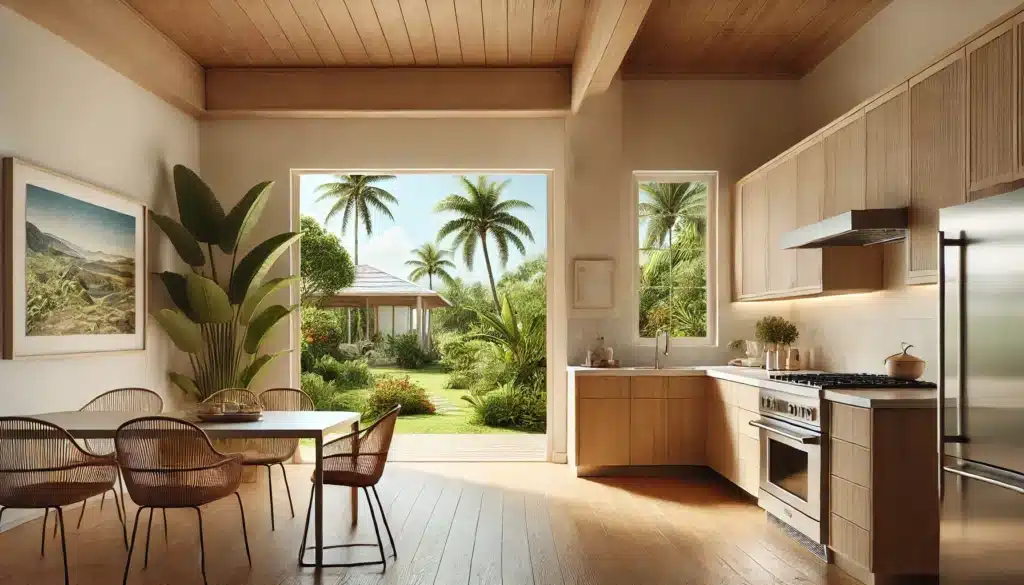
Basic kitchen design is often simpler than homeowners expect, yet it can make all the difference in daily comfort and efficiency. A well-planned kitchen design supports your cooking experience, improves traffic flow, and reflects personal style. With smart planning, even small spaces can become functional, comfortable, and enjoyable for everyday use.
Creating a dream kitchen starts with thoughtful kitchen layout design and intentional planning. Balancing counter space, storage, and appliances helps maximize efficiency, reduce frustration, and improve movement. With proven design principles and professional guidance, a kitchen renovation can deliver long-term value without unnecessary complexity or excessive cost.
The Psychology of Kitchen Design
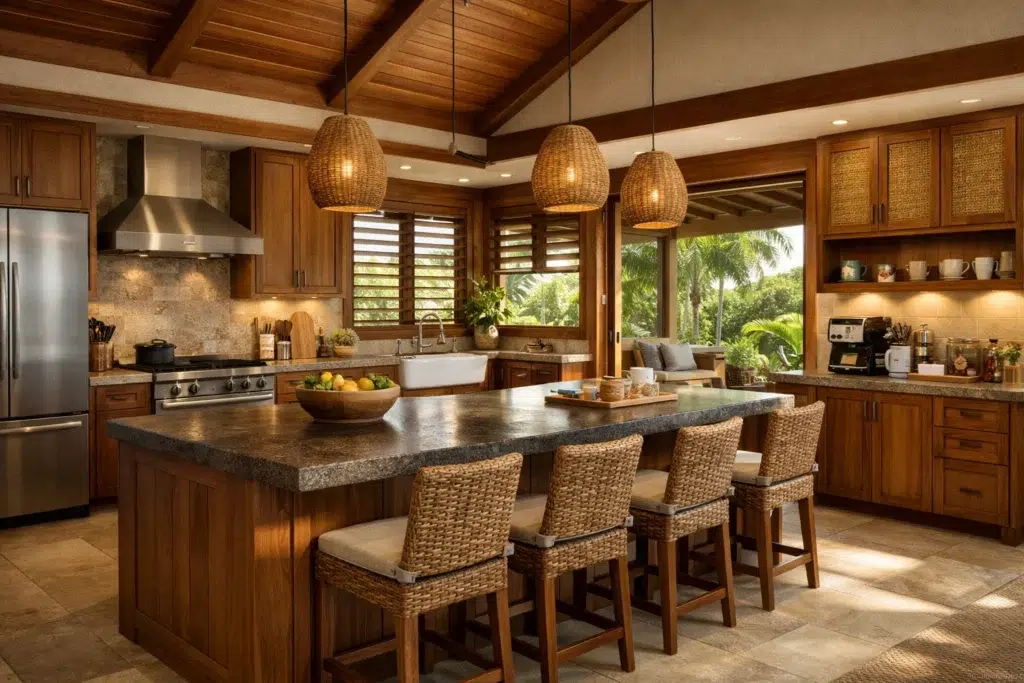
Kitchen design is deeply connected to how people move, think, and feel within the space. A well-planned kitchen layout supports natural movement, efficient workflow, and clearly defined functional zones. By applying the classic work triangle and grouping frequently used items together, homeowners can reduce steps, improve efficiency, and enjoy a smoother, more intuitive cooking experience.
Here’s how different functional zones influence daily life:
Cooking Zone: Encourages creativity and efficiency
Cleaning Zone: Simplifies cleanup and organization
Storage Zone: Keeps cabinets and lower cabinetry organized
Family Zone: Encourages social interaction
Kitchens today serve as extensions of living spaces, supporting casual dining, homework sessions, and everyday conversations. When designed correctly, the kitchen becomes a welcoming focal point for the entire home.
| Zone Type | Table Header | Emotional Impact |
|---|---|---|
|
Prep Area |
Focus & Creativity |
Good lighting |
|
Dining Space |
Connection & Joy |
Comfortable seating |
|
Cleanup Area |
Satisfaction |
Easy-access storage |
|
Coffee Station |
Energy & Welcome |
Morning sun exposure |
Research consistently shows families spend a significant portion of their time in the kitchen. A thoughtfully planned kitchen design improves functionality and overall happiness. Your kitchen should work with you, not against you. When layout, lighting, and storage flow naturally, daily tasks feel easier and more enjoyable.
Beyond the Work Triangle
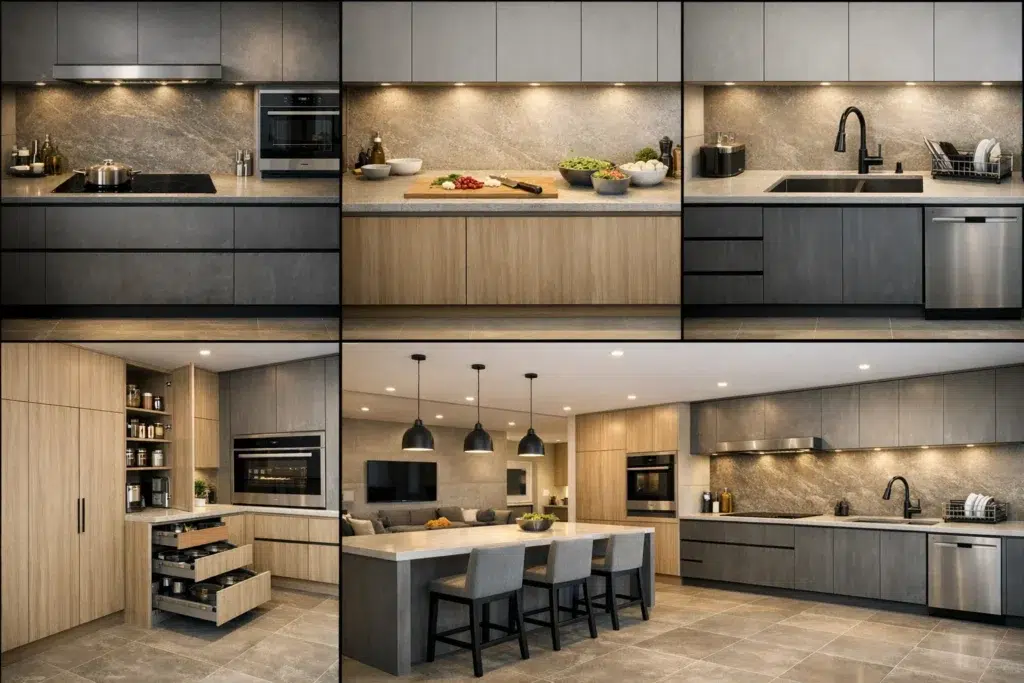
Modern kitchen design has evolved beyond the traditional work triangle. While still valuable, today’s kitchens are designed to support individual cooking habits and varied lifestyles. Some homeowners focus on efficiency and speed, while others prioritize entertaining and social interaction. A flexible kitchen layout allows you to adapt the space to your needs.
Key Modern Kitchen Zones
| Kitchen Zone | Primary Purpose |
|---|---|
|
Cooking Zone |
Supports efficient cooking and use of appliances |
|
Prep Zone |
Provides dedicated space for meal preparation |
|
Cleaning Zone |
Simplifies cleanup around the sink and dishwasher |
|
Storage Zone |
Organizes cabinets, pantry items, and cookware |
|
Entertainment Zone |
Encourages social interaction and gathering |
Think of your kitchen as a professional workspace with each area serving its own set of tasks. Placing appliances and storage where they are most needed helps maximize space and efficiency.
Modern Kitchen Features
| Activity | Traditional Design | Modern Approach |
|---|---|---|
|
Coffee Making |
Part of the prep area |
Dedicated beverage station |
|
Device Charging |
Not considered |
Tech-friendly workspace |
|
Food Storage |
Single pantry |
Multiple storage points |
|
Socializing |
Limited space |
Integrated gathering areas |
Mapping your daily routine is essential. Whether you start your day at a breakfast nook or entertain guests around a kitchen island, thoughtful placement improves traffic flow. Clear pathways between the sink, wall ovens, and prep areas reduce congestion and improve safety. The result is a kitchen that feels spacious, even in small spaces. Ultimately, your kitchen layout should reflect how you live, cook, and gather.
Design for Real Life
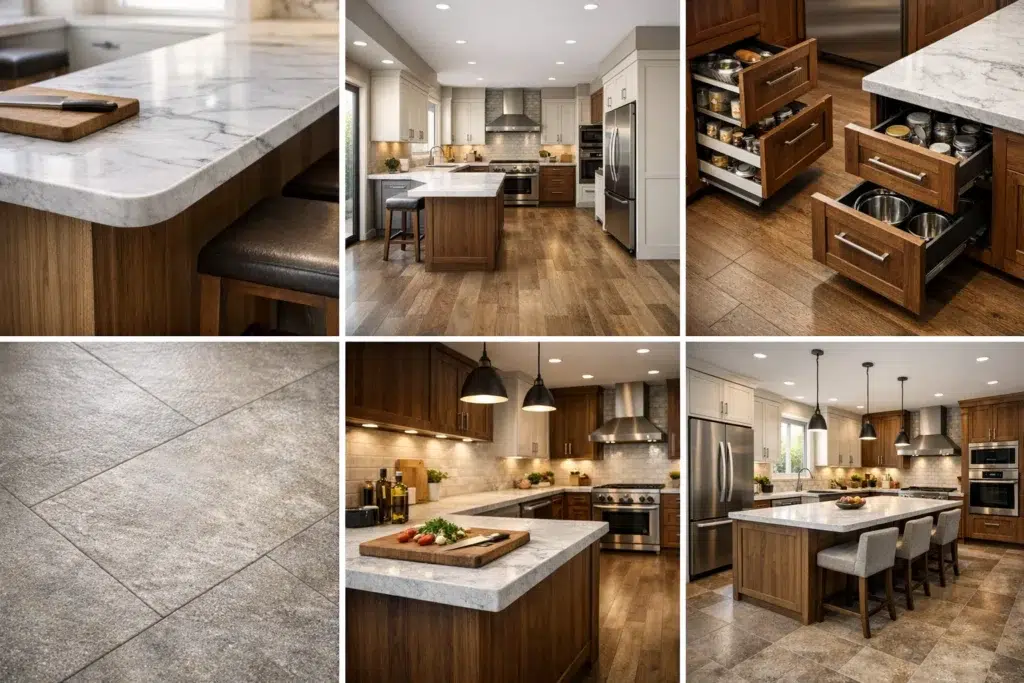
A beautiful kitchen must also be practical. Real-life kitchen design considers durability, safety, and comfort alongside aesthetics. Materials such as marble countertops and quartz countertops offer visual appeal, but they should also support daily use. Choosing finishes that match your cooking habits note only improves longevity but also simplifies maintenance.
Key Practical Kitchen Design Elements
| Practical Element | Benefit |
|---|---|
|
Comfortable Counter Height |
Reduces strain and improves comfort during cooking |
|
Enough space between appliances |
Supports safe movement and smooth traffic flow |
|
Easy access storage solutions |
Improves organization and daily efficiency |
|
Non-slip flooring |
Enhances safety during busy cooking periods |
|
Task-focused lighting |
Improves visibility for meal preparation |
Families benefit from thoughtful storage solutions like bottom cabinets, lower cabinetry for children, and easy-to-grip hardware for all ages.
Grouping cooking tools, small appliances, and ingredients by task supports efficient workflow.
Dividing Your Kitchen Into Zones
| Kitchen Zone | What Goes There | Why It Works |
|---|---|---|
|
Drink Station |
Coffee maker, tea, cups |
Quick morning access |
|
Prep Zone |
Cutting boards, knives, bowls |
Everything at hand |
|
Cooking Zone |
Pots, pans, utensils |
Less running around |
|
Snack Zone |
Kids’ treats, fruit bowl |
Easy access for all |
For homeowners working remotely, kitchens can also include extra workspace for quick meals or coffee breaks. A small desk or extended counter space can serve multiple purposes. Special diets benefit from clear organization. Separate storage areas reduce confusion and streamline meal preparation. A kitchen designed for real life prioritizes simplicity, practicality, and ease of use.
Basic Kitchen Design: 5 Smart and Proven Designs
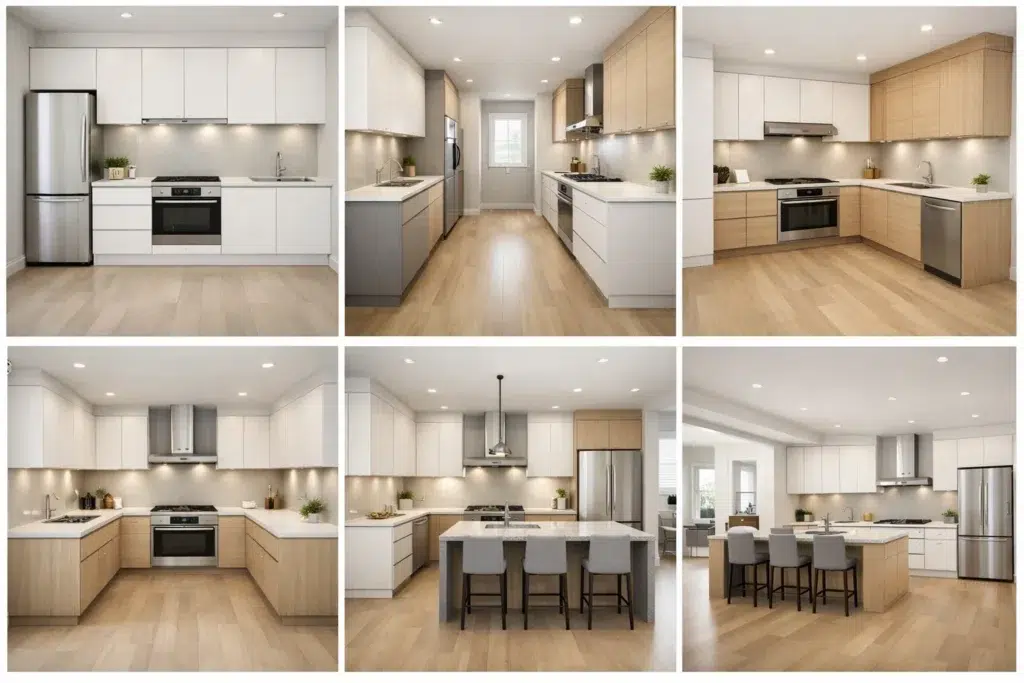
1. One-Wall Basic Kitchen Design
A one wall or single wall kitchen places appliances, cabinets, and countertops along one wall. This layout is ideal for small spaces, studio apartments, and homes with limited square footage, offering efficient use of available space.
2. Galley Basic Kitchen Design
The galley kitchen uses two parallel walls to create an efficient corridor-style layout. This design maximizes efficiency, minimizes unnecessary movement, and works especially well in narrow floor plans.
3. L-Shaped Basic Kitchen Design
An l shaped kitchen layout uses two adjacent walls to form an efficient corner workspace. L shaped kitchens are versatile, support open concept living, and often allow room for a dining area or kitchen island.
4. U-Shaped Basic Kitchen Design
A u shaped layout surrounds the cook on three walls, creating ample counter space and storage. The u shaped kitchen design offers exceptional efficiency, additional storage, and excellent separation of functional zones.
5. Island-Based Basic Kitchen Design
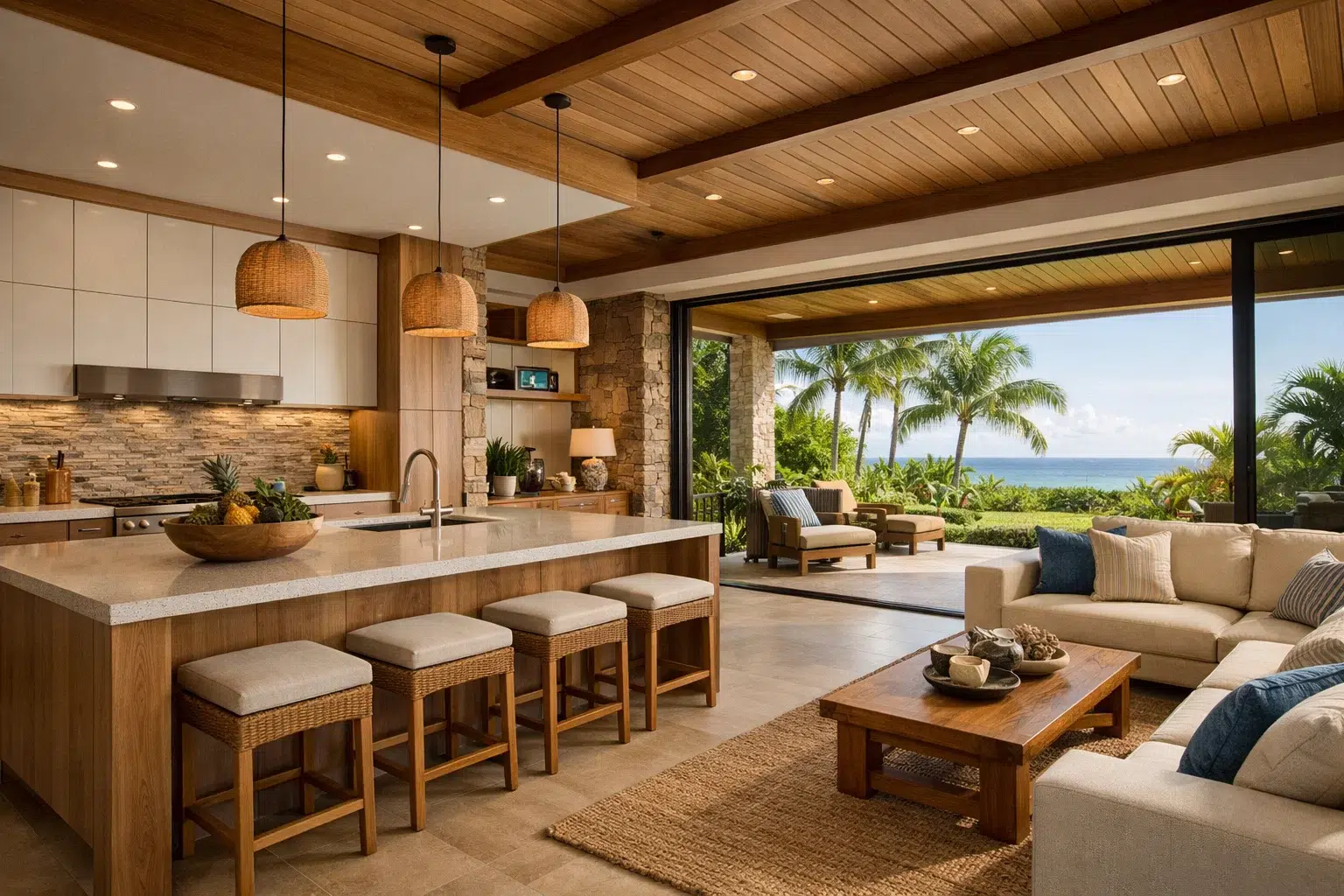
Island-centered kitchens add extra workspace, additional storage, and casual dining options. A kitchen island often becomes the focal point of the room and enhances social interaction.
Future-Proofing Your Kitchen
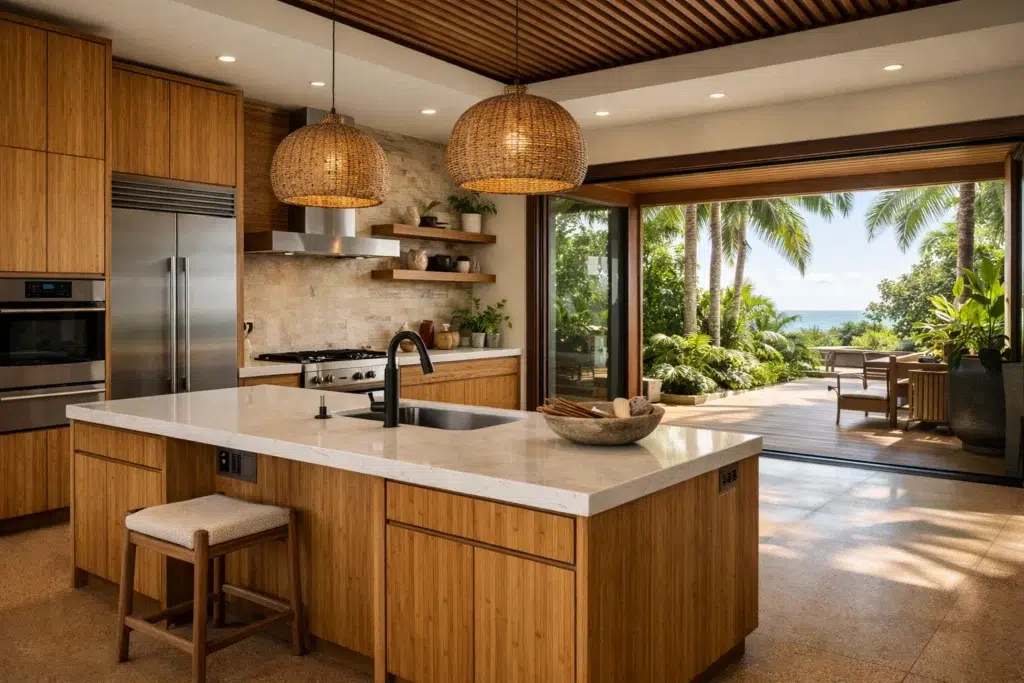
The best kitchens are designed to last. Future-focused kitchen design balances durability, flexibility, and sustainability. Choosing materials like bamboo cabinets, quartz countertops, and steel appliances supports long-term performance while reducing environmental impact. Flexible layouts allow for future changes. Leaving extra space for new appliances and planning electrical outlets strategically ensures your kitchen adapts as design trends evolve.
Future Proofing Your Kitchen: Best Materials
| Material Type | Lifespan | Eco-Rating | Cost-Effectiveness |
|---|---|---|---|
|
Quartz Counters |
20+ years |
High |
Excellent |
|
Bamboo Cabinets |
25+ years |
Very High |
Good |
|
Cork Flooring |
15+ years |
High |
Moderate |
|
Steel Appliances |
15+ years |
Moderate |
Very Good |
Smart features to consider:
Voice-controlled lighting
Touchless faucets
Smart power outlets
App-connected appliances
Built-in charging stations
These smart kitchen features improve convenience, efficiency, and long-term adaptability. Integrated technology supports hands-free operation, simplifies daily tasks, and prepares your kitchen for future appliances while enhancing safety, energy efficiency, and overall user experience. Selecting low-VOC paints and eco-friendly cabinets promotes healthier indoor air quality while supporting sustainable living.
Space Optimization Secrets
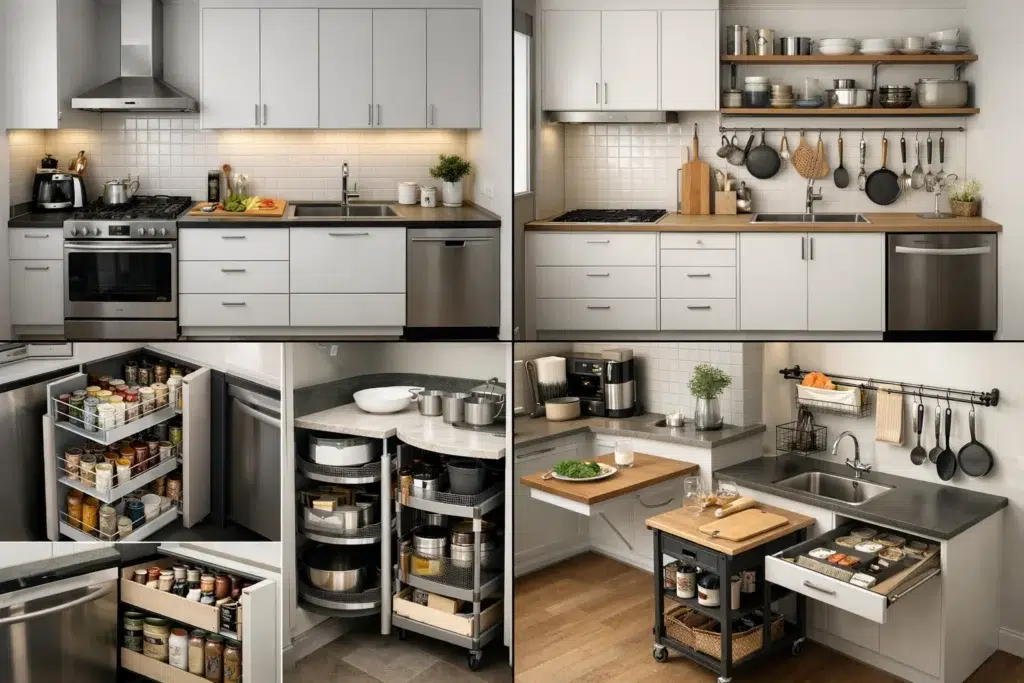
Even compact kitchens can feel spacious with the right strategies. Smart kitchen design focuses on maximizing every inch. Optimizing workflow ensures items are stored near where they are used, improving efficient use and reducing clutter.
Maximizing functionality in any kitchen size
Clear zoning and thoughtful placement help kitchens feel organized and functional.
Vertical space utilization strategies
Using upper cabinets, open shelving, pot racks, and wall-mounted storage maximizes vertical space without sacrificing floor space.
Hidden Storage Solutions
Pull-out pantries, narrow carts, and corner solutions like lazy susans turn unused space into valuable storage.
Multi-Functional Elements
Furniture and accessories that serve multiple purposes create extra space and flexibility.
| Space-Saving Item | Multiple Uses |
|---|---|
|
Nesting bowls |
Storage + Mixing + Serving |
|
Fold-down table |
Dining + Extra counter |
|
Rolling cart |
Storage + Prep station + Bar |
|
Over-sink rack |
Drying + Extra workspace |
A thoughtful approach helps maximize space and create an efficient kitchen, regardless of size.
Color Psychology and Materials
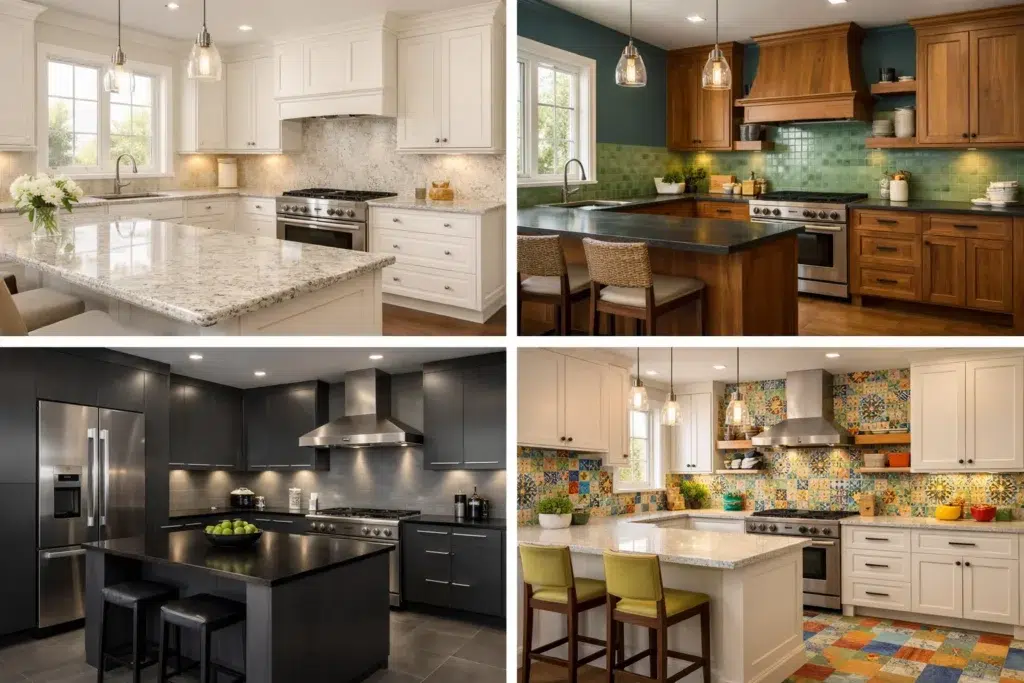
Color plays a critical role in kitchen design. The right palette enhances natural light and creates visual interest.
Color Preferences
Warm colors encourage energy, while cooler tones promote calm and focus. Light colors reflect light, making small spaces feel larger. Pairing materials like marble countertops with wood or metal surfaces adds depth and character.
Color Pairings for Various Kitchen Surfaces
| Surface Type | Best Color Pairings | Mood Created |
|---|---|---|
|
Granite |
Whites & Creams |
Elegant |
|
Wood |
Blues & Greens |
Cozy |
|
Steel |
Grays & Blacks |
Modern |
|
Tile |
Any bright color |
Fun |
Textures
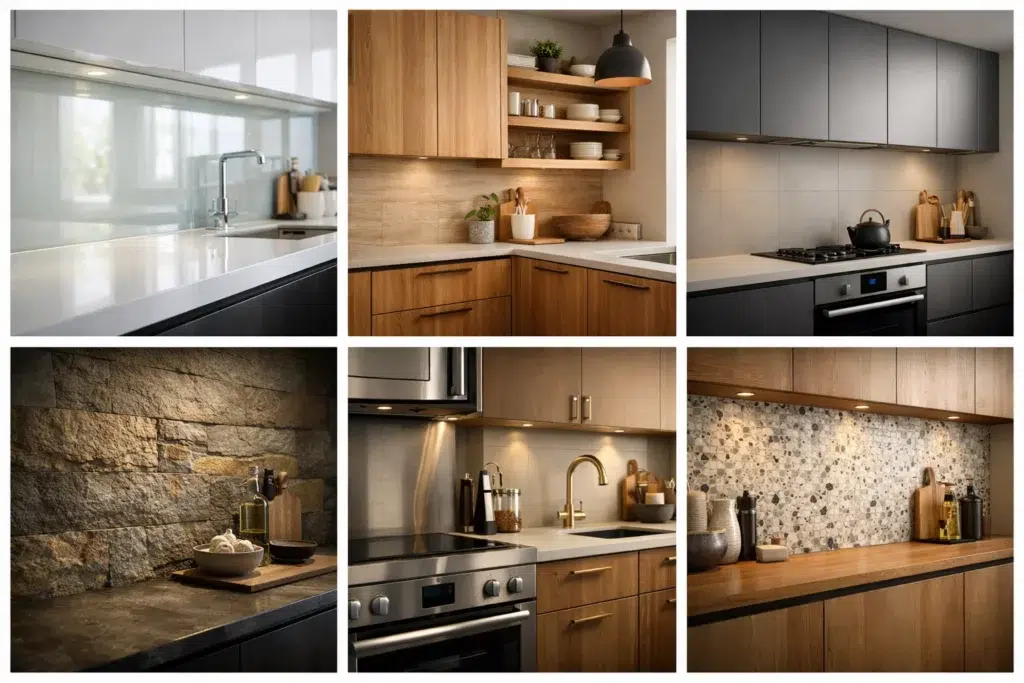
Textures play a vital role in kitchen design by adding depth, warmth, and visual balance. Combining smooth and textured surfaces, such as sleek countertops with natural stone or wood, creates visual interest without overwhelming the space. Limiting your selection to a few complementary textures helps maintain a clean, cohesive look.
| Texture Type | Common Materials | Best Use in Kitchen | Visual Effect |
|---|---|---|---|
|
Smooth & Polished |
Quartz, marble, glass |
Countertops, backsplashes |
Clean and elegant |
|
Natural Wood Grain |
Oak, maple, bamboo |
Cabinets, shelving |
Warm and inviting |
|
Matte Finishes |
Matte tile, painted cabinetry |
Cabinets, walls |
Soft and modern |
|
Textured Stone |
Slate, travertine |
Backsplashes, accent walls |
Organic and grounded |
|
Metal Accents |
Stainless steel, brushed brass |
Appliances, hardware |
Contemporary contrast |
|
Patterned Surfaces |
Decorative tile, terrazzo |
Feature areas, floors |
Dynamic visual interest |
Lighting
Layered lighting improves both function and ambiance, supporting cooking tasks and dining areas.
Why Hawaii Homeowners Trust United Construction Group Hawaii
United Construction Group Hawaii delivers dependable kitchen renovation and basic kitchen design solutions that balance aesthetics, durability, and efficient use of space.
Testimonials
“Brandon and the United Construction crew are very professional and they know what they are doing!” – Alvaro Guarana Jr.
“United Construction Group has a U.C.G. Team of educated and experienced Subject Matter Experts that specialize in resolving construction concerns with the highest quality solutions!” – Brent Dixon
“Brandon and his team are fantastic! Their response time is always quick, and the quality of their work is consistently excellent.” – Miki Kojima
“You would be hard pressed to find a more honest, reliable, and fair priced company to work with than UCG!” – Jesse Alverio
How the Basic Kitchen Design Process Works
Step-1: Initial Consultation
A kitchen designer evaluates your goals, cooking habits, and space to develop a clear design direction.
Step-2: Design and Planning
Layouts, materials, and timelines are finalized to ensure efficiency and compliance.
Step-3: Final Proposal Approval
Transparent proposals outline costs, scope, and schedules for confidence and clarity.
Step-4: Construction and Installation
Skilled professionals execute the approved kitchen layout with precision and quality control.
Step-5: Final Walkthrough and Completion
A detailed walkthrough ensures every element meets expectations.
Frequently Asked Questions
How long does a basic kitchen design project take?
Can I stay within a limited budget?
Do you handle permits and inspections?
Will my kitchen increase home value?
Can you work with existing layouts?
Transform Your Home With Expert Basic Kitchen Design Today
Schedule your free consultation and discover how professional basic kitchen design creates lasting value, improved functionality, and a kitchen that truly feels like your own dream kitchen.