Flooring Installation in Hawaii: What Homeowners Need to Know
Flooring installation is one of the most impactful upgrades Hawaii homeowners can make, affecting comfort, durability, and long-term property value. From coastal humidity to volcanic soil conditions, local factors influence material selection, preparation, and performance far more than many mainland guides explain.
This guide explains flooring installation specifically for Hawaii homes, covering materials, costs, timelines, and professional considerations. Whether renovating a condo, updating a single room, or planning a full-home remodel, understanding these details helps homeowners make confident, informed decisions before starting their project.
Understanding Flooring Installation for Hawaii Homes
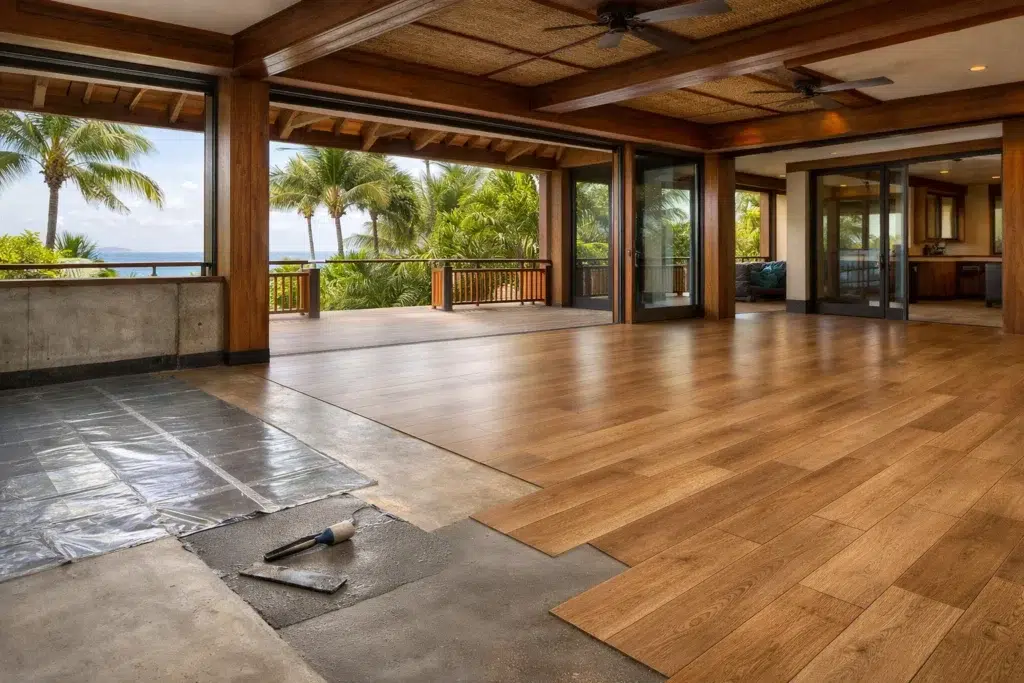
Flooring installation involves preparing subfloors, selecting appropriate materials, and installing surfaces designed to perform well under local conditions. In Hawaii, moisture exposure, salt air, temperature consistency, and pest resistance all influence how flooring systems should be designed and installed.
Moisture and Humidity Considerations
Hawaii’s year-round humidity affects flooring expansion, adhesion, and longevity. Proper acclimation, moisture barriers, and material selection prevent warping, mold growth, and adhesive failure. Flooring installation must account for consistent indoor humidity rather than seasonal fluctuations common in mainland climates.
Subfloor Conditions in Island Homes
Many Hawaii homes feature concrete slabs, raised foundations, or older wood subfloors. Each requires specific preparation methods. Leveling compounds, vapor barriers, and structural assessments are essential steps before flooring installation to ensure stability, durability, and long-term performance.
When Business Owners Should Consider Flooring Installation
Flooring installation becomes necessary when surfaces show water damage, cupping, cracking, or outdated materials. Renovations, home sales preparation, accessibility upgrades, and lifestyle changes also prompt homeowners to replace flooring to improve comfort, aesthetics, and property value.
Commercial Flooring Performance Requirements

Picking the right commercial flooring isn’t just about looks – it’s about finding something that can take a beating and still look good years later.
Let me break down what really matters for your business floors: High-traffic durability is measured by something called the Taber Abrasion Test. Think of it like a scratch test on steroids – it shows how many footsteps your floor can handle before showing wear. The best commercial-grade materials can take 100,000+ steps before breaking a sweat.
- Luxury vinyl tile: $4-7 per square foot, lasts 10-20 years
- Commercial carpet tiles: $2-5 per square foot, needs replacement every 5-7 years
- Polished concrete: $3-8 per square foot, 20+ year lifespan
- Epoxy flooring: $3-12 per square foot, 10-15 year lifespan
Safety First: Meeting Building Codes
Your floor needs to meet some non-negotiable safety rules:
- Slip resistance rating of 0.5 or higher (wet)
- Fire resistance rating: Class 1 or A
- ADA compliance for texture and transitions
- Chemical resistance (for industrial spaces)
Material Selection and ROI
Want to know what really works? Let’s look at real numbers:
A 10,000 sq ft retail space chose luxury vinyl tile:
- Initial cost: $50,000
- Yearly maintenance: $2,000
- Lifespan: 15 years
- Total cost per year: $5,333
Compare that to carpet:
- Initial cost: $35,000
- Yearly maintenance: $4,000
- Lifespan: 6 years
- Total cost per year: $9,833
The winner? Luxury vinyl tile costs 46% less over time, even with a higher upfront price. That’s what I call smart money spent.
Key Benefits of Flooring Installation for Businesses and Commercial Properties
Upgrading commercial flooring goes beyond appearance and directly impacts daily operations, safety, and long-term operating costs. Professional flooring installation helps businesses withstand heavy foot traffic, comply with regulations, reduce maintenance disruptions, and create professional environments that support employees, customers, and brand perception.
- Improved durability for high-traffic commercial and public-use spaces
- Enhanced slip resistance and safety compliance for employees and customers
- Easier cleaning and maintenance to reduce operational downtime
- Better acoustics and comfort in offices, retail, and hospitality environments
- Increased lifespan and lower total cost of ownership over time
- Professional appearance that reinforces brand image and customer confidence
Popular Flooring Installation Options in Hawaii

1. Luxury Vinyl Plank Flooring
Luxury vinyl plank offers strong moisture resistance, realistic wood visuals, and easy maintenance. It performs well in humid environments and suits condos, kitchens, and living areas where durability, affordability, and consistent appearance are priorities.
2. Porcelain and Ceramic Tile
Tile flooring remains popular in Hawaii for its water resistance and cooling properties. Porcelain and ceramic tiles withstand humidity, resist staining, and work well in bathrooms, kitchens, and coastal homes exposed to salt air.
3. Engineered Hardwood Flooring
Engineered hardwood provides natural wood aesthetics with improved stability over solid hardwood. Its layered construction reduces expansion risks, making it suitable for Hawaii homes when installed with proper moisture controls and professional techniques.
4. Natural Stone Flooring
Natural stone creates a high-end appearance and excellent durability. However, it requires sealing and professional installation to manage porosity and prevent moisture-related issues common in Hawaii’s climate.
Cost Factors to Consider Before Starting Your Project
Flooring installation costs vary based on materials, preparation requirements, and project complexity. Hawaii-specific factors such as shipping, permitting, and labor availability also influence overall investment.
| Cost Factor | Description |
|---|---|
|
Project Scope |
Size of area, room layout, and removal of existing flooring |
|
Materials |
Flooring type, underlayment, moisture barriers, finishes |
|
Permits |
Condo approvals, building permits, and inspections |
|
Labor |
Skilled installation, subfloor preparation, specialty techniques |
|
Timeline |
Scheduling, material delivery, and curing times |
While exact pricing varies, professional assessments help homeowners understand realistic budgets. Investing in proper preparation and quality materials often reduces long-term repair and replacement costs.
Why Professional Contractors Matter in Hawaii
Flooring installation in Hawaii requires more than basic construction knowledge. Local professionals understand environmental challenges, building codes, and material performance specific to island conditions, helping homeowners avoid costly mistakes.
- Knowledge of Hawaii building codes and condo association requirements
- Proper moisture management and subfloor preparation techniques
- Safe handling of heavy materials and specialized tools
- Experience selecting materials suited for island durability
- Accountability through licensing, insurance, and warranties
Flooring Installation Boost: 6 Ultimate Expert Tips for Hawaii

1. Choose Materials Designed for Humidity
Selecting flooring materials engineered for high humidity prevents swelling, warping, and adhesive failure. Hawaii homes benefit from products rated for moisture resistance, stable core construction, and manufacturer guidelines supporting installation in tropical climates.
2. Prioritize Subfloor Preparation
Proper subfloor preparation ensures flooring longevity and performance. Leveling, moisture testing, and structural repairs create a stable foundation that prevents future issues such as squeaking, cracking, or premature wear after installation.
3. Allow Proper Acclimation Time
Flooring materials must acclimate to indoor conditions before installation. Allowing sufficient acclimation time helps materials adjust to Hawaii’s consistent humidity, reducing expansion stress and improving long-term stability and appearance.
4. Understand Condo and Permit Requirements
Many Hawaii properties require approvals before flooring installation. Noise ratings, waterproofing standards, and association guidelines must be addressed early to avoid delays, fines, or costly rework during the project.
5. Plan for Island Logistics
Material shipping timelines, limited inventory, and weather delays affect flooring projects. Planning ahead and working with experienced contractors helps coordinate deliveries and schedules efficiently within Hawaii’s unique logistics environment.
6. Focus on Long-Term Maintenance
Choosing flooring based on maintenance requirements ensures lasting satisfaction. Understanding cleaning needs, resealing schedules, and repair options helps homeowners select materials that align with lifestyle and long-term care expectations.
Why Homeowners Trust United Construction Group Hawaii
United Construction Group Hawaii brings extensive experience managing flooring installation projects across diverse island homes. Their team emphasizes craftsmanship, transparency, and detailed planning, helping homeowners navigate material selection, preparation, and installation with confidence and clarity.
Homeowners value clear communication, realistic timelines, and consistent quality throughout each project. United Construction Group Hawaii focuses on durable solutions tailored to local conditions, ensuring flooring installations enhance comfort, performance, and long-term value.
Testimonials
“Brandon and the United Construction crew are very professional and they know what they are doing!” – Alvaro Guarana Jr.
“Brandon and his team are fantastic! Their response time is always quick, and the quality of their work is consistently excellent. Both myself and my clients have been very happy with the results. Highly recommend them for their professionalism and reliability. Thank you!” – Miki Kojima
“You would be hard pressed to find a more honest, reliable, and fair priced company to work with than UCG! Consider yourself lucky if you have the opportunity to work with Brandon and his company!” – Jesse Alverio
How It Works: Our Step-by-Step Process
Step-1: Initial Consultation and Assessment
The process begins with an in-home or virtual consultation to evaluate existing flooring, subfloor conditions, and homeowner goals. This assessment helps identify suitable materials, preparation needs, and realistic timelines tailored to Hawaii homes.
Step-2: Design and Material Selection
Homeowners review flooring options based on durability, appearance, and maintenance requirements. Guidance ensures materials align with climate conditions, budget expectations, and long-term performance goals before final selections are made.
Step-3: Detailed Planning and Scheduling
Project planning includes ordering materials, coordinating deliveries, and scheduling installation phases. Clear timelines account for shipping, acclimation, and curing periods common in Hawaii flooring installation projects.
Step-4: Professional Installation
Experienced crews handle subfloor preparation, moisture management, and precise installation techniques. Attention to detail ensures proper alignment, adhesion, and finishing for lasting performance and visual consistency.
Step-5: Final Walkthrough and Support
After installation, a final walkthrough confirms quality and addresses homeowner questions. Maintenance guidance and warranty information help homeowners protect their investment and enjoy long-term flooring performance.
Frequently Asked Questions
How long does flooring installation usually take?
Do I need permits for flooring installation in Hawaii?
Can I live in my home during installation?
How do I choose the right flooring for my home?
What maintenance should I expect after installation?
Start Your Flooring Installation Project with Confidence in Hawaii
Planning flooring installation becomes easier with expert guidance tailored to Hawaii homes. Homeowners seeking clarity on materials, timelines, and preparation can benefit from professional consultations that focus on education, transparency, and durable solutions designed for island living.